
CGN's 50 MW Tibet CSP Plant Sets World Altitude Record
China General Nuclear Power Group connects the world's highest concentrated solar power plant to the grid at 4,300 metres in Tibet.
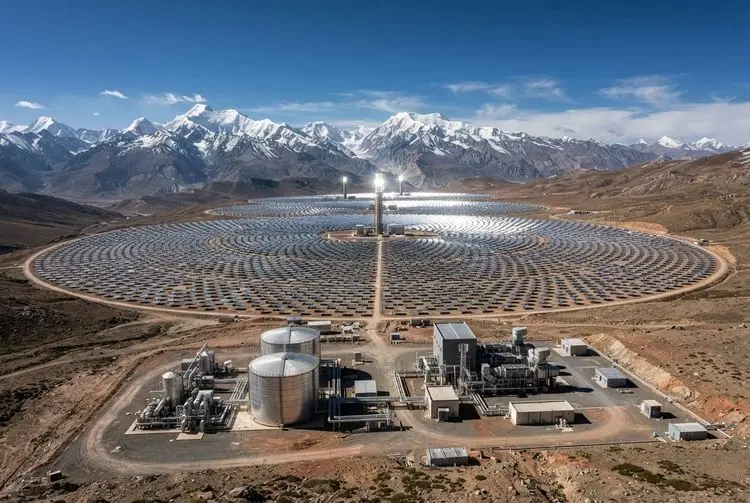
A concentrated solar power (CSP) plant operated by China General Nuclear Power Group (CGN) in Ngari Prefecture, Tibet, achieved grid connection on November 6, 2026 — establishing a new global benchmark as the highest-altitude CSP facility ever connected to a power network. Sitting at approximately 4,300 metres above sea level in Shiquanhe Town, Gar County, the 50 MW plant forms the thermal backbone of a broader 150 MW solar-storage-thermal demonstration project with a total investment of roughly 2.4 billion yuan ($359.9 million).
The project combines a 100 MW photovoltaic (PV) array — already fully grid-connected — with the newly commissioned CSP unit and a molten salt thermal storage system capable of holding heat for 14 hours. The CSP component broke ground in July 2024, making the roughly 28-month construction timeline notable given the extreme elevation and harsh operating environment of the Tibetan Plateau.
How the System Works
The technology configuration departs from conventional CSP designs. Rather than using solar concentrators to heat molten salt directly, the Ali plant routes PV-generated electricity through 205 MW of molten salt electric heaters, converting daytime solar power into stored thermal energy. That heat is then dispatched through a steam generation system to drive two 25 MW turbine-generator units, delivering electricity and urban heating on a continuous basis.
Ding Hongliang, engineering head of CGN New Energy's Ngari company, described the logic: "The project converts PV-generated electricity into heat during the day via the molten salt electric heaters, storing it in high-temperature molten salt, and then uses a steam generation system to deliver continuous power supply and urban heating around the clock."
Only the first of the two turbine-generator units was connected on November 6; the second unit is scheduled to follow within the year. The plant also carries the distinction of being the first CSP facility to deploy CGN's own self-developed distributed control system — a milestone for the group's technology independence in this segment.
Addressing a Weak and Isolated Grid
The Ngari grid presents conditions that challenge conventional renewable energy deployment. The network is small in scale, subject to large load fluctuations, and faces concentrated heating demand during winter months. Long-duration storage and dispatchable generation capacity have both been in short supply in the region.
Yi Jinyin, general manager of CGN (Tibet) New Energy Investment Co., framed the plant's grid value in those terms: "CSP combines the 'dual functions' of peaking power and long-duration storage, and can provide long-cycle peaking capability and rotational inertia to the power system."
That rotational inertia point carries weight for grid engineers. Unlike inverter-based PV or battery energy storage systems (BESS), a spinning turbine-generator inherently stabilises grid frequency — a property that becomes critical in isolated or weak-grid environments where there are few other synchronous machines to absorb sudden imbalances.
Projected Output and Environmental Impact
CGN projects the Ali plant will generate approximately 270 million kWh per year once fully operational. On an emissions basis, that output is expected to displace around 74,200 tonnes of standard coal annually and reduce carbon dioxide (CO2) emissions by roughly 168,200 tonnes per year.
The project also demonstrates a multi-energy co-supply model — combining electricity generation, thermal storage and district heating — that CGN describes as replicable for other high-altitude, weak-grid locations. The plant has already verified off-grid operating capability, meaning it can function independently of the main network if required, adding resilience value beyond its generation role.
Economics and Outlook
For investors and developers watching China's CSP pipeline, the Ali project illustrates both the promise and the cost challenge of the technology at scale. CGN acknowledges that CSP unit investment intensity is markedly higher than that of equivalent PV capacity. Future project economics will hinge on thermal storage duration, annual utilisation hours and the compensation mechanisms that regulators put in place for dispatchable renewable capacity.
The 14-hour storage duration at Ali is among the longest deployed in any operational CSP project globally, and the hybrid PV-plus-molten-salt-heater configuration offers a potential pathway for regions where direct solar irradiance is strong but conventional parabolic trough or power tower CSP infrastructure is difficult to build. Whether that model attracts replication — in Tibet or in comparable high-altitude markets elsewhere — will depend heavily on how grid operators and policymakers price the grid services that dispatchable, storage-backed solar can provide.