
Grid-forming batteries: Sungrow and ENGIE deliver 200 MW Belgian project
Europe's grid codes are shifting toward grid-forming requirements as battery storage takes on new stability roles.
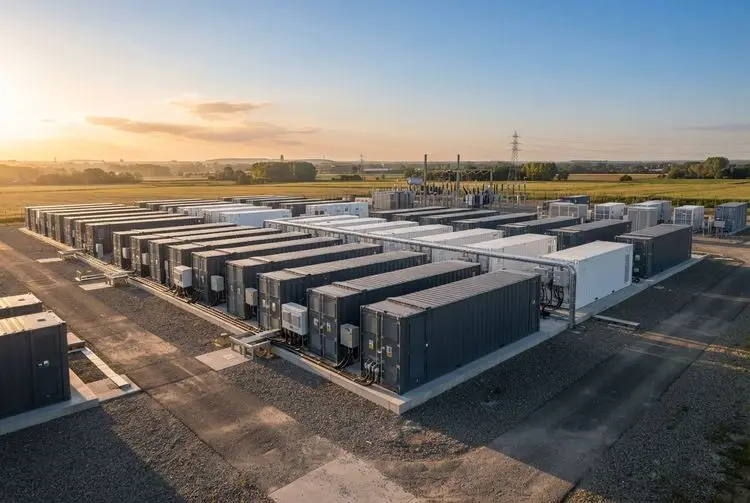
Grid-forming battery technology is moving from concept to commercial reality as Europe prepares to update its grid connection rules. The 200 MW / 800 MWh Vilvoorde project in Belgium, built by ENGIE and Sungrow, demonstrates how large-scale battery storage can now actively stabilise frequency and voltage rather than simply following the grid.
The Vilvoorde energy park, inaugurated in January 2026, uses 320 liquid-cooled PowerTitan units from Sungrow. The site faced tight space constraints, which drove the design choice: PowerTitan 2.0 halves the footprint compared to a conventional DC block design. The project integrates both PowerTitan 1.0 and 2.0 units under a common control system, with the battery and power conversion system combined into a single AC block in the 2.0 version.
How grid-forming differs from conventional storage
Conventional grid-following batteries adjust their charging and discharging rates to support frequency and can absorb or inject reactive power for voltage support. But they rely on the existing grid voltage as a reference. Grid-forming systems, by contrast, establish their own voltage and frequency reference internally.
Sungrow implements grid-forming functionality through its power conversion system and control algorithms, using the virtual synchronous machine principle. This approach mimics the rotating mass of conventional generators, which traditionally provided inertia that slows frequency changes. As more inverter-fed electricity enters the grid, that rotating mass declines, and new stabilisation methods become necessary.
Grid-forming systems also offer black start capability — the ability to restore a grid segment after a complete outage without relying on external power.
Regulatory momentum builds
The European Commission's draft Network Code for Requirements for Grid Connection of Generators — NC RfG 2.0 — was published in July 2026 and proposes grid-forming requirements for new generation and storage assets. EU member states are expected to update their national grid codes between 2027 and 2029 to implement the new rules.
Europe's grid frequency operates at 50 Hz, and maintaining that frequency within tight tolerances becomes more challenging as synchronous generation is replaced by inverter-based resources. Battery storage has traditionally been measured by energy capacity and duration, but grid-forming capability adds a new dimension: the ability to actively shape grid conditions rather than react to them.
Sungrow's European footprint
Sungrow has built a substantial European presence to support these developments. The company employs more than 900 people in Europe and operates over 25 local offices across the continent. Its research and development centres in Munich and Amsterdam focus on grid integration and power electronics.
Andrea Polini, speaking on behalf of Sungrow Europe, noted the strategic importance of the Vilvoorde project. "The Vilvoorde energy park demonstrates how advanced battery storage can meet the evolving needs of European grid operators," he said.
James Li, also representing Sungrow Europe, emphasised the company's commitment to grid stability solutions. "Our grid-forming technology through the virtual synchronous machine principle enables batteries to provide the stability services that modern power systems require," he said.
Market opportunities and challenges
Different European markets are developing distinct requirements for grid stability services. The UK has created a stability market that creates opportunities for inertia and reactive power provision. Germany's priorities include interconnected grid operation, rapid response capability and black start functionality.
Industry observers note that grid stability services will need appropriate remuneration to attract investment. The transition from grid-following to grid-forming capability represents a technical upgrade that adds value for system operators, but the business case depends on market frameworks that recognise and compensate those services.
SolarPower Europe has been active in the policy discussions around NC RfG 2.0, advocating for technology-neutral requirements that allow battery storage and solar inverters to compete with conventional generators in providing stability services.
For solar industry professionals and investors, the shift toward grid-forming requirements signals that battery storage projects will increasingly need to demonstrate stability capabilities beyond simple energy arbitrage. Projects planned for connection after the 2027-2029 grid code updates will likely face mandatory grid-forming requirements, making early adoption a potential competitive advantage.