
SPONSORED

Italy Awards 16 GWh Storage as European Solar M&A Shifts Strategy

Terna's second MACSE auction clears at lower prices while project-by-project deals reshape renewable transactions.
•• 5 Min
Italy Awards 16 GWh Storage as European Solar M&A Shifts Strategy

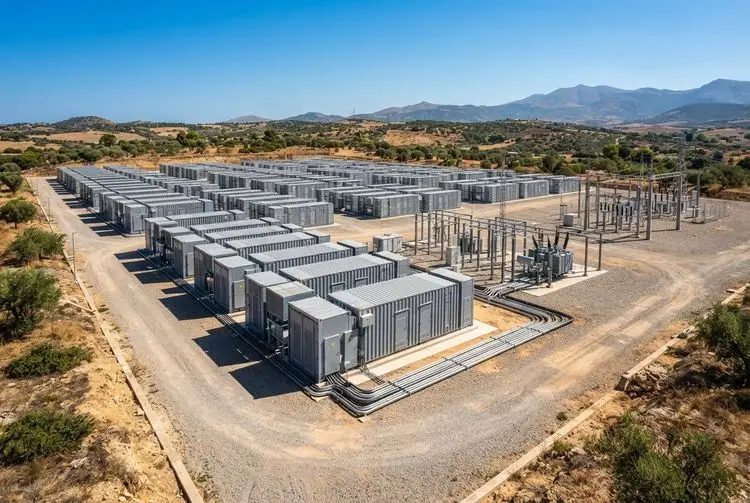
Italy's grid operator Terna has awarded 16 GWh of lithium-ion battery storage in its second MACSE auction, while European renewable energy M&A undergoes a structural shift from large portfolio sales toward single-asset transactions, according to industry data and market commentary.

Terna's auction, held on November 24, 2026, cleared at a weighted average price of €11,382 per MWh-year — a 12% decline from the €12,959 per MWh-year recorded in the first auction on September 30, 2025, according to list.solar calculations. The round covered 100% of the volume required for 2029 delivery, with capacity distributed across four southern and island regions.

The largest allocation went to South and Calabria, which received 9.6 GWh, or 60% of the awarded volume. Central-South secured 2.8 GWh, Sicily received 3 GWh, and Sardinia took approximately 0.5 GWh. Only lithium-ion battery technologies competed in this round.

Demand far exceeded available capacity. Roughly 67 GWh of projects qualified for the auction, with around 43 GWh actually offered. The 16 GWh awarded represents about 37% of the volume bid. The clearing price came in at 42% of the €27,000 reserve premium, compared to 35% of the €37,000 cap in the first round.

Regional price variations and cost implications

Prices fell unevenly across Italy's southern regions. Sicily experienced the steepest decline at approximately 28%, dropping to €11,467 per MWh-year. Sardinia fell about 27% to €10,925 per MWh-year. South and Calabria, which accounted for the bulk of awarded volume, saw only a 5% reduction to €11,575, keeping the national average decline at 12%.

The total cost is estimated at approximately €182 million annually at the average price, or roughly €2.7 billion over 15 years on a nominal, undiscounted basis. The premium equates to about €11.38 per kWh of capacity per year, or approximately €171 per kWh over the 15-year contract period.

Winners receive a fixed annual premium they bid and must build the plants and offer capacity to others on energy and grid services markets. Terna did not disclose winning bidders, power ratings in MW, battery duration, or the investment involved. For the first round, the operator estimated investment at around €1 billion.

The 16 GWh represents half of the 32 GWh of additional storage Terna proposed purchasing by 2030, according to a July consultation document from regulator ARERA. Italy's energy ministry confirmed the 16 GWh for 2029 by decree on May 20, 2026. The round covered only southern and island regions, excluding northern projects such as ZE Energy's Magliano Alpi in Piedmont. Contracted plants are scheduled to enter operation in 2029, with the 2030 requirement to be set after further assessments.

European M&A: from portfolios to single assets

In a parallel development, European solar and storage M&A is shifting from large portfolio sales to smaller, single-asset transactions closer to the grid, according to a commentary by Maxime Courtaigne of Solmeria published by pv Europe.

Courtaigne identifies four key shifts reshaping the market. First, valuation has become more granular. Solar cannibalisation, more frequent negative-price hours in markets such as Germany, France, and Spain, and higher financing costs mean two projects of the same size can be worth vastly different amounts. Grid connection terms, storage options, curtailment exposure, and permit status now drive value more than capacity alone. Portfolios hide these differences, leading buyers to price the weakest project in the bundle and discount the rest.

Second, hybridisation is transforming buyer preferences. Co-located batteries are becoming the default for new solar projects in many European markets. A hybrid project's value depends on approved injection and withdrawal capacities, battery duration, and revenue strategy. Buyers with trading desks or assets in the same grid zone value these projects differently from pure solar investors, making asset-buyer matching a source of value itself.

Third, the buyer universe has widened beyond IPPs and infrastructure funds to include mid-sized developers, EPCs moving into ownership, utilities, and industrial groups. Many are crossing borders, with French and Italian players seeking first footholds of a few megawatts in Central and Eastern Europe. Courtaigne notes that a single 1 MW project sold through Solmeria in France drew 35 expressions of interest, while Romanian projects received around ten within weeks. "Small projects are often seen as illiquid, but in our experience the real problem is that they rarely reach the right buyers," he writes.

Fourth, timing has become a cost. Grid connection rights increasingly come with deadlines and milestones in Spain and Italy, and EU grants have implementation calendars. Projects waiting nine months for portfolio processes may lose value, while developers facing tighter capital need faster cash recycling. Selling one project to fund the next is becoming a normal financing strategy.

Courtaigne predicts several developments by 2027: more single-asset transactions at every stage up to ready-to-build, more cross-border deals with Western European capital flowing into Central and Eastern Europe, storage-led valuation, and shorter, more standardised processes with permits, grid terms, and land rights disclosed from day one. Portfolio deals will not disappear, but the market is shifting toward single assets where value depends on matching each project with the buyer who values it most.

Integrated PV market expands

Europe's building-integrated photovoltaics (BIPV) market continues to grow, with annual installations rising from 147 MW in 2018 to around 350 MW in 2024, according to pv Europe. More than 90 European manufacturers now supply the segment.

Switzerland's façade PV installations grew by 30% in 2025 to 8.3 MW, while France installed around 100 MW of BIPV in 2024, making it one of Europe's largest markets. The revised Energy Performance of Buildings Directive requires new buildings to be designed with solar in mind.

The IPV Conference 2026 will take place on December 3-4 at the Florence Chamber of Commerce, covering BIPV, agrivoltaics, vehicle-integrated photovoltaics (VIPV), and emerging applications. The event targets architects, engineers, researchers, manufacturers, urban planners, and policymakers. Registration costs €100 including VAT, with free attendance for municipal and public body staff. The conference is organised by ETA-Florence Renewable Energies as an initiative of the Seamless-PV project, under the patronage of Rete IFV.

These developments occur against a backdrop of broader European energy market challenges. ACER reported €8 billion lost to slow EU market integration since 2020, while the RE-Source 2026 event in Amsterdam catches the PPA market mid-rethink. The convergence of storage procurement, M&A restructuring, and integrated PV growth suggests Italy and Europe are entering a more mature, granular phase of the energy transition.

Italy Battery StorageTerna Macse AuctionEuropean Solar M&ASingle-Asset TransactionsBipv Market EuropeLithium-Ion Storage ItalySolar Project ValuationRenewable Energy M&A

Most Popular News

  1. Statera Energy reaches financial close on 290MW BESS in East Devon
  2. Ireland RESS 6 awards 1.3GW solar PV in record auction round
  3. Indian banks ease rooftop solar loan norms under PM Surya Ghar scheme
  4. Brazil battery auction faces dispute over R$94 billion cost allocation
  5. GoodWe sees storage surge as Brazil moves to Fixed-Time Tariff

Disclaimer


Important notice regarding existing conflicts of interest:

We expressly point out that conflicts of interest exist in connection with this publication:

1. Stock Market Media Ltd. and persons closely associated with it hold shares in the companies recommended here and intend to sell them within the scope of, and at any time during, this recommendation. This constitutes a clear and specific conflict of interest.

2. The publisher of this publication and the responsible editors receive financial remuneration for its preparation. This, too, constitutes a clear and specific conflict of interest.

3. Please also note the further statements on existing conflicts of interest in the disclaimer below, inter alia under no. 2.

Important information and mandatory disclosures pursuant to the German Securities Trading Act (Wertpapierhandelsgesetz, WpHG) and pursuant to the German Financial Investment Ordinance (Finanzanlageverordnung, FinAnV).

Stock Market Media Ltd. has notified the German Federal Financial Supervisory Authority (Bundesanstalt für Finanzdienstleistungsaufsicht, “BaFin”), pursuant to the WpHG, of its activity as a producer of investment strategy recommendations within the meaning of Article 3(1) point 34 of Regulation (EU) No 596/2014 or of investment recommendations within the meaning of Article 3(1) point 35 of Regulation (EU) No 596/2014 (formerly “financial analyses”). The obligations of Stock Market Media Ltd. are governed primarily by §§ 85, 86 WpHG, Regulation (EU) No 596/2014 and Delegated Regulation (EU) 2016/958.

Information on the producer(s) of this publication:
Mr Roberto Gonçalves de Albuquerque, as analyst and editor-in-chief, is responsible for the preparation of the texts and contents of this publication. The publisher is Stock Market Media Ltd., 405 Kings Road, Flat 600, London; SW10 0BB, United Kingdom, represented by its Director Roberto Gonçalves de Albuquerque.

Important notes on the preparation of this publication:
This publication contains both facts and factual information on the companies discussed and purely subjective value judgements, interpretations, estimates, projections, forecasts and price targets. We endeavour to distinguish these from one another as transparently as possible in order to avoid misleading statements. Research, preparation and wording are carried out using common digital and AI-supported tools; the review of the content and the editorial responsibility lie with us. The essential bases and standards of our value judgements and valuations of the shares discussed are based on the following approach:

Assessment and valuation of companies according to conventional valuation methods (fundamental valuation approach)

  • Assessment of the potential of the company's future development (growth approach) and projection onto the corresponding valuation potential (price potential analysis) as well as a possible valuation of the company's shares on the basis of potential profit expectations (P/E ratio projection)
  • Assessment of the best-case scenario expected by us in the event of the company's absolute success (blue-sky potential approach)
  • Effect on the share price of the increased awareness of the recommended share expected by us, resulting from a strong rise in demand on the market (particularly decisive in the case of illiquid shares or shares recommended newly or for the first time) on account of the publications (mostly buy recommendations) published by us or by third parties (multiplier / momentum effect, hype), and thereby a disproportionately rising return/share price with a correspondingly rising risk
  • Technical analysis of the share price in accordance with common methods of analysis, mostly for the prediction of price signals (buy or sell signal, breakout of the share, determination of price targets, support or resistance areas, expected minimum movements or minimum counter-movements, prediction of signal points (if-then), etc.), for the most part building on the expected mass psychology (technical approach).

Conventional valuation approaches often cannot be meaningfully applied to young companies or companies that do not yet generate revenue. In valuing such companies we therefore tend to rely on the potential analysis calculated by us and on the assessment of the demand for such shares on the capital market. Ultimately, the market decides on the share price of a company. If extensive recommendations of a share give rise to excessive demand for it, it is possible that the share price will rise at an above-average rate on high trading volume. Although this leads to extreme opportunities for profit, it correspondingly increases the risk of a bubble forming, with a corresponding fall in price. The increased volatility of the share in such situations gives rise to above-average opportunities for profit and loss, both in both trading directions and in the case of recurring counter-movements. Such market developments are also an important part of our trading recommendations and valuation approaches.

This publication deals exclusively with securities of above-average volatility with high potential for profit and also for loss.

Note on sources of information:
The reliability of sources of information is examined by us in detail before they are used and is subjectively assessed by us according to their credibility and significance. In doing so, we decide by our own standards which sources we consider relevant, too conservative or too optimistic. Ultimately, we determine our recommendations on the basis of our personal assessments. In obtaining information we draw on numerous publicly accessible sources such as press releases, ad hoc announcements, company announcements, company presentations, publications and articles on the company discussed, common financial media in Germany and abroad as well as company or sector analyses by third parties.

Our publications use exclusively publicly available information and sources as well as information disseminated by the company itself.

Note on existing conflicts of interest:
We hereby point out that shareholders, editors, employees and persons or companies involved in the preparation of this publication, as well as principals (third parties) commissioning the publication of Stock Market Media Ltd., hold, directly or indirectly, at the time of this publication, interests in securities which are discussed in the respective publication, and are therefore interested in an increase in price and/or turnover, i.e. also in increased trading liquidity, since it is intended to sell these securities in direct connection with this publication and to participate in rising prices and turnover. An increase in the price of the shares of the companies presented may lead to an increase in the assets of these persons. In any case, the share price of the company may be significantly influenced by the discussion of the company. In particular, the share price of the companies discussed is also materially influenced by securities transactions. This applies in particular where the companies concerned are ones whose shares do not have a broad market capitalisation and for which only a narrow market exists. Here, even small order volumes can have considerable effects on prices. However, they are also interested in the price of the company discussed falling if they wish to acquire its shares more cheaply. By law, this gives rise to a conflict of interest, to which we hereby expressly draw attention.

Stock Market Media Ltd. and its employees are furthermore remunerated for the preparation, electronic distribution and publication of this publication as well as for other services. By law, this gives rise to a conflict of interest, to which we hereby expressly draw attention.

This remuneration may be paid by the company about which Stock Market Media Ltd. publishes information, by third parties affiliated with these companies or by other third parties pursuing an interest with regard to the companies discussed in connection with this publication. By law, this gives rise to a conflict of interest, to which we hereby expressly draw attention. This arises, first of all, from the fact that Stock Market Media Ltd. could make its statements in the interest of its principal. Stock Market Media Ltd. and/or companies affiliated with it have entered into an agreement, for a fee, with the company in question or with its shareholders for the preparation of the editorial coverage. By law, this gives rise to a conflict of interest, to which we hereby expressly draw attention.

Note on the handling of internal organisational duties:
Owing to the small size of the publisher's business, internal control of the compliance processes of the employees and other parties contributing to this publication is limited.

Competent supervisory authority:
Stock Market Media Ltd. has notified BaFin of its activity pursuant to § 86 WpHG.