
Spain solar sector adds 9 GW in 2025 as price cannibalisation deepens
Record employment and GDP growth mask mounting revenue pressure from falling captured prices.
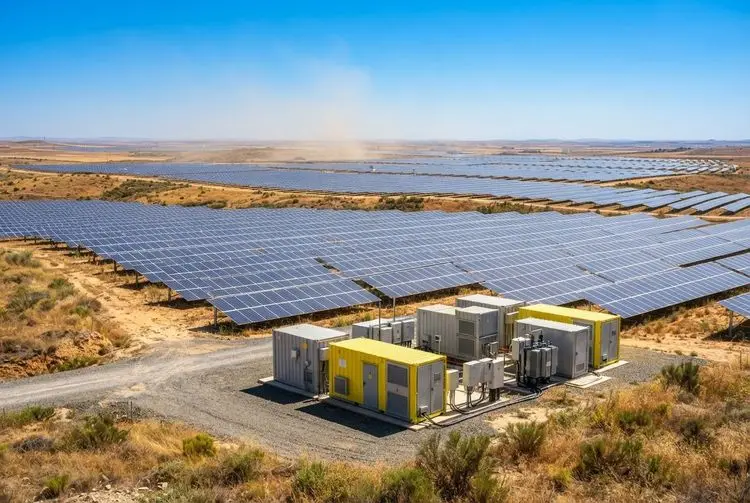
Spain's solar photovoltaic sector employed 134,708 people and contributed €9.84 billion to the country's GDP in 2025, according to the annual report from the Unión Española Fotovoltaica (UNEF). The figure represents 0.5% of Spanish GDP, while the total economic footprint including indirect effects reached €14.12 billion.
The data comes from UNEF's report titled "Challenges of the Second Phase of the Energy Transition (2025–2030)", produced jointly with the University of Castilla-La Mancha. It paints a picture of a maturing industry that continues to grow rapidly but faces increasingly difficult market conditions.
Spain added approximately 9 GW of new ground-mounted solar capacity in 2025, bringing cumulative ground-mounted capacity to roughly 46 GW. Self-consumption installations added a further 1.14 GW, lifting the cumulative self-consumption base to 9.28 GW. Behind-the-meter storage reached 540 MWh of new capacity in 2025, a 65% year-on-year increase, with cumulative behind-the-meter storage totalling 2,745 MWh since 2022.
On the utility-scale side, Spain installed 261 MW of storage, comprising 241 MW of hybrid storage systems and 20 MW of stand-alone storage plants. Approved storage capacity now stands at 33 GW, with a further 14.6 GW in the permitting process.
PV share of electricity mix reaches 23%
Solar photovoltaic covered approximately 23% of Spain's electricity mix in 2025, making it the energy source with the largest newly installed capacity globally. Cumulative global PV capacity passed 3 TW for the first time in 2025, with 698 GW added worldwide. Europe installed 67.2 GW of new solar in 2025, with Spain ranking as the continent's second-largest market.
Spain's solar sector exported €3.21 billion worth of goods and services in 2025 and invested €473 million in research and development. The sector's innovation intensity reached 3.6%, more than double the Spanish industrial average of 1.6%.
Captured prices fall sharply
The rapid build-out of solar capacity is driving down wholesale electricity prices during sunlight hours, a phenomenon known as price cannibalisation. The average captured price for solar fell from €42.28/MWh in 2024 to €36.39/MWh in 2025. In the first half of 2026, the average captured price dropped further to €29.68/MWh.
Spain recorded 797 zero-price hours in 2025 — hours in which wholesale electricity prices fell to zero or below due to high renewable feed-in. By early September 2026, the number of zero-price hours had already reached approximately 900, passing that threshold on 7 July 2026.
While falling wholesale prices ease the burden on electricity consumers, they directly pressure the economics of existing solar plants and make financing new projects more challenging.
UNEF calls for market reform
Rafael Benjumea, President of UNEF, described the current situation as the start of a more complex phase for the sector.
"A second, more complex phase is now beginning, in which we must harness these advantages, by electrifying our economy, scaling up storage and self-consumption, adapting the electricity market to the new reality and strengthening public acceptance of the projects," Benjumea said.
UNEF's report calls for the introduction of market price ceilings and floors to stabilise revenues. The association also advocates for short-term remuneration for congestion management services, state-backed loans for project financing, and remuneration for voltage regulation services provided by solar and storage assets.
Grid connection pipeline remains strong
Spain has approved or planned 71.5 GW of grid connection points through 2030, according to the report. A further 24 GW of connection points have been requested but remain undecided, indicating sustained developer interest despite the challenging revenue environment.
New demand from data centres, industrial electrification, green hydrogen production, energy storage and electric mobility is expected to absorb some of the growing solar output, but UNEF warns that without market reforms and accelerated storage deployment, the gap between supply and demand during peak solar hours will continue to widen.
The report's findings underscore the central dilemma facing Spain's solar industry: record deployment and employment alongside deteriorating revenue conditions that threaten the viability of future projects if policy adjustments do not keep pace.