
SPONSORED

ZNShine Solar graphene glass modules target LCOE reduction in field performance

Graphene-coated glass from ZNShine Solar aims to cut soiling losses and improve energy yield over 25-year module lifespan.
•• 3 Min
ZNShine Solar graphene glass modules target LCOE reduction in field performance

Solar modules with the same nominal power rating can deliver significantly different energy yields once installed in the field. Heat, low irradiance conditions and soiling all affect real-world generation, making Levelized Cost of Energy (LCOE) — which factors in investment, operation and maintenance (O&M) costs and total energy output over more than 25 years — the more meaningful metric for project economics.

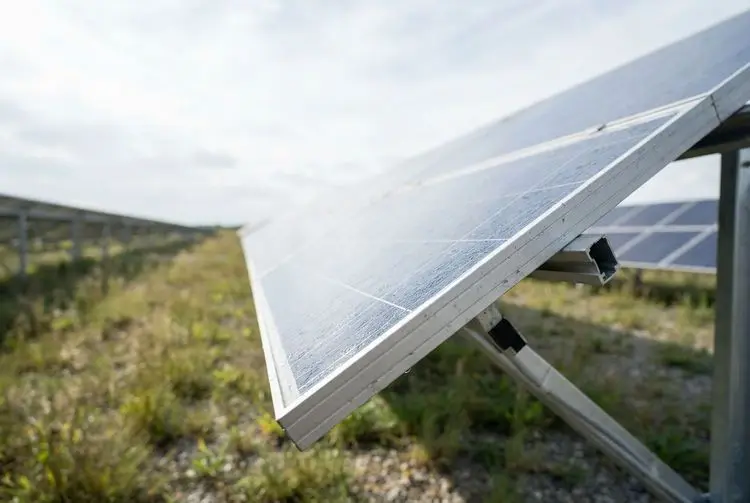
ZNShine Solar has developed a graphene glass technology that addresses several of these performance variables directly at the module surface. The technology, patented and developed in cooperation with Chinese research institutions including the University of Science and Technology of China, applies graphene directly to the front glass of the photovoltaic module.

How graphene changes the glass surface

Standard solar module glass reflects a portion of incoming light before it ever reaches the solar cells. ZNShine's graphene coating reduces this reflection and improves light transmission in the 600 to 1,100 nanometer wavelength range — the spectral band most relevant for crystalline silicon cell conversion. The improved transmission also enhances the module's ability to use diffuse radiation, which is particularly valuable in regions with frequent cloud cover or high aerosol loads.

Beyond optics, the graphene layer alters how water interacts with the glass surface. Instead of forming droplets that scatter light, rainwater spreads into a thin film. This self-cleaning effect reduces dust accumulation, a phenomenon known as soiling.

Soiling losses in the solar industry are typically estimated at 3% to 5% per year, though losses can be substantially higher in dry regions or areas with nearby agricultural or industrial activity. By keeping the glass cleaner for longer periods, ZNShine's graphene modules can reduce soiling-related generation losses without manual cleaning.

The graphene coating also reacts to ultraviolet light, activating a process that breaks down organic debris on the glass surface. This photocatalytic effect further reduces the need for frequent cleaning interventions.

O&M savings and long-term reliability

The combination of reduced soiling and self-cleaning properties translates into lower operational expenditure. ZNShine estimates that its graphene glass modules can deliver up to 30% in O&M cost savings in high-dust environments, where cleaning schedules and water usage represent a significant portion of ongoing project costs.

Camila Yamaguti, Sales Manager at ZNShine Solar, said: "The evaluation of a photovoltaic module needs to go beyond the initial acquisition cost. The market seeks high-performance assets where glass technology, conversion efficiency, and long-term reliability guarantee the lowest Levelized Cost of Energy (LCOE) and maximum return for the investor."

Module degradation is a key factor in LCOE calculations because it reduces production over time. ZNShine has designed its modules to minimise microcracks, mechanical fatigue and potential-induced degradation (PID), all of which can accelerate power loss. The company offers a linear performance guarantee that defines the minimum power output over the module's coverage period.

What this means for project economics

For solar industry professionals evaluating module procurement, the price per watt-peak (R$/Wp) remains the most common initial comparison metric. However, as Yamaguti noted, the upfront cost is only one component of long-term project value. LCOE benchmarks the total cost of energy over the project lifespan, incorporating initial investment, ongoing O&M and the cumulative energy produced — which is directly affected by degradation rates, soiling losses and optical performance.

In markets with high irradiance and dry climates — such as parts of Brazil, the Middle East, Australia and the southwestern United States — soiling is a persistent challenge that can erode project returns. Technologies that reduce soiling without adding mechanical complexity or water consumption offer a clear operational advantage.

ZNShine's graphene glass approach is one of several advanced glass coating strategies emerging in the solar manufacturing sector. The key differentiator is the direct application of graphene to the glass surface rather than a separate coating layer, which the company says improves durability and optical performance over the module's lifetime.

For installers and investors, the practical implication is straightforward: modules that maintain higher energy output with lower maintenance costs over 25 years can improve project IRR even if their initial price per watt is slightly higher than standard alternatives. The challenge for the industry remains verifying these performance claims through independent field testing and bankable degradation data.

Znshine SolarGraphene Glass ModulesLCOESoiling LossesO&M SavingsPhotovoltaic ModulesSolar Module PerformanceSelf-Cleaning Solar Glass

Most Popular News

  1. Statera Energy reaches financial close on 290MW BESS in East Devon
  2. Ireland RESS 6 awards 1.3GW solar PV in record auction round
  3. Indian banks ease rooftop solar loan norms under PM Surya Ghar scheme
  4. Brazil battery auction faces dispute over R$94 billion cost allocation
  5. GoodWe sees storage surge as Brazil moves to Fixed-Time Tariff

Disclaimer


Important notice regarding existing conflicts of interest:

We expressly point out that conflicts of interest exist in connection with this publication:

1. Stock Market Media Ltd. and persons closely associated with it hold shares in the companies recommended here and intend to sell them within the scope of, and at any time during, this recommendation. This constitutes a clear and specific conflict of interest.

2. The publisher of this publication and the responsible editors receive financial remuneration for its preparation. This, too, constitutes a clear and specific conflict of interest.

3. Please also note the further statements on existing conflicts of interest in the disclaimer below, inter alia under no. 2.

Important information and mandatory disclosures pursuant to the German Securities Trading Act (Wertpapierhandelsgesetz, WpHG) and pursuant to the German Financial Investment Ordinance (Finanzanlageverordnung, FinAnV).

Stock Market Media Ltd. has notified the German Federal Financial Supervisory Authority (Bundesanstalt für Finanzdienstleistungsaufsicht, “BaFin”), pursuant to the WpHG, of its activity as a producer of investment strategy recommendations within the meaning of Article 3(1) point 34 of Regulation (EU) No 596/2014 or of investment recommendations within the meaning of Article 3(1) point 35 of Regulation (EU) No 596/2014 (formerly “financial analyses”). The obligations of Stock Market Media Ltd. are governed primarily by §§ 85, 86 WpHG, Regulation (EU) No 596/2014 and Delegated Regulation (EU) 2016/958.

Information on the producer(s) of this publication:
Mr Roberto Gonçalves de Albuquerque, as analyst and editor-in-chief, is responsible for the preparation of the texts and contents of this publication. The publisher is Stock Market Media Ltd., 405 Kings Road, Flat 600, London; SW10 0BB, United Kingdom, represented by its Director Roberto Gonçalves de Albuquerque.

Important notes on the preparation of this publication:
This publication contains both facts and factual information on the companies discussed and purely subjective value judgements, interpretations, estimates, projections, forecasts and price targets. We endeavour to distinguish these from one another as transparently as possible in order to avoid misleading statements. Research, preparation and wording are carried out using common digital and AI-supported tools; the review of the content and the editorial responsibility lie with us. The essential bases and standards of our value judgements and valuations of the shares discussed are based on the following approach:

Assessment and valuation of companies according to conventional valuation methods (fundamental valuation approach)

  • Assessment of the potential of the company's future development (growth approach) and projection onto the corresponding valuation potential (price potential analysis) as well as a possible valuation of the company's shares on the basis of potential profit expectations (P/E ratio projection)
  • Assessment of the best-case scenario expected by us in the event of the company's absolute success (blue-sky potential approach)
  • Effect on the share price of the increased awareness of the recommended share expected by us, resulting from a strong rise in demand on the market (particularly decisive in the case of illiquid shares or shares recommended newly or for the first time) on account of the publications (mostly buy recommendations) published by us or by third parties (multiplier / momentum effect, hype), and thereby a disproportionately rising return/share price with a correspondingly rising risk
  • Technical analysis of the share price in accordance with common methods of analysis, mostly for the prediction of price signals (buy or sell signal, breakout of the share, determination of price targets, support or resistance areas, expected minimum movements or minimum counter-movements, prediction of signal points (if-then), etc.), for the most part building on the expected mass psychology (technical approach).

Conventional valuation approaches often cannot be meaningfully applied to young companies or companies that do not yet generate revenue. In valuing such companies we therefore tend to rely on the potential analysis calculated by us and on the assessment of the demand for such shares on the capital market. Ultimately, the market decides on the share price of a company. If extensive recommendations of a share give rise to excessive demand for it, it is possible that the share price will rise at an above-average rate on high trading volume. Although this leads to extreme opportunities for profit, it correspondingly increases the risk of a bubble forming, with a corresponding fall in price. The increased volatility of the share in such situations gives rise to above-average opportunities for profit and loss, both in both trading directions and in the case of recurring counter-movements. Such market developments are also an important part of our trading recommendations and valuation approaches.

This publication deals exclusively with securities of above-average volatility with high potential for profit and also for loss.

Note on sources of information:
The reliability of sources of information is examined by us in detail before they are used and is subjectively assessed by us according to their credibility and significance. In doing so, we decide by our own standards which sources we consider relevant, too conservative or too optimistic. Ultimately, we determine our recommendations on the basis of our personal assessments. In obtaining information we draw on numerous publicly accessible sources such as press releases, ad hoc announcements, company announcements, company presentations, publications and articles on the company discussed, common financial media in Germany and abroad as well as company or sector analyses by third parties.

Our publications use exclusively publicly available information and sources as well as information disseminated by the company itself.

Note on existing conflicts of interest:
We hereby point out that shareholders, editors, employees and persons or companies involved in the preparation of this publication, as well as principals (third parties) commissioning the publication of Stock Market Media Ltd., hold, directly or indirectly, at the time of this publication, interests in securities which are discussed in the respective publication, and are therefore interested in an increase in price and/or turnover, i.e. also in increased trading liquidity, since it is intended to sell these securities in direct connection with this publication and to participate in rising prices and turnover. An increase in the price of the shares of the companies presented may lead to an increase in the assets of these persons. In any case, the share price of the company may be significantly influenced by the discussion of the company. In particular, the share price of the companies discussed is also materially influenced by securities transactions. This applies in particular where the companies concerned are ones whose shares do not have a broad market capitalisation and for which only a narrow market exists. Here, even small order volumes can have considerable effects on prices. However, they are also interested in the price of the company discussed falling if they wish to acquire its shares more cheaply. By law, this gives rise to a conflict of interest, to which we hereby expressly draw attention.

Stock Market Media Ltd. and its employees are furthermore remunerated for the preparation, electronic distribution and publication of this publication as well as for other services. By law, this gives rise to a conflict of interest, to which we hereby expressly draw attention.

This remuneration may be paid by the company about which Stock Market Media Ltd. publishes information, by third parties affiliated with these companies or by other third parties pursuing an interest with regard to the companies discussed in connection with this publication. By law, this gives rise to a conflict of interest, to which we hereby expressly draw attention. This arises, first of all, from the fact that Stock Market Media Ltd. could make its statements in the interest of its principal. Stock Market Media Ltd. and/or companies affiliated with it have entered into an agreement, for a fee, with the company in question or with its shareholders for the preparation of the editorial coverage. By law, this gives rise to a conflict of interest, to which we hereby expressly draw attention.

Note on the handling of internal organisational duties:
Owing to the small size of the publisher's business, internal control of the compliance processes of the employees and other parties contributing to this publication is limited.

Competent supervisory authority:
Stock Market Media Ltd. has notified BaFin of its activity pursuant to § 86 WpHG.