
California's free midday solar power plan faces rate design hurdles
Becerra's Power Hour proposal offers two hours of free electricity but raises complex cost-shifting questions.
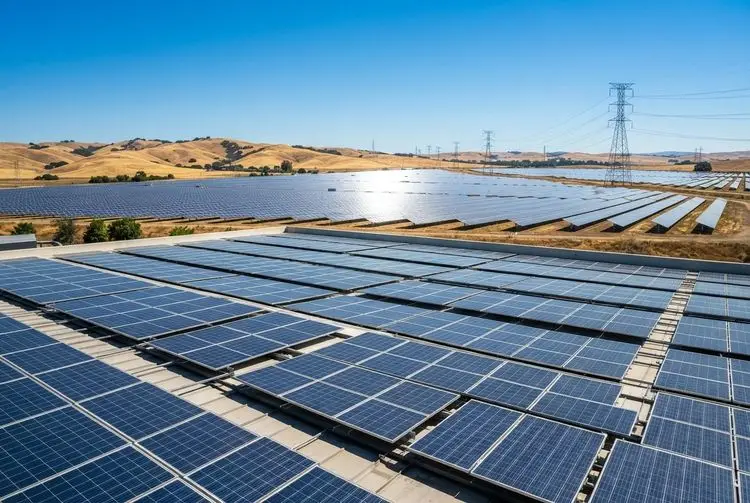
California's solar industry is watching closely as the Becerra administration advances a novel proposal to offer two hours of free midday electricity to residents — a plan designed to soak up abundant solar generation but one that could reshape utility rate structures across the state.
The so-called "Power Hour" would provide free electricity between 10 a.m. and 2 p.m., a window when California's massive fleet of utility-scale and rooftop solar systems routinely overgenerates. During spring and autumn months especially, grid operators are forced to curtail solar output or accept negative wholesale power prices.
The rate design challenge
The proposal could cut typical household utility bills by roughly $1,000 per year, according to estimates. But the mechanics of delivering that saving are far from straightforward. Wholesale power costs account for only about one-third of typical retail electricity rates. The majority of a customer's bill covers fixed grid costs — transmission, distribution, wildfire mitigation and utility overhead.
If the Becerra administration mandates free midday power, utilities would need to recover those fixed costs from other hours, effectively raising rates during morning, evening and nighttime periods. Time-of-use rates in California already charge more for evening power, when solar generation fades and demand peaks.
Michael Colvin, who helped design time-of-use rates during his tenure at the California Public Utilities Commission (CPUC), said the program should "make it as simple and easy to understand as possible." He added that the free hours window should remain consistent across seasons to avoid confusing customers.
Starting with income-qualified households
The Becerra administration plans to launch Power Hour by targeting customers enrolled in the California Alternate Rates for Energy (CARE) and Family Electric Rate Assistance (FERA) programs. These existing income-qualified discount programs already provide bill relief to low- and moderate-income households.
Subsidies for CARE and FERA are currently collected from all other ratepayers. Rebecca Lee of Vote Solar noted that the CPUC could explore new approaches: "You could create a sub-option within CARE where you have more flexibility to use the CARE subsidy in a time-differentiated way."
The administration has stated the plan cannot push total costs higher overall, which means any revenue lost from free midday hours must be recovered elsewhere — or offset by savings from reduced solar curtailment and avoided wholesale energy purchases.
Storage, virtual power plants and the midday gap
A central question for solar industry professionals is how customers will actually use free midday power when many households are empty during work and school hours. Batteries offer one solution: homeowners could charge storage systems during the free window and discharge them in the evening. However, battery storage systems remain expensive for most households.
Virtual power plant programs could help make batteries more affordable by aggregating distributed storage and selling grid services. California already has roughly 20 GW of battery storage installed, but most of that capacity sits at the utility scale rather than behind the meter.
Utilities may also need to upgrade billing software to handle time-differentiated free credits. As an interim workaround, the CPUC could issue rebate checks to qualifying households while software upgrades are completed.
Claudine Custodio of the Environmental Defense Fund described the proposal as "actually possible in California," pointing to the state's existing infrastructure and policy momentum.
Broader climate and grid context
The Power Hour proposal sits within California's ambitious clean energy targets. The state aims to cut greenhouse gas emissions 40% below 1990 levels by 2030 and achieve a fully carbon-free electricity grid by 2045. Emissions dropped 3.9% from 2023 to 2024, but the state needs to add roughly 8 GW of clean capacity per year to meet the 2045 goal. Currently, utilities add about 3 GW of utility-scale renewables annually, while rooftop solar installations contribute roughly 1.5 GW per year.
California's solar overgeneration problem is most acute in the Central Valley and Southern California, where the bulk of utility-scale solar is located. Lower-income households in those regions face high summer cooling bills, making the Power Hour's free midday window particularly relevant.
The CPUC has an advanced electric rate design rulemaking underway, which could provide the regulatory framework for implementing Power Hour. The Demand Side Grid Support program, another existing initiative that compensates customers for reducing usage during grid emergencies, remains underfunded and could serve as a model — or a cautionary tale — for the new proposal.
With 2 million electric vehicles now on California roads and 20 GW of battery storage online, the grid is evolving rapidly. The Power Hour concept represents a bet that rate design can keep pace with technology — encouraging consumption when the sun shines and storage is cheapest, without leaving utilities or low-income customers behind.