
First Solar CEO thanks Trump for Section 232 tariffs on solar imports
Mark Widmar says solar supply chain is now recognised as a national security issue by the US government.
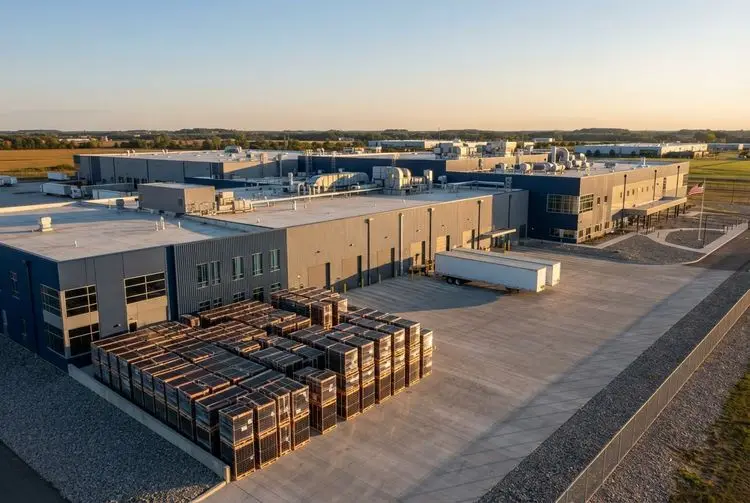
First Solar CEO Mark Widmar has thanked President Trump and Commerce Secretary Howard Lutnick for imposing Section 232 tariffs on polysilicon imports, calling the move the first true acknowledgment that the solar supply chain is a national security issue.
"On behalf of all of our American workers, I thank President Trump and Secretary Lutnick for the first true acknowledgment that the solar supply chain is a national security issue," Widmar said during a hearing titled 'Outproducing the CCP: Restoring American Manufacturing'.
The Section 232 duties on polysilicon imports are set to begin on 4 December. They arrive alongside Prohibited Foreign Entity (PFE) measures introduced in 2025, both aimed at reducing US reliance on Chinese-dominated solar supply chains.
First Solar's position
First Solar, which produces cadmium telluride (CdTe) thin-film modules, is relatively unaffected by the Section 232 and PFE policies. The company has invested approximately US$5 billion in US manufacturing and now operates six domestic plants producing CdTe thin-film modules.
Widmar believes First Solar is structurally positioned to benefit from the new trade measures. Unlike the majority of the global solar PV industry, which uses crystalline silicon (c-Si) technology dominated by Chinese manufacturing capacity, First Solar's thin-film technology sits outside the main tariff impact zone.
However, the company faces headwinds of a different kind. Shareholders filed a class action lawsuit against First Solar in June, alleging the company made misleading claims about its resilience to tariffs.
Industry impact
The tariffs create a complex picture for the broader US solar manufacturing sector. US module assembly capacity now stands at approximately 60 GW, but domestic cell capacity is only around 11 GW. That gap forces module makers to rely on imported cells, which Section 232 and PFE measures make more expensive.
Tim Pawlenty, CEO of the Solar Energy Industries Association (SEIA), struck a cautious note. "Imposing tariffs and price floors on solar materials will create new challenges for American manufacturers," he said.
Intertek CEA has assessed that the tariffs are unlikely to spur significant new US solar cell production, suggesting the capacity gap may persist.
Market and policy outlook
Aaron Hall, president of Anza Renewables, described Section 232 as "a very strong domestic manufacturing policy." Anza has reported that US module prices surged ahead of the tariff start date, reflecting market anticipation of higher costs.
Crux's Hasan Nazar noted that Section 232 could spur domestic demand for polysilicon, potentially benefiting US-based polysilicon producers.
The political landscape has shifted with this month's midterm elections, in which Democrats retook both the House and the Senate. A Democrat-controlled Congress is likely to be more favourable to renewable energy policies, though experts consider it unlikely that either Section 232 or PFE measures will be reversed.
What it means for the industry
For solar industry professionals, the key dynamic to watch is the growing divergence between thin-film and crystalline silicon manufacturers under US trade policy. First Solar's CdTe technology insulates it from tariffs that directly raise costs for c-Si producers, giving the company a structural cost advantage in the US market.
For c-Si module makers, the combination of Section 232 duties starting in December and the existing PFE framework means higher input costs for cells and polysilicon. With US cell capacity at roughly one-sixth of module capacity, import dependence will remain high unless domestic cell manufacturing expands significantly — which Intertek CEA suggests is unlikely under current conditions.
Investors and project developers should monitor how the tariff-driven price increases affect module procurement strategies. Anza's reported price surge ahead of the 4 December start date indicates that market adjustments are already underway.
The political dimension adds another layer. While a Democrat-controlled Congress may pursue additional renewable energy support, the bipartisan appeal of reducing Chinese supply chain dependence means the core tariff structure is likely to remain in place for the foreseeable future.