
Castile and León Plans Per-Hectare Solar Tax of Up to €2,000
UNEF says the regional levy on PV plants, extended from an environmental impact charge, is purely fiscally motivated and penalises biodiversity-friendly projects.
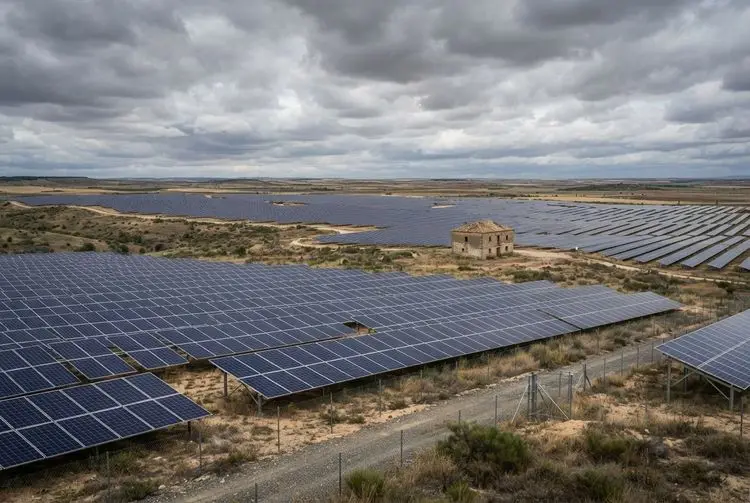
The regional government of Castile and León plans to introduce a per-hectare tax on solar parks by extending the existing Impuesto sobre la Afección Medioambiental (environmental impact levy) to photovoltaic (PV) plants. The proposed rate runs from €600 to €2,000 per hectare. The Spanish photovoltaic association UNEF (Unión Española Fotovoltaica) has come out against the plan, arguing that the charge is fiscally motivated rather than environmental.
UNEF rejects the framing of the levy as environmental compensation. "Behind this unjustified tax announced by the Regional Government of Castilla y León lies a supposed environmental compensation. But this is not the case," the association stated. In UNEF's reading, the design of the tax base works against the projects that do most for biodiversity, rather than rewarding them.
José Donoso, Director General of UNEF, framed the proposal as a brake on a technology that has delivered measurable savings to consumers. "The tax is purely fiscally motivated and unjustified, and it penalises an activity that generates local socio-economic development and strengthens the competitiveness of all consumers," he said.
Municipal revenue already flows from PV
The association points out that municipalities hosting solar parks already receive around €10,000 per megawatt of installed capacity per year. Under the regional proposal, by contrast, the revenue would go into the general budget rather than to the host municipalities themselves. That distinction matters for rural councils that have come to count on energy-related income.
Solar parks in the region are already subject to the Impuesto sobre Actividades Económicas (IAE), the Impuesto sobre el Valor de la Producción de la Energía Eléctrica (IVPEE) and the Impuesto sobre la Electricidad (IEE), alongside municipal-level charges. UNEF argues that the additional per-hectare levy stacks on top of an existing tax load rather than replacing any part of it.
Northern plants pay the same rate for less output
A flat per-hectare rate ignores geography. Plants in the north pay the same amount per hectare as those in the south but generate less electricity from each hectare, which compresses the economics of projects outside the highest-irradiation areas. Projects that set aside land for biodiversity measures are hit hardest, because those measures reduce the area available for generation while the tax base does not recognise them.
UNEF also notes that all affected projects already hold a positive environmental assessment. In the association's view, a levy applied on top of that approval duplicates a control that has already been exercised, and it does so through a mechanism that does not distinguish between well-sited and poorly-sited plants.
Exemptions fall short for shared self-consumption
The exemptions attached to the proposal are inadequate for shared self-consumption schemes enabled by Real Decreto-ley 7/2026, according to UNEF. Shared self-consumption allows several consumers to draw on the output of one installation, and the decree provides the legal framework for it. If the regional exemptions do not cover such configurations properly, the tax would reach installations that the national framework is actively promoting.
Consumer savings set against the levy
UNEF sets the proposal against the savings solar has delivered. The association says solar energy saved Spanish consumers more than €17 billion over the past 18 months, and that €8 is saved on the electricity price for every €1 invested in photovoltaics. Donoso described the levy as a charge on that benefit: "This is a tax on the future, on the opportunities for economic development and on the competitiveness of Spanish companies and citizens who benefit, thanks to solar energy, from a clean, affordable and homegrown technology that helps keep people in rural areas, attracts industry to our country and gives our companies a competitive edge."
For developers and investors, the practical question is how a per-hectare charge interacts with project economics in a region where land use per megawatt varies widely between sites and technologies. Installers and homeowners involved in shared self-consumption should watch how the regional exemptions are drafted, since the coverage of Real Decreto-ley 7/2026 configurations determines whether smaller participants are drawn into the tax. As described by UNEF, the revenue would flow into the general budget rather than to host municipalities, and the environmental rationale is not borne out by the design of the tax base.