
Solar resilience hubs bring energy justice to West Virginia's West Side
Community-driven solar projects on Charleston's West Side tackle energy burden and build climate resilience.
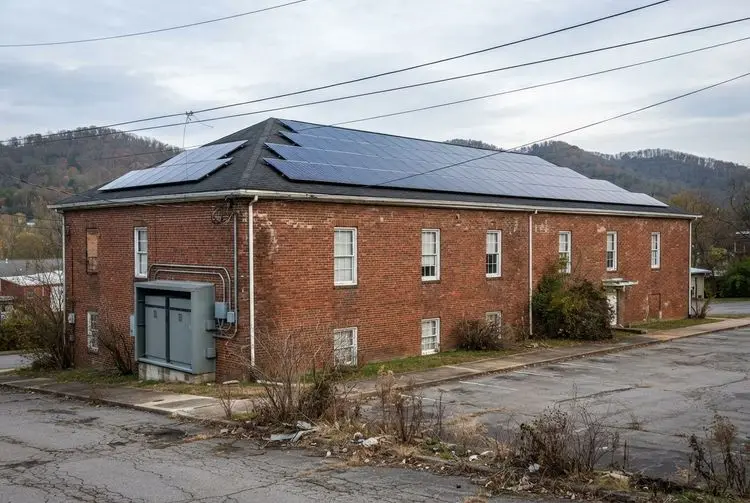
A shift is underway in Charleston's West Side, where community organisers are turning to solar energy as a tool for environmental justice and self-determination. The effort, part of a three-part series reported with support from the Ohio River Valley Participatory Fund, moves beyond traditional extraction defence toward proactive resilience.
Janet Keating, a long-time organiser in the region, described the approach as a natural evolution. "In West Virginia, everything's about relationship, right? People here know who has stood by them through the floods and the chemical spills. They don't care about fancy titles; they care about who shows up," Keating said.
Resilience hubs — neighbourhood centres equipped with solar panels and battery storage — are emerging as a practical solution for communities that have faced decades of neglected infrastructure. These hubs can provide backup power during outages, reduce household energy bills and lower emissions, all while building neighbour-to-neighbour trust.
Solar as a multi-solution strategy
Keating emphasised the compounding benefits of pairing solar generation with community facilities. "It solves several problems at once. If you have solar panels on this particular facility, but if it could be extended to a community resilience hub you're reducing emissions," she said.
For solar industry professionals, the West Side model illustrates a growing market segment: distributed solar paired with storage in underserved urban communities. These projects often qualify for federal incentives under the Inflation Reduction Act, including the Investment Tax Credit and bonus adders for low-income and energy-community locations. Installers and developers watching the Appalachian region may find similar opportunities in other historically disadvantaged neighbourhoods across the Ohio River Valley.
The West Side's history compounds the challenge. The area faced redlining, which blocked residents from accessing mortgages and investment, and later saw commercial spaces bulldozed. Crumbling utility infrastructure now compounds the effects of a climate emergency that is causing more severe flooding and extreme weather events.
Grid control and civil rights
Bishop Haley, another organiser involved in the effort, framed the push for solar in stark terms. "The mindset of the government here is to control, and when you have solar panels, part of their control goes away," Haley said.
Haley described a community abandoned by government leaders, where the state protects a captured energy market. West Virginia lawmakers have signed non-disclosure agreements and carved exceptions into law, according to the source material, reinforcing a system that Haley argues limits energy choice.
For investors and engaged homeowners, the West Side story highlights a broader trend: energy self-reliance is increasingly framed as a 21st century civil rights issue. When households and community centres generate their own power, they reduce dependence on a grid that has historically under-served them. The grid itself is becoming a new frontier for the civil rights movement, as access to reliable, affordable clean energy becomes a marker of equity.
What the solar industry should watch
The West Side project is still in its early stages, but it points to several dynamics relevant to the solar market. First, community trust — not technical specs — is often the critical success factor for distributed solar in underserved areas. Organisers like Keating and Haley have built credibility over years of flood response and chemical spill advocacy, a foundation that commercial developers cannot easily replicate.
Second, the resilience hub model creates a natural anchor load for solar-plus-storage systems. When paired with community facilities such as churches, community centres or health clinics, the economics improve because the building has predictable daytime demand. Excess generation can offset household bills for nearby residents, creating a shared-benefit structure that strengthens community buy-in.
Third, policy risk remains. West Virginia's political environment has been hostile to renewable energy, with lawmakers carving exceptions into law and signing NDAs that limit transparency. Developers entering the Appalachian market should factor in regulatory uncertainty and plan for extended interconnection timelines.
The Ohio River Valley Participatory Fund, which supported the reporting on this series, has backed similar community-led energy projects across the region. For solar professionals, the takeaway is clear: the next wave of distributed solar growth may come not from rooftops in affluent suburbs, but from resilience hubs in communities that have been waiting for someone to show up.