
Türkiye's Konya Province Hits 2.8 GW Solar as Europe's Integrated PV Market Accelerates
Konya now hosts 10% of Türkiye's solar capacity while Europe's BIPV market nears 350 MW annually.
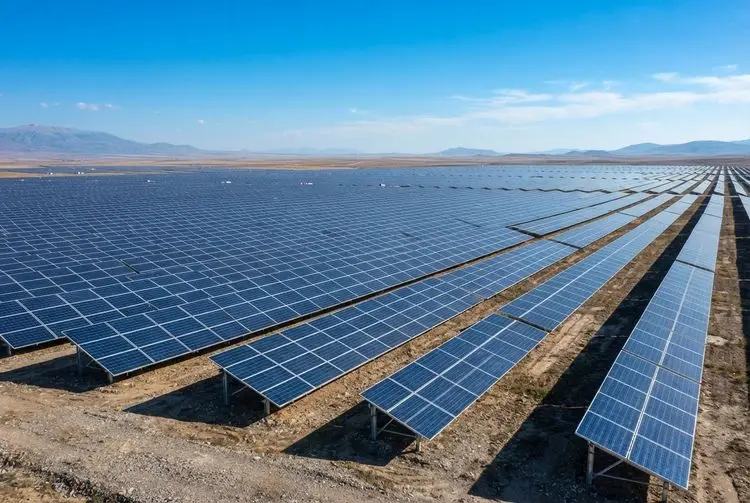
Europe's solar sector is advancing on two parallel tracks: large-scale utility installations in Türkiye's Konya province and a rapidly maturing integrated photovoltaics market across the continent.
Konya province in central Türkiye now accounts for roughly 10% of the country's total installed solar energy capacity, according to data from the Energy Market Regulatory Authority (EPDK). Türkiye's total installed electricity capacity has reached 127,355 MW, with solar energy capacity at 28,222 MW. Konya alone hosts 2,840 MW of installed solar capacity.
Ismail Hakkı Karaca, deputy chair of a research center at the Konya Chamber of Commerce, attributed the province's solar prominence to its broad plains, high solar potential, and effective use of nonarable land. He also noted that advancements in solar energy technology have accelerated investments in the region.
"About 10% of Türkiye's total installed solar energy capacity is located in Konya. We have a solar power plant with approximately 1,350 megawatts installed as a single unit in our Karapınar district," Karaca told Anadolu Agency. "In Türkiye, almost 3,000 megawatts of the total 28,000 megawatts of installed capacity are produced solely in Konya."
The Karapınar Solar Power Plant has been described as Europe's largest and among the world's top five solar power plants. Karaca predicted that Konya's installed solar capacity could reach 6,000 to 7,000 MW in the future.
Türkiye's 2040 Energy Strategy
Türkiye's new 2040 energy strategy targets increasing renewable energy capacity, and Karaca suggested that Konya, with its existing potential and sectoral accumulation, could host significant investments in this process. He also highlighted that renewable energy investments have created a new industrial ecosystem in the city, accommodating companies operating in engineering, assembly, infrastructure construction, and solar panel and inverter production.
Integrated PV Market Gains Momentum
Meanwhile, the International Conference on Integrated Photovoltaics (IPV Conference) is set to take place on 3 and 4 December at the Florence Chamber of Commerce. The event will bring together architects, engineers, researchers, manufacturers, urban planners, and policymakers working to integrate solar into buildings, infrastructure, vehicles, and farmland.
The programme covers integrated PV in all its forms, including building-integrated photovoltaics (BIPV), agrivoltaics, vehicle-integrated photovoltaics (VIPV), and a growing range of emerging applications. A solar module integrated into a façade or car roof becomes part of the building or vehicle and must meet the same design, structural, and safety requirements as the materials it replaces. The questions involved reach beyond engineering, making the conference relevant to urban planners and policymakers as well as technical specialists.
Europe's BIPV market has shown significant growth. Annual BIPV installations in Europe rose from 147 MW in 2018 to around 350 MW in 2024, and more than 90 European manufacturers now supply the segment. In Switzerland, façade PV installations grew by 30 percent in 2025 to 8.3 MW. France installed around 100 MW of BIPV in 2024, making it one of Europe's largest markets. The revised Energy Performance of Buildings Directive also requires new buildings to be designed with solar in mind, providing further regulatory momentum.
The Florence programme will combine keynote presentations, technical sessions, project showcases, and panel discussions, with contributions covering new research, best-practice examples, and demonstration projects. Participants are expected from academia, industry, and public institutions across Europe and beyond. Networking lunches and a reception on 3 December will give participants time to exchange ideas and build partnerships.
Registration costs €100 including VAT, with free attendance for staff of municipalities and other public bodies. The IPV Conference is organised by ETA-Florence Renewable Energies as an initiative of the Seamless-PV project, under the patronage of Rete IFV.
Broader Italian Solar Activity
The IPV Conference report also referenced several related Italian solar developments, including European Energy securing Contracts for Difference (CfDs) for 513 MW of solar projects, Solar Steel expanding its footprint with a 70 MW tracker deal, Schletter mounting deployed at a 96 MW park in Udine, Energy Release 2.0 securing 22.5 TWh for energy-intensive industry, a new subsidiary for vertical agri-PV specialist Next2Sun, and RWE bringing its first commercial agri-PV plants online.
Outlook
As Türkiye pursues its 2040 energy strategy and Europe implements the revised Energy Performance of Buildings Directive, both large-scale solar installations and integrated PV applications appear poised for continued growth. The IPV Conference in Florence will serve as a key gathering for stakeholders seeking to advance the integration of solar technology into buildings, infrastructure, vehicles, and farmland across the continent.