
Eos Energy Revenue Surges 171%; Big Canberra Battery Goes Live
US zinc battery maker posts $82.7M Q3 as 250-MW Australian storage project commissions.
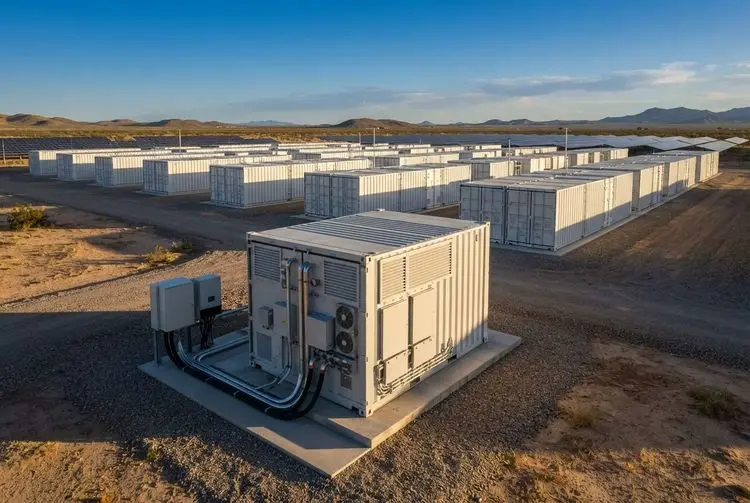
Eos Energy Enterprises reported third-quarter revenue of $82.7 million on November 5, a 171% increase year-on-year and a 20% sequential gain from the second quarter. The US manufacturer of zinc-based long-duration batteries attributed the growth to deliveries across ten projects.
Gross margin improved 58 percentage points to minus 53%, compared to minus 111% a year earlier, meaning the company continues to sell its batteries below production cost. Adjusted EBITDA, a non-GAAP metric, stood at a loss of $63.8 million. Net income attributable to shareholders reached $125.0 million, driven primarily by non-cash mark-to-market gains, according to the company's SEC filing.
Cube shipments grew 216% year-on-year and 23% from the second quarter. Adjusted EBITDA margin improved 96 percentage points year-on-year to minus 77%. The company's backlog amounted to $765 million, representing 3.2 GWh, a 5% decline from the second quarter. That translates to roughly $239 of backlog per kWh and about $8.3 million of revenue per project delivered, based on list.solar calculations.
Project Pipeline and Financing
In September, Eos agreed with MN8 Energy and Google to supply a 10-hour, 10-MW/100-MWh Z3 system for MN8's Mammoth Solar project in West Virginia. The broader project also includes 86 MW of solar capacity and 70 MW/280 MWh of lithium-ion storage. The Eos unit is scheduled to come online in 2030.
Also in September, Eos received an $87 million first advance under the second tranche of its Department of Energy loan, bringing total draws to approximately $178 million. Cash, including restricted cash, stood at $344.1 million on September 30.
The company is consolidating battery production at its Thorn Hill facility in Warrendale, Pennsylvania, which shifted to 24-hour operations in October. Disassembly of Line 1 began in late October at Turtle Creek, the plant Eos took full control of in 2021. Eos said the consolidation lowers fourth-quarter capacity and affects the timing of some shipments.
"We remain on track to achieve the lower half of our full-year revenue outlook," CEO Joe Mastrangelo said. The company's full-year revenue guidance ranges from $300 million to $350 million, narrowed in August from a previous $300 million to $400 million range. Eos expects Line 1 to resume production near the end of the first quarter of 2027. Thorn Hill would then have approximately 4 GWh of annual nameplate capacity across two lines.
The lower half of guidance implies fourth-quarter revenue of $91.5 million to $116.5 million, according to list.solar calculations. For context, the average duration of US batteries installed in the second quarter was 3.5 hours, according to Wood Mackenzie and the American Clean Power Association.
Big Canberra Battery Commissions
In Australia, Eku Energy commissioned the 250-MW/500-MWh Williamsdale battery in southern Canberra on November 5. The facility represents the largest component of the Australian Capital Territory's Big Canberra Battery program.
The plant can meet one-third of Canberra's electricity needs for up to two hours at peak demand, the ACT Government said in a joint statement. It operates on Tesla Megapack 2 XL batteries. Consolidated Power Projects served as Eku's balance-of-plant contractor, and Evoenergy is the distribution network service provider. AEMO supported the grid connection approval.
The Territory selected Eku in April 2023 and estimated the cost at A$300 million to A$400 million ($210 million to $280 million). Under a revenue swap arrangement, the ACT receives a share of the battery's earnings in the National Electricity Market. In return, it pays Eku fixed quarterly amounts for 15 years. Westpac, SMBC and MUFG Bank financed the project, and Habitat Energy optimises its market trading.
The battery comprises 136 Tesla Megapack units arranged in 12 collector grids, each with 12 step-up transformers, according to the ACT Government. It delivers two hours of output at the full 250 MW, and approximately 3.7 MWh of storage per Megapack, based on list.solar calculations. The main transformer connecting the batteries to the network weighs over 180 tonnes.
The project created 150 jobs at peak construction and contributed A$1 million ($700,000) in community benefits funding, the government said. Williamsdale represents roughly 2% of NEM grid-scale battery capacity, which exceeded 23 GWh at the end of September, according to AEMO data. In the third quarter, 8.0% of NEM evening-peak supply came from grid-scale batteries, surpassing gas for the first time, AEMO reported.
AEMO lists Williamsdale in its New South Wales market region, as one of four NEM batteries that began commissioning in the third quarter. The nine large batteries Australia commissioned in the first half of 2026 averaged 792 MWh, according to Clean Energy Council figures. Construction at Williamsdale started in November 2024.
The battery "is now ready to provide energy security and support the ACT's electricity needs for the long term," Chief Operating Officer Tom Best said. The wider battery storage program also covers behind-the-meter units at nine government sites and neighbourhood batteries in Dickson, Casey and Fadden. Eku will continue to manage Williamsdale. The battery will provide energy and system security services, particularly in summer, when the grid can come under stress, the company said.