
Global Solar Markets Expand Amid Policy Shifts and Financial Hurdles
Solar and storage advance worldwide as auctions, earnings and policy changes reshape the industry landscape.
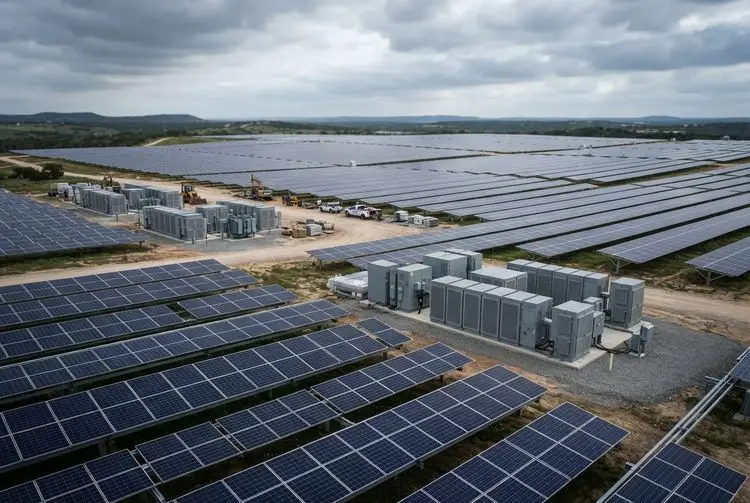
Solar and energy storage markets are pushing ahead across multiple continents this week, with auction results, corporate earnings and policy developments revealing both momentum and persistent challenges. From Turkey's competitive solar tender to Nova Scotia's technology-neutral capacity call and Eos Energy's continued revenue growth despite below-cost sales, the global industry is navigating a complex phase of expansion.
Eos Energy Revenue Surges, but Profitability Remains Elusive
US battery manufacturer Eos Energy Enterprises reported third-quarter revenue of US$82.7 million, a 171 percent increase year-over-year and 20 percent higher than the second quarter. The company, which produces zinc-based long-duration batteries, attributed the growth to deliveries across ten projects. Gross margin improved significantly to minus 53 percent, up from minus 111 percent a year earlier, meaning the company still sells its batteries below manufacturing cost.
Adjusted EBITDA showed a loss of US$63.8 million, while net income attributable to shareholders reached US$125.0 million, driven primarily by non-cash mark-to-market gains. Cube shipments rose 216 percent year-on-year and 23 percent from the prior quarter. Backlog stood at US$765 million, representing 3.2 GWh, down 5 percent from the second quarter.
The company maintained its 2026 revenue outlook at the lower half of the US$300-350 million range as it relocates Line 1 to Thorn Hill. Production at Thorn Hill is expected to resume near the end of the first quarter of 2027, with the facility then holding approximately 4 GWh of annual nameplate capacity across two production lines.
In September, Eos agreed with MN8 Energy and Google to supply a 10-hour, 10-MW/100-MWh Z3 battery system for MN8's Mammoth Solar project in West Virginia. That project also includes 86 MW of solar and 70 MW/280 MWh of lithium-ion storage, with the Eos unit scheduled to come online in 2030. Eos also received an US$87 million first advance under the second tranche of its Department of Energy loan, bringing total draws to roughly US$178 million. Cash, including restricted cash, stood at US$344.1 million as of September 30.
Turkey Awards 785 MW of Solar at Floor Price
Turkey's Ministry of Energy and Natural Resources allocated 785 MW of utility-scale solar grid-connection capacity across 11 sites in nine provinces under the YEKA GES-2026 auction programme. Nineteen companies submitted 44 bids. All sites cleared at the 3.25 euro cent floor price, so bidders competed on contribution fees pledged per megawatt. The total pledges amount to €31.585 million before 20 percent VAT, or €37.9 million including VAT.
Winners can sell electricity on the open market for 60 months from contract signing. Thereafter, plants must deliver power to the transmission system for 20 years at 3.25 euro cents per kWh. Egesa Enerji secured the largest allocation: 200 MW in Diyarbakir, 120 MW in Mardin and 25 MW in Batman. Temmuz Günes Enerji won 30 MW in Denizli and two sites in Kahramanmaras totalling 135 MW. Is Enerji Yatirimlari took 110 MW in Konya, while Ezel Mensucat Sanayi won 55 MW in Malatya with the highest per-MW pledge.
The average contribution pledge reached €40,236 per MW before VAT, with pledges ranging from €12,000 to €91,000 per MW. Combined wind and solar rounds allocated 2,285 MW at 18 sites, expected to attract US$1.9 billion in new investment and generate 6.1 billion kWh annually. Solar accounted for 22.2 percent of Turkey's 127,355 MW of installed generating capacity at the end of September, second only to hydropower.
UK Energy Bill Mandates Community Benefits for Solar
The UK government introduced the Energy Independence Bill to Parliament on November 4, containing several community energy commitments. The bill proposes a mandate requiring developers of onshore wind and solar projects larger than 5 MW to provide community benefit funds or benefits in kind through contractual agreements. The mandate will not extend to other technologies.
Grace Millman, just transition and communities lead at Regen, noted that while many developers already provide community benefits voluntarily, the practice has not been consistent across the sector. Mandating it should channel more money into communities. However, she said there is limited information on what the per-MW commitment would need to be, making it difficult to quantify the additional benefit. She expressed hope that the mandate would later extend to other technologies.
The bill also initiates the legislative process for a Local Power Plan requiring renewable generation capacity of 1 MW or more to offer up to 20 percent ownership to local individuals and communities, up from the current 5 percent. Additionally, suppliers would be obliged to engage with and provide bespoke services to community energy organisations, including purchasing energy from or providing a route to market for community projects. Millman highlighted that route to market and the ability to sell power locally are among the biggest challenges for community energy, making supplier obligations potentially valuable.
Hybrid Wind-Solar-Battery Plants Could Cover 70-90% of Kazakh Demand
A report by Ember and Converge-Hybrid found that hybrid plants pairing wind and solar with a four-hour battery could supply 70 to 90 percent of a typical Kazakh demand profile at a delivered cost below US$60 per MWh. The study conducted 1,875 hourly simulations testing 125 mixes at each of 15 sites near cities and power lines. The weakest site, near Kordai in the south, reached 70 percent, while Zhanaozen in the west achieved 90 percent.
The modelled solar plant uses 720-W bifacial modules on single-axis trackers at US$553 per kWac installed. Hybrids meet 78 to 95 percent of summer demand and 61 to 87 percent in winter. Plants are oversized by design, with 23 percent of output curtailed on average, mostly in spring and summer. That raises the average cost from US$45 per MWh generated to US$56 per MWh delivered. By comparison, new coal costs US$70 to 170 per MWh, Ember said.
The largest modelled configuration featured 180 MW of wind, 250 MW of solar and 480 MWh of batteries, meeting 91 to 97 percent of demand at US$87 to 91 per MWh. Optimal battery size was 12 to 25 percent of combined wind and solar capacity at 14 of the 15 sites. Since 2025, Kazakh auction winners must add storage equal to 30 percent of capacity with two hours of duration, but Ember's optimal batteries were smaller yet longer at four hours. Approximately 2.4 GWh of batteries are due at four wind-plus-battery projects, and the country's first battery system is expected by 2029. Ember urged a post-2030 wind and solar target and storage rules allowing batteries to earn revenue from grid services.
Nova Scotia Launches Technology-Neutral Capacity Call
Nova Scotia's independent grid operator, IESO Nova Scotia, launched a technology-neutral request for qualifications on October 30, inviting bids for on-demand capacity as the province prepares to phase out coal by 2030. Eligible technologies include battery storage, pumped hydro, long-duration storage, geothermal, biomass, thermal generation, hydrogen combustion and fuel cells, small modular reactors and hybrid facilities. Projects must be at least 10 MW, with submissions due by January 30, 2027.
Chris Milligan, vice president of planning and procurement at IESO Nova Scotia, said: "There is no single technology that can meet all of Nova Scotia's future electricity needs. Different resources contribute in different ways to the grid's reliability, and they come at different costs." The operator received feedback from more than 20 organisations. The final call clarifies that hybrid projects can participate, adjusts scoring to recognise a range of storage durations, and broadens the development experience that counts toward qualification. IESO Nova Scotia has not disclosed the capacity it intends to procure.
Bids will be assessed alongside a separate gas procurement through energy system modelling to determine the most cost-effective mix. That gas tender, launched in July, seeks up to 600 MW from one or two 300 MW gas-fired plants in Pictou County designed to switch to non-fossil fuels. Its deadline was extended to January 21, 2027, targeting commercial operation by July 2030 but considering dates up to July 2032.
Nova Scotia needs new on-demand capacity to avoid rotating outages during low-wind periods, which can last for days. Coal supplies about 40 percent of the province's electricity. Provincial law requires coal to be phased out and 80 percent of generation to come from renewables by 2030. The province's Clean Power Plan calls for roughly 1,000 MW of new onshore wind, at least 300 MW of larger-scale solar and 300 to 400 MW of battery storage by 2030. Nova Scotia Power inaugurated three 50 MW/200 MWh batteries in September, and IESO Nova Scotia's resource plan includes 250 MW of further battery procurement.
TNB Renewables Takes Majority Stake in 500 MW Malaysian Solar Project
TNB Renewables signed a joint venture agreement on November 3 with IOI's Luminous Aspect and SME consortium CSP 500MW, taking a 70 percent stake. Project company Bahau Energy Ventures will develop 500 MWac of solar and a 250-MW/1,000-MWh battery under Malaysia's Corporate Renewable Energy Supply Scheme (CRESS). The battery matches the CRESS storage option of 50 percent of plant capacity for four hours. TNB gave no cost estimate or start date.
The CRESS scheme allows large power users in Peninsular Malaysia to purchase renewable electricity directly from a developer over the grid. TNB Renewables holds 70 percent, IOI's Luminous Aspect holds 25 percent and CSP 500MW holds 5 percent. The project represents roughly 25 percent of the 1,975 MWac approved in the LSS PETRA 5+ tender, Malaysia's largest Large Scale Solar round to date. Malaysia aims for 70 percent renewables in its capacity mix by 2050, with an interim target of 40 percent by 2035.
US Election Results Bolster Renewable Energy Markets
The outcome of the US midterm elections, in which Democrats secured control of both the Senate and the House of Representatives, sent renewable energy company valuations higher. European developers with US exposure saw notable gains. Orsted, the world's largest offshore wind developer, saw its market value jump almost 10 percent within hours before closing nearly 5 percent higher. Portugal's EDP Renewables and France's Engie rose more than 3 percent, while Germany's RWE added about 1 percent.
Orsted had lost more than 70 percent of its market value since President Trump returned to the White House in 2025 and resumed attacks on the industry amid rising interest rates and supply chain pressures. The White House has issued multiple stop-orders against Orsted's Revolution Wind project since Trump's re-election.
The US hosts renewable energy projects with a combined capacity of 388 GW, enough to power more than 83 million American homes. The sector directly employs more than 400,000 people. Wind, solar, hydro and geothermal projects supplied about 30 percent of US electricity generation this year, compared to the EU's 50 percent and China's 40 percent. There is no binding US-wide clean energy target, but 24 states plus the District of Columbia have plans to achieve 100 percent clean electricity or net zero carbon emissions between 2035 and 2050.
Analysts suggested the election outcome may reduce the risk of further regulatory disruption and provide a more stable backdrop for projects under development. A Democratic House would be able to block further repeals of solar and wind tax credits, and battery storage credits would have a stronger defender in budget negotiations. Several Republican states turned Democratic in the election, including Texas, Maine, Kansas, Ohio, Iowa and North and South Carolina, potentially ushering in greater support for clean energy investments.