
Global Solar Funding Jumps 45% to $25.1 Billion in 2026
Debt financing drives $25.1 billion across 170 deals in three quarters as Waaree starts two 800 MW lines in Texas.
Global corporate funding in the solar sector climbed 45% year over year to $25.1 billion across 170 deals in the first three quarters of 2026, up from $17.3 billion across 127 deals in the same period of 2025, according to Mercom Capital Group. PV Magazine USA reported the figures, which describe a market where capital is abundant but increasingly concentrated in debt and public markets rather than early-stage risk.
Debt financing accounted for the bulk of the total: $20.4 billion across 80 deals, a 61% increase on the $12.7 billion raised over 60 deals in the first nine months of 2025. Public market financing also strengthened, reaching $2.7 billion across 32 deals compared with $1.7 billion across 12 deals a year earlier.
Mercom chief executive Raj Prabhu credited debt financing for most of the jump. He said public-market fundraising improved as companies expanded their portfolios, recycled capital and consolidated operations.
Venture capital moves the other way
Venture capital (VC) funding ran counter to the trend, falling 31% to $2.0 billion across 60 deals from $2.9 billion over 55 deals in the year-ago period. Solar downstream companies accounted for $1.3 billion of that total across 39 deals.
The largest VC transactions through three quarters of 2026 were:
- Inox Clean Energy: $343 million - Nexamp: $180 million - Clean Max Enviro Energy Solutions: $165 million - Amarenco: $150 million - Erco: $129 million
Consolidation drives deal activity
Corporate mergers and acquisitions (M&A) in the solar sector reached 88 transactions in the first nine months of 2026, against 76 in the same window of 2025. Large-scale project acquisitions rose to 205 transactions from 166, with 34.4 GW of projects changing hands, up from 29 GW in 9M 2025.
In the third quarter of 2026, project developers and independent power producers (IPPs) were the most active buyers, picking up 6.7 GW. Investment firms acquired 1.2 GW, other buyers including distributors and engineering and construction companies took 852 MW, and utilities bought 362 MW.
Notable corporate deals over the period included Inox Solar Americas' $750 million purchase of Boviet Solar, Drax's $737 million acquisition of Bluefield Solar Income Fund, NextPower's $378 million deal for Zimmermann PV-Steel Group, and Greenbacker's $375 million purchase of a 59.14% stake in Dasolar. TCL Solar also made strategic acquisitions.
Policy and trade pressures temper the picture
Prabhu pointed to changes in U.S. tax policies, trade restrictions, rising equipment costs and uncertainty over project economics as factors complicating investment decisions. "Capital remained available," he said, but access to financing and investor appetite remained uneven across the industry.
Waaree starts two 800 MW lines in Texas
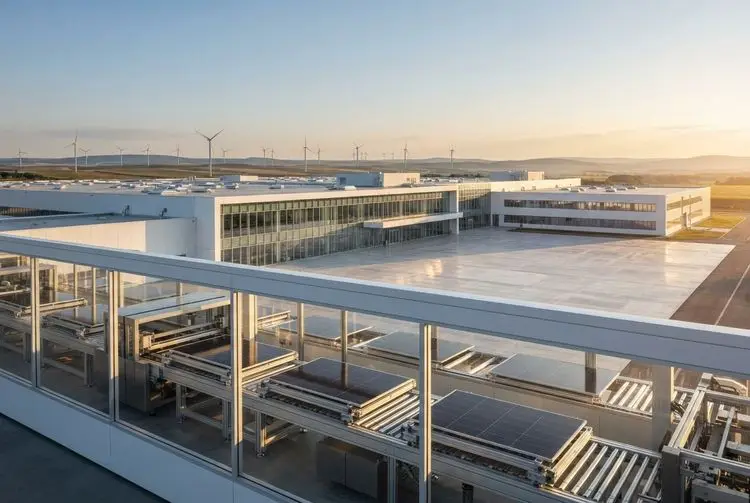
Separately, India's Waaree Energies reported two parallel developments. Waaree Solar Americas Inc. (WSA), a wholly owned subsidiary, began commercial production on two new solar module manufacturing lines of 800 MW each at its Brookshire, Texas, facility, according to Saur Energy. The additions lift the Brookshire plant's aggregate annual installed manufacturing capacity to 3.2 GW.
Waaree's board, meeting on October 31, 2026, also approved the purchase of a 33.34% stake in Wictor Sealz Private Limited from Vimac Impex Private Limited through a Share Purchase-cum-Shareholders' Agreement. The deal covers 3,334 equity shares for a cash consideration of ₹33,340, and Waaree will invest a further ₹5 crore in the company, with a long-stop date of March 31, 2027.
Wictor Sealz operates in the solar module sealants and specialty chemicals manufacturing segment. It was incorporated in India on January 5, 2026, and has not yet commenced business operations. Waaree expects to complete the acquisition during the 2026-27 financial year and said the transaction is not a related-party deal, with Wictor Sealz unrelated to its promoter group or group companies.
The company said the investment is intended to strengthen supply chain integration, reduce dependence on imported solar module sealants and enhance supply security, with an expectation of long-term strategic value for stakeholders.
Taken together, the two reports describe a sector in which scale and bankability are winning out. Funding is robust but skewed toward debt and public markets, M&A and project acquisitions are accelerating, venture capital is tightening, and manufacturers are responding with regional capacity and vertical integration.