
India targets 900 GW clean energy by 2035 in major policy shift
New Delhi nearly doubles its previous goal as grid bottlenecks and storage needs emerge as key hurdles.
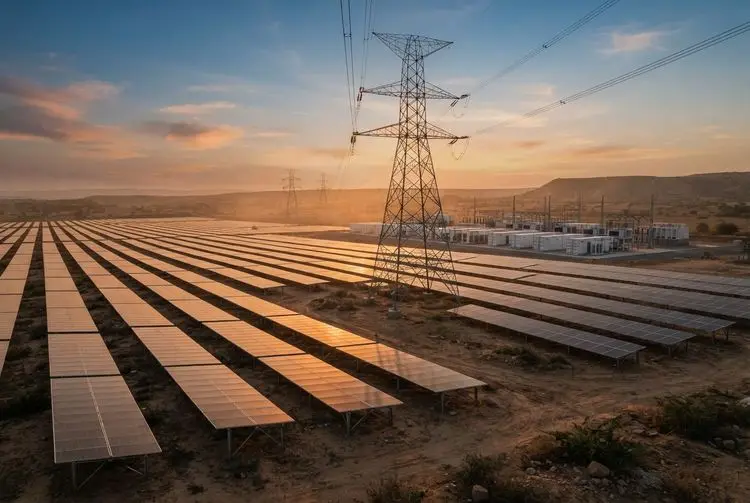
India has set a new target of 900 GW of clean power capacity by 2035, a goal announced in late September at COP31 in Turkey that nearly doubles the existing 500 GW target for 2030. The world's most populous country and one of its biggest carbon polluters currently operates over 300 GW of clean capacity, ranking third globally behind China and the United States.
Clean power already accounts for 55 percent of India's installed capacity as of September. Yet that capacity has generated only about one-third of the country's electricity over the past three months. Coal still supplied 71 percent of India's electricity in 2025, highlighting the gap between installed clean capacity and actual generation.
Grid infrastructure emerges as critical bottleneck
Inadequate transmission infrastructure prevents India from using all the renewable electricity it can produce. Over a 16-month period, solar power was curtailed enough to power approximately 10 million homes. The government has approved nearly $20 billion for transmission and battery storage upgrades, but analysts say much more is needed.
"If the grid doesn't catch up, then there is no way India can meet this target," said Nikit Abhyankar of the University of California, Berkeley's India Energy and Climate Centre. "A robust and innovative transmission grid is an absolute must."
The Green Energy Corridor plan aims to accommodate 135 GW of renewable capacity by 2033. But the 900 GW target will require a far more ambitious buildout of high-voltage lines, substations and grid management systems.
Storage requirements and coal's uncertain future
India will need up to 250 GW of energy storage over the next decade to balance variable solar and wind generation. Solar and wind paired with storage are increasingly cost-competitive with fossil fuels, yet the country remains dependent on imported battery cells, mainly from China.
Coal plants already struggle to reduce output when renewable electricity is available, a problem that will intensify as more solar and wind capacity comes online. Beyond the approximately 35 GW of coal currently under construction, new coal plants could become uneconomic and risk becoming stranded assets if India meets its clean energy targets. The country could still need up to 150 GW of additional coal capacity by 2035, though analysts note that new coal plants are increasingly uneconomic.
Cheap energy as a new economic asset
The emergence of what analysts call an Indian "electrostate" — electricity replacing fossil fuels across the economy — could reshape the country's competitive position. Cheaper clean electricity could reduce reliance on coal and petroleum imports.
"So now in India you have two assets — not only do you have cheap labour, you also have cheap energy," said Ajay Shah of the XKDR Forum in Mumbai.
India has already overtaken the United States in annual renewable energy growth. For comparison, the US expects electricity demand to grow 40 percent, with natural gas remaining a major source. Brazil projects renewables will reach 90 percent of its electricity mix within the next decade.
What the target means for solar professionals
For solar industry professionals, the 900 GW target signals a massive pipeline opportunity but also highlights structural risks. The grid cannot handle rapid clean energy expansion at current transmission levels, and government policies may at times discourage renewable investment if they prioritise coal plant utilisation or impose tariffs on imported components.
Installers and developers should watch for progress on the $20 billion transmission and storage programme, as well as any domestic battery manufacturing incentives that could reduce reliance on Chinese imports. The gap between installed capacity share (55 percent) and generation share (~33 percent) underscores the value of hybrid projects that pair solar with storage and of corporate PPAs that can secure grid access.
Engaged homeowners and commercial rooftop investors should note that grid constraints can affect feed-in tariffs and curtailment risk. Markets with strong distribution-level infrastructure and state-level renewable policies are likely to offer more stable returns than regions where transmission bottlenecks are severe.
The 900 GW target is among the most ambitious clean energy goals globally. Whether India can build the grid and storage infrastructure to match its generation ambitions will determine if the target becomes reality or remains an aspiration.