
SPONSORED

Masdar and Scatec Advance Major Solar Projects in Malaysia and Egypt

Two large-scale solar-plus-storage projects reach key milestones in emerging markets.
•• 4 Min
Masdar and Scatec Advance Major Solar Projects in Malaysia and Egypt

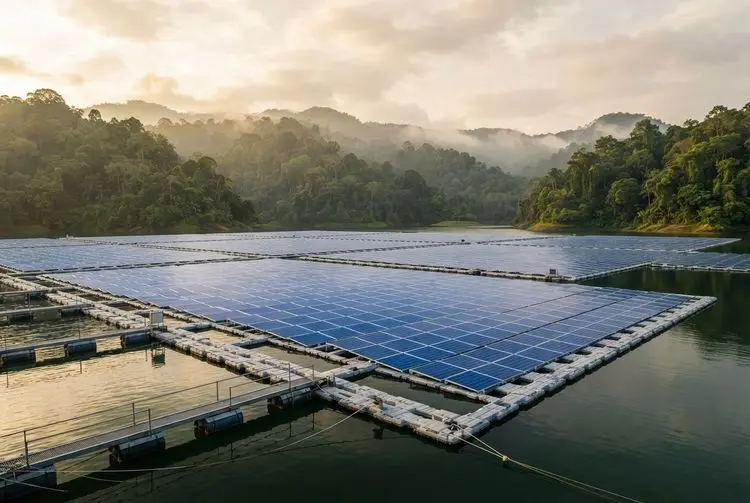
Two major solar projects in emerging markets reached critical milestones this week, as Masdar broke ground on a 200-MWac floating photovoltaic plant in Malaysia and Scatec secured financing for the first phase of a 569-MW solar-plus-storage facility in Egypt. Both projects are backed by long-term power purchase agreements and target commercial operation in 2028.

Masdar, together with Citaglobal and TIZA Global, has started construction on the Chereh Dam floating solar plant in Pahang, Malaysia. The project has a capacity of 200 MWac, equivalent to more than 300 MWp, and will span approximately 950 acres. Financing of about MYR 580 million ($143 million) from three international lenders closed on October 27, Masdar announced on October 29. The debt was provided in Malaysian ringgit, though the lenders were not named in the statement.

The project company, Chereh Solar Sdn Bhd, will sell the electricity output to national utility Tenaga Nasional Berhad (TNB) under a 21-year power purchase agreement signed in December 2025. The consortium secured the site through Malaysia's Large Scale Solar (LSS) Cycle 5+ tender, achieving the lowest tariff in the floating solar category. That tender round approved 13 projects totaling 1,975 MWac, including a separate 500-MWac quota for floating solar installations, according to the energy transition ministry PETRA.

The Chereh project represents 40 percent of the 500-MWac floating quota and roughly 10 percent of all capacity approved in the LSS PETRA 5+ round. It is expected to supply electricity equivalent to the consumption of 100,000 homes and create 1,500 jobs during development and construction, Masdar said.

Masdar's First Malaysian Project

Chereh is Masdar's first project in Malaysia and the first under a 10-GW renewable energy roadmap that the Abu Dhabi-based company agreed with the Malaysian Investment Development Authority in 2023. Masdar previously built the 145-MWac (192-MWp) Cirata floating plant in West Java, Indonesia, which opened in November 2023. The company and PLN Nusantara Power have agreed on plans to add up to 500 MW more at Cirata, and Masdar is also studying a floating installation at the Murum reservoir in Sarawak.

"With long-term electricity sales contracted to TNB, the priority now is to deliver the project and bring it into operation," said Mohamad Norza Zakaria, executive chairman and president of Citaglobal and TIZA Global.

The partners have signed a site agreement with Pahang Water & Energy Resources. Masdar expects operations to begin in 2028, and Citaglobal's filing with Bursa Malaysia puts the targeted commercial operation date under the PPA at March 2028.

The project company is held 49 percent by Masdar, 30 percent by Citaglobal Renewable Energy and 21 percent by TIZA Global, according to a Citaglobal filing.

Scatec Closes Financing for Dandara Phase One in Egypt

In Egypt, Scatec has signed $217 million in loans for the first phase of its Dandara solar and battery project and is starting construction, the company said on October 28. This phase combines a 569-MW solar plant with a 100-MWh battery energy storage system. Egypt Aluminium will purchase the output under a 25-year power purchase agreement backed by a sovereign guarantee. Scatec expects the facility to generate approximately 1.4 TWh per year.

The non-recourse debt comes from the European Bank for Reconstruction and Development (EBRD), the African Development Bank and the European Investment Bank. The EBRD, which describes the plant as 500 MW, said on October 29 that its contribution is $63 million. In April, the bank had disclosed a loan of up to $80 million for the project.

The first phase represents an estimated capex of $271 million, of which $217 million, or about 80 percent, is non-recourse debt. National Bank of Egypt will take a 20 percent stake. About 60 percent of the project sits in an Egypt platform that Scatec and the EBRD agreed on October 22, split 60/40 between them. Scatec plans to add equity partners and use equity bridge loans, deferring its own cash until construction ends. The company is also serving as the EPC contractor and O&M provider.

The Dandara project is part of a larger framework. A March 2025 PPA covers a total of 1.1 GW of solar and 200 MWh of storage. The first phase accounts for 569 MW of solar and 100 MWh of storage. Scatec currently holds 56 percent of Dandara, with 36 percent through its EBRD platform and 20 percent directly.

Egypt Aluminium is the country's largest industrial power user and exports about 60 percent of its metal to Europe, Scatec said in 2025. The EBRD also arranged $265 million in October for the 1.2-GW Nefer Minya solar plant.

"Egypt is one of our most important markets, and Dandara reinforces our position as a long-term contributor to the country's energy transition," Scatec CEO Terje Pilskog said.

Commercial operation of the first phase is targeted for the first half of 2028. Scatec expects to begin construction on the second phase in the first half of 2027.

The Dandara first phase represents roughly 18 percent of Egypt's total 3,247 MW of installed solar PV capacity at the end of 2025, based on IRENA data.

MasdarScatecFloating SolarMalaysia SolarEgypt SolarSolar-Plus-StorageChereh DamDandara

Most Popular News

  1. Statera Energy reaches financial close on 290MW BESS in East Devon
  2. Ireland RESS 6 awards 1.3GW solar PV in record auction round
  3. Indian banks ease rooftop solar loan norms under PM Surya Ghar scheme
  4. Brazil battery auction faces dispute over R$94 billion cost allocation
  5. GoodWe sees storage surge as Brazil moves to Fixed-Time Tariff

Disclaimer


Important notice regarding existing conflicts of interest:

We expressly point out that conflicts of interest exist in connection with this publication:

1. Stock Market Media Ltd. and persons closely associated with it hold shares in the companies recommended here and intend to sell them within the scope of, and at any time during, this recommendation. This constitutes a clear and specific conflict of interest.

2. The publisher of this publication and the responsible editors receive financial remuneration for its preparation. This, too, constitutes a clear and specific conflict of interest.

3. Please also note the further statements on existing conflicts of interest in the disclaimer below, inter alia under no. 2.

Important information and mandatory disclosures pursuant to the German Securities Trading Act (Wertpapierhandelsgesetz, WpHG) and pursuant to the German Financial Investment Ordinance (Finanzanlageverordnung, FinAnV).

Stock Market Media Ltd. has notified the German Federal Financial Supervisory Authority (Bundesanstalt für Finanzdienstleistungsaufsicht, “BaFin”), pursuant to the WpHG, of its activity as a producer of investment strategy recommendations within the meaning of Article 3(1) point 34 of Regulation (EU) No 596/2014 or of investment recommendations within the meaning of Article 3(1) point 35 of Regulation (EU) No 596/2014 (formerly “financial analyses”). The obligations of Stock Market Media Ltd. are governed primarily by §§ 85, 86 WpHG, Regulation (EU) No 596/2014 and Delegated Regulation (EU) 2016/958.

Information on the producer(s) of this publication:
Mr Roberto Gonçalves de Albuquerque, as analyst and editor-in-chief, is responsible for the preparation of the texts and contents of this publication. The publisher is Stock Market Media Ltd., 405 Kings Road, Flat 600, London; SW10 0BB, United Kingdom, represented by its Director Roberto Gonçalves de Albuquerque.

Important notes on the preparation of this publication:
This publication contains both facts and factual information on the companies discussed and purely subjective value judgements, interpretations, estimates, projections, forecasts and price targets. We endeavour to distinguish these from one another as transparently as possible in order to avoid misleading statements. Research, preparation and wording are carried out using common digital and AI-supported tools; the review of the content and the editorial responsibility lie with us. The essential bases and standards of our value judgements and valuations of the shares discussed are based on the following approach:

Assessment and valuation of companies according to conventional valuation methods (fundamental valuation approach)

  • Assessment of the potential of the company's future development (growth approach) and projection onto the corresponding valuation potential (price potential analysis) as well as a possible valuation of the company's shares on the basis of potential profit expectations (P/E ratio projection)
  • Assessment of the best-case scenario expected by us in the event of the company's absolute success (blue-sky potential approach)
  • Effect on the share price of the increased awareness of the recommended share expected by us, resulting from a strong rise in demand on the market (particularly decisive in the case of illiquid shares or shares recommended newly or for the first time) on account of the publications (mostly buy recommendations) published by us or by third parties (multiplier / momentum effect, hype), and thereby a disproportionately rising return/share price with a correspondingly rising risk
  • Technical analysis of the share price in accordance with common methods of analysis, mostly for the prediction of price signals (buy or sell signal, breakout of the share, determination of price targets, support or resistance areas, expected minimum movements or minimum counter-movements, prediction of signal points (if-then), etc.), for the most part building on the expected mass psychology (technical approach).

Conventional valuation approaches often cannot be meaningfully applied to young companies or companies that do not yet generate revenue. In valuing such companies we therefore tend to rely on the potential analysis calculated by us and on the assessment of the demand for such shares on the capital market. Ultimately, the market decides on the share price of a company. If extensive recommendations of a share give rise to excessive demand for it, it is possible that the share price will rise at an above-average rate on high trading volume. Although this leads to extreme opportunities for profit, it correspondingly increases the risk of a bubble forming, with a corresponding fall in price. The increased volatility of the share in such situations gives rise to above-average opportunities for profit and loss, both in both trading directions and in the case of recurring counter-movements. Such market developments are also an important part of our trading recommendations and valuation approaches.

This publication deals exclusively with securities of above-average volatility with high potential for profit and also for loss.

Note on sources of information:
The reliability of sources of information is examined by us in detail before they are used and is subjectively assessed by us according to their credibility and significance. In doing so, we decide by our own standards which sources we consider relevant, too conservative or too optimistic. Ultimately, we determine our recommendations on the basis of our personal assessments. In obtaining information we draw on numerous publicly accessible sources such as press releases, ad hoc announcements, company announcements, company presentations, publications and articles on the company discussed, common financial media in Germany and abroad as well as company or sector analyses by third parties.

Our publications use exclusively publicly available information and sources as well as information disseminated by the company itself.

Note on existing conflicts of interest:
We hereby point out that shareholders, editors, employees and persons or companies involved in the preparation of this publication, as well as principals (third parties) commissioning the publication of Stock Market Media Ltd., hold, directly or indirectly, at the time of this publication, interests in securities which are discussed in the respective publication, and are therefore interested in an increase in price and/or turnover, i.e. also in increased trading liquidity, since it is intended to sell these securities in direct connection with this publication and to participate in rising prices and turnover. An increase in the price of the shares of the companies presented may lead to an increase in the assets of these persons. In any case, the share price of the company may be significantly influenced by the discussion of the company. In particular, the share price of the companies discussed is also materially influenced by securities transactions. This applies in particular where the companies concerned are ones whose shares do not have a broad market capitalisation and for which only a narrow market exists. Here, even small order volumes can have considerable effects on prices. However, they are also interested in the price of the company discussed falling if they wish to acquire its shares more cheaply. By law, this gives rise to a conflict of interest, to which we hereby expressly draw attention.

Stock Market Media Ltd. and its employees are furthermore remunerated for the preparation, electronic distribution and publication of this publication as well as for other services. By law, this gives rise to a conflict of interest, to which we hereby expressly draw attention.

This remuneration may be paid by the company about which Stock Market Media Ltd. publishes information, by third parties affiliated with these companies or by other third parties pursuing an interest with regard to the companies discussed in connection with this publication. By law, this gives rise to a conflict of interest, to which we hereby expressly draw attention. This arises, first of all, from the fact that Stock Market Media Ltd. could make its statements in the interest of its principal. Stock Market Media Ltd. and/or companies affiliated with it have entered into an agreement, for a fee, with the company in question or with its shareholders for the preparation of the editorial coverage. By law, this gives rise to a conflict of interest, to which we hereby expressly draw attention.

Note on the handling of internal organisational duties:
Owing to the small size of the publisher's business, internal control of the compliance processes of the employees and other parties contributing to this publication is limited.

Competent supervisory authority:
Stock Market Media Ltd. has notified BaFin of its activity pursuant to § 86 WpHG.