
Over 2.4M Brazilian households risk losing electricity bill discount
Deadline looms for low-income families to renew Social Electricity Tariff registration by December 31st.
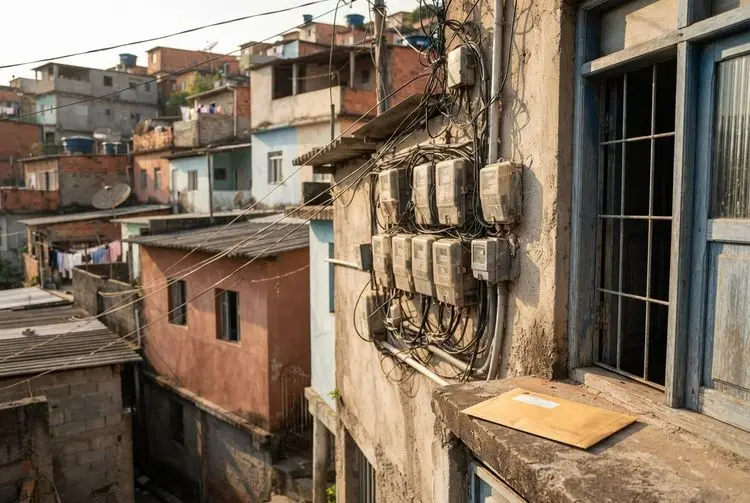
More than 2.4 million low-income households in Brazil must update their registration by December 31st or lose access to the Social Electricity Tariff, a program that grants discounts of up to 100 percent on electricity bills.
The Social Electricity Tariff currently benefits 16 million households across the country. Eligible families receive a total exemption for consumption of up to 80 kWh per month. The program is funded by the Energy Development Account (CDE), a charge paid by all other electricity consumers. Distributors grant the discount and receive exact reimbursement from the fund.
The Brazilian Association of Electricity Distributors (Abradee) and the National Electric Energy Agency (Aneel) set the program rules. Eligibility is tied to registration in CadÚnico, the federal government's Unified Registry for Social Programs, with a household income of up to half the minimum wage (R$ 1,621.00) per person.
Why families are at risk
The benefit is lost when there is an inconsistency between the CadÚnico registration and the electricity account holder. The account holder must be a family member listed in CadÚnico, and the residence municipality must match the registration data. To fix the issue, families can change the account holder with their electricity distributor or update their information at a CRAS (Social Assistance Reference Center).
Under Law 14.203/2021, the benefit is granted automatically to eligible families. The program also covers families with a disabled person who uses electric life-support equipment and has a household income of up to three minimum wages, as well as individuals aged 65 and older and disabled persons receiving the Continuous Cash Benefit (BPC).
Breakdown by distributor
The Equatorial Group faces the largest number of beneficiaries at risk, with approximately 1 million customers needing to update their registration out of a total of 4 million subsidy customers. The breakdown by state includes Pará (286,000 families), Maranhão (279,300), Goiás (188,100), Alagoas (167,000), Piauí (117,000), Amapá (33,900), and Rio Grande do Sul (23,800).
Neoenergia has nearly 533,000 customers who have not updated their registration. The highest numbers are in Bahia (304,900), Pernambuco (165,600), Rio Grande do Norte (31,600), the Federal District (16,500), and the combined São Paulo/Mato Grosso do Sul region (14,200).
Enel has over 502,000 families with pending regularization. The affected areas include São Paulo (over 180,600), Rio de Janeiro (over 175,000), and Ceará (over 147,000). Enel has set up a WhatsApp contact for inquiries: (21) 99601-9608.
Energisa reports that 393,000 customers — 17 percent of its eligible base — have registration issues, with Paraíba accounting for 172,000 of those.
3.2 million eligible families not yet registered
Beyond the 2.4 million families who must update their existing registration, an additional 3.2 million households are eligible for the Social Electricity Tariff but have not registered at all.
Equatorial estimates that 2.2 million households in its service area are eligible but not in CadÚnico. The state-level breakdown includes Pará (707,000), Maranhão (489,000), Goiás (317,000), Piauí (221,000), Alagoas (221,000), Rio Grande do Sul (151,000), and Amapá (81,000).
Energisa estimates that approximately 1 million eligible customers in its territory are not yet receiving the benefit. Of those, 891,000 consume 80 kWh per month or less, meaning they would qualify for a full exemption.
For solar industry professionals, the scale of the Social Tariff program matters because the CDE charge that funds it is embedded in the electricity bills of all other consumers, including commercial and industrial solar customers. Any expansion or contraction of the beneficiary base directly affects the cross-subsidy burden on the broader electricity market. Distributors also play a key operational role in verifying eligibility and applying the discount, making the registration deadline a significant logistical event for the sector.