
Plug-in VPPs, Stem's Software Sale, and Solar Recycling 2.0
Renter VPPs, a storage software fire sale, recycling advances, and October irradiance extremes shape the week.
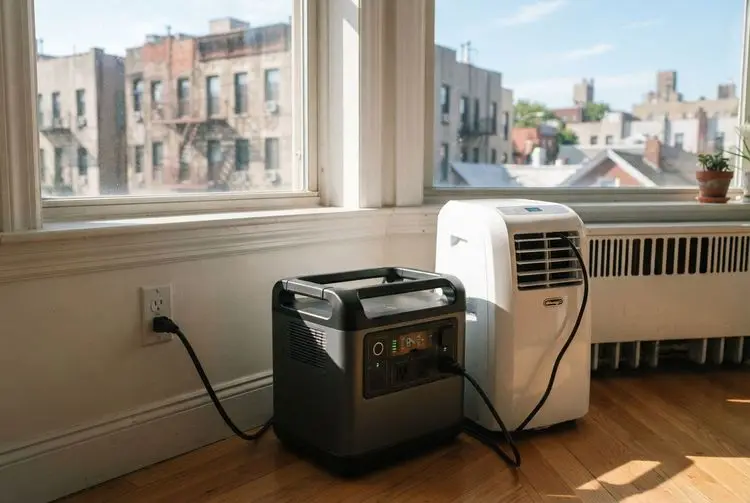
This week's North American solar and storage news spans a first-of-its-kind plug-in virtual power plant for renters, the sale of Stem's core battery optimization IP amid financial distress, the maturation of solar recycling technology, and sharply divergent October irradiance across the continent.
Jackery and Every Electric launch plug-in VPP for New York renters
Portable power station manufacturer Jackery and consumer energy aggregator Every Electric have partnered to roll out what they call North America's first plug-in battery virtual power plant (VPP) aimed at renters and apartment residents. The setup uses standard wall outlets rather than hardwired residential systems that require electricians.
The program has operated across Consolidated Edison's New York City service territory since September. Roughly 2,000 portable power stations, mostly Jackery Explorer 2000 v2 units, are currently distributed across more than 1,000 households, providing 4 MWh of flexible storage capacity. According to the companies, nearly 50 MWh of energy has cycled through the units to date.
Onboarding requires residents to register online, link their utility account, and plug a window or portable air conditioner into the drop-shipped battery's passthrough outlet. Once connected to Wi-Fi via Jackery's app, Every Electric's cloud software automates charging during off-peak hours and discharges the battery to run the air conditioner during peak grid demand, while keeping backup capacity available for outages. The setup requires no electrician labor, municipal permits, or other agreements.
Every Electric offers several options. In the first, the household pays nothing upfront for hardware, setup, or a monthly fee, and a refundable security deposit is $30. Every Electric retains ownership of the battery, collects demand-response revenue through Con Edison's Smart Usage program, and pays residents $100 to $150 per year per air conditioner. A second ownership tier lets households buy a unit outright for $650, discounted from a $999 list price, raising annual payouts to up to $250 per air conditioner while cross-subsidizing a free unit for a neighbor. A third option accepts a bring-your-own battery, and Every Electric operates with other brands including EcoFlow and Bluetti.
Total seasonal payouts across participating New York homes are approaching $200,000. Every Electric reports a waitlist of more than 15,000 air conditioners looking to join the network. "Traditional solar and storage require a roof, a garage or a permanent professional installation, which leaves renters and multifamily residents out," said Andrew Wang, co-founder and CEO of Every Electric. "With Every Electric, adding grid services capabilities lets any household with a wall outlet earn on their bills while supporting the broader electrical infrastructure." Both companies are demonstrating the platform at RE+ 2026 in Las Vegas from November 17 to 19.
Stem sells Athena software to Voltus for $10 million
Stem has sold the intellectual property behind its Athena distributed battery optimization software to VPP operator Voltus for $10 million in cash. The transaction was announced alongside Stem's third-quarter financial results. The dispatch and tariff-optimization software, reportedly deployed across more than 800 battery sites across North America, is now owned by San Francisco-based Voltus. Stem retains the right to license Athena to its existing managed-services customers, while Voltus assumes ongoing platform development and commercialization.
The sale effectively offloads the core software asset that underpinned Stem's $1.35 billion special purpose acquisition company (SPAC) listing in 2021. Debt has reached $533.7 million, and Stem's latest Q3 2026 earnings report trimmed full-year revenue guidance from $140M–$190M to $132M–$142M. In its third-quarter Form 10-Q filing with the SEC, Stem flagged substantial doubt regarding its ability to continue as a going concern. CEO Arun Narayanan confirmed Stem is halting new managed-services contracts and exiting battery hardware resale entirely, as the company refocuses on PowerTrack, a solar monitoring and power plant controls suite acquired via a $695 million purchase of AlsoEnergy in 2022.
"This transaction monetizes technology that sits outside of our core PowerTrack platform, strengthens our balance sheet, and supports continued investment in PowerTrack," Narayanan said in a statement. On the latest earnings call, Stem noted that exiting managed services does not mean a complete withdrawal from energy storage, pointing to PowerTrack Energy Management System (EMS) for site-level charge and discharge control.
For Voltus, the acquisition follows its June purchase of battery project development software firm Brightfield AI. The deal consolidates project evaluation, site-level dispatch, and wholesale market participation under a single software stack as the firm targets 1,000 MW of new distributed battery capacity in the PJM interconnection by 2030.
Solar recycling enters a new phase
A number of US companies are vying to leverage capital, experience, and new technology ahead of a wave of end-of-life solar panels expected in the coming years. According to the International Energy Agency (IEA), the annual volume of end-of-life crystalline silicon modules in the US is expected to hit 87,000 metric tons (MT) by 2030 and skyrocket to 820,000 MT by 2050.
Analysts at Rystad Energy estimated the global value of recycled solar materials would hit $2.7 billion in 2030, rising to $80 billion by 2050. Assuming a 15-year panel lifespan, Rystad's research estimated end-of-life solar modules in North America would be worth $1.4 billion in 2037 — about 15% of the global total.
Most of the material in a solar module is glass, typically 70% to 76% of a module's weight. The aluminum frame accounts for 8% to 13%. But the most valuable material is silver, which was added to the US Critical Minerals List in November 2025 alongside silicon. Silver paste accounts for around 60% of the cost of solar cells and 10% of the total cost of a module. According to the IEA, solar silver consumption was around 10 mg/W in 2024, down from 16 mg/W in 2020. While this equates to only about 0.05% of a panel's total weight, the concentration of silver in a solar module rivals that found in many silver ores currently being mined.
"The industry as a whole up to now has been on a 1.0 system, if you will," said Adam Saghei, CEO of We Recycle Solar (WRS). "It's about shredding. It is heavily dependent on a mechanical process." When shredded material is exported, the valuable silver, silicon, copper, and other trace metals trapped in the encapsulant are exported too.
That is changing. In September, WRS announced plans to open what it called "the nation's first end-to-end critical materials recovery facility for retired solar panels" on a 10-acre site in Dallas, Texas, by the third quarter of 2027. The company says its "recycling 2.0" process allows it to recover up to 96% of the silver, copper, silicon, aluminum, and glass from end-of-life solar panels. "Our approach is a little bit different," said Saghei. "It's on a very small footprint with regenerative solvents." He added that the process results in glass with less than 10 parts per million of impurities.
OnePlanet Solar has been operating its commercial demonstration plant in Florida since early 2024, capable of processing 480,000 end-of-life solar modules per year, equal to around 19,000 tons of material. According to the company, 100% of the outputs have been sold and consumed within the United States. In August 2026, OnePlanet unveiled its "PRISM" process, which it says results in 99% pure glass and a concentrated silicon product with 95% purity containing 1% silver.
Comstock Metals is in the beginning stages of operating a solar recycling facility in Silver Springs, Nevada. The facility was commissioned and tested in August 2026, and the company is working to ramp the plant up to 25% of its rated output capacity of 100,000 tons per year. Comstock has deals with RWE for decommissioning aged solar panels and with manufacturer Illuminate USA for manufacturing byproducts.
As of 2025, the NC Clean Energy Technology Center tracked 23 states with mandatory statewide decommissioning policies. However, laws in just four states — California, Maine, New Jersey, and New York — effectively prohibit the disposal of solar panels in landfills. Outside those states, entities typically engage recyclers based on their own corporate ESG goals.
October irradiance: Great Lakes surge, Southwest deficit
North American irradiance remained close to normal overall in October, but the continental average concealed sharply contrasting conditions. Global Horizontal Irradiance (GHI) was 0.8% above normal across North America, while the Great Lakes and Northeast recorded substantial surpluses and the Southwest experienced widespread deficits during an unusually wet month, according to analysis using the Solcast API.
Across the Northeast and Great Lakes, October GHI averaged 14% above normal, with 95.5% of the region recording above-average irradiance. The largest anomalies occurred around Upstate New York and parts of Michigan, where GHI was approximately 20-25% above normal. Buffalo recorded the strongest October GHI in its 2007-2026 series. Cleveland experienced a similarly exceptional month. These conditions were particularly relevant across the Northeast, where significant volumes of distributed solar are installed in states including New York, New Jersey and Massachusetts.
Conditions were markedly different farther southwest. A strong low-pressure trough approaching the West Coast drew Pacific moisture into the Four Corners region. Moisture associated with Tropical Storms Polo and Trudy contributed to several days of heavy rainfall. GHI across the region averaged 9% below the October norm. Phoenix recorded GHI approximately 10% below its 2007-2025 October average, making October 2026 the second-lowest October for GHI in the Solcast record. The below-normal conditions covered the solar-intensive corridor from Southern California into Arizona, exposing a substantial concentration of utility-scale solar assets to the same regional irradiance deficit.
Solcast produces these figures by tracking clouds and aerosols at 1-2km resolution globally, using satellite data and proprietary AI/ML algorithms. The data is used by more than 350 companies managing over 350 GW of solar assets globally.