
Surface engineering unifies solar thermal efficiency across all temperature ranges
New review from University of Padova examines coatings, nanofluids and storage interfaces for solar heat.
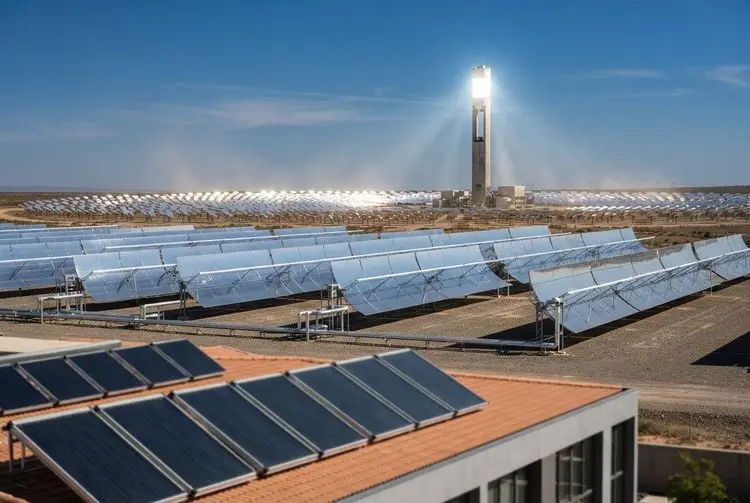
A comprehensive review from the University of Padova identifies surface and interfacial engineering as the unifying foundation for improving solar thermal technologies across all temperature ranges. Published in Frontiers in Thermal Engineering, the study by Davide Fantin, Marco Tancon, Marco Azzolin and Arianna Berto covers non-concentrating collectors, concentrating solar power (CSP) systems and thermal energy storage.
The timing is significant. Thermal energy accounts for roughly 50% of global final energy consumption, and heating generates approximately 37% of energy-related emissions. Solar thermal systems — from domestic hot water panels to high-temperature CSP towers — rely on tailored morphology, coatings and interfacial properties to govern heat transport and conversion efficiency.
Temperature ranges and collector types
The review structures solar thermal technologies by operating temperature. Low-temperature collectors operate below 100°C, serving domestic hot water, space heating and low-grade industrial heat. Medium-temperature systems span 100–400°C and include compound parabolic concentrators and parabolic troughs. High-temperature CSP technologies operate above 400°C, covering solar towers and point-focusing dishes for both heat and electricity generation.
Each range presents distinct interfacial challenges. Convective loss scales with temperature difference, while radiative emission rises with T⁴ — the fourth power of absolute temperature. This makes selective surface properties critical at higher temperatures.
Selective coatings: the performance gap
Commercial selective coatings typically achieve solar absorptance above 0.90–0.95 and thermal emittance of 0.05–0.15. Cermet coatings reach absorptance of 0.88–0.94 with emittance as low as 0.04. Ground aluminium-silicon carbide (Al-SiC) offers absorptance around 0.90 and emittance of approximately 0.22. Screen-printed granite waste coatings achieve absorptance of 0.93–0.94, while electrodeposited black chromium reaches 0.96.
However, the authors note that no single coating currently meets the combined targets of absorptance above 0.95, emittance below 0.50 and stability for 1,000 hours at 700°C in air. Medium-temperature coatings achieve absorptance of 0.90–0.97 and emittance of 0.05–0.15, but chromium-molybdenum tandems degrade in air above 425°C, remaining stable only to 500°C under vacuum.
Above 400°C, the review points to refractory multilayer architectures. Physical vapour deposition (PVD) coatings achieve absorptance of 0.96 and emittance of 0.11, but degraded within one year in marine environments. Paint-based coatings offer absorptance of 0.92 and emittance of 0.58 with superior durability.
Optical selectivity becomes negligible above 1,200 suns concentration. Under high flux, non-selective Pyromark 2500 — with absorptance of 0.97 and emittance of 0.80 — can outperform selective coatings. The SOLGATE receiver achieved 78% efficiency at 800°C. Yttria-stabilised zirconia (YSZ) coatings reached 94.8% solar-weighted reflectance with scratch adhesion ranging from 4.7 to 18 mN.
Nanofluids and direct absorption collectors
Direct absorption collectors use the working liquid itself as the solar absorber. Pure water captures only 13.6% of the solar spectrum over 1 cm of path length, rising to 39% over 10 cm. Glycols capture 9%, and diathermic oils capture just 2%.
Nanofluids increase thermal conductivity by 10–40% and improve collector efficiency by 5–15%. Carbon nanostructures are added at concentrations of 5–50 mg/L. Carbon nanohorns show scattering of approximately 5% of extinction, with solar-weighted absorption exceeding 95% over 10 cm. At 0.02 g/L, carbon nanohorns achieved 87% efficiency initially, but this dropped to 69% after eight hours, with 80% of the carbon depositing on circuit surfaces.
Chemical functionalisation provides a more durable solution. Functionalised nanohorns maintained 94–98% efficiency over 65 hours. Plasma-carboxylated carbon nanotubes lost only 4–9% over eight months in glycols. The review stresses that base-fluid polarity governs colloidal stability, and that interfacial ageing remains a major barrier to commercial deployment.
A zinc oxide-cerium oxide-graphene oxide (ZnO-CeO2-GO) coating achieved a contact angle of 10–13°, a heat transfer coefficient of 410 W/m²K and collector efficiency of 76%.
Receiver and reflector engineering
Elevated temperatures accelerate oxidation and interdiffusion in solid selective absorbers. The review highlights receiver development that emphasises refractory oxides and ceramic foams. Thermal stress reduction reached 4.1 MPa for Inconel 718 and 24 MPa for stainless steel/copper combinations.
Anti-soiling coatings achieved cleanliness degradation below 0.004 over 22 months, reducing cleaning cycles by 11.7%. This matters because dust losses can reach up to 25% over four months in Oman. Transparent baffles reduce solar transmission by less than 5.5%. A 9 mm silica aerogel layer in a compound parabolic concentrator increased efficiency by 31%, and aerogel-insulated troughs reduced heat loss by 7–10%.
Staggered arc ribs improved heat transfer by 66.7% to 179.6%, though pressure loss increased by 102% to 224%. The maximum thermo-hydraulic parameter reached 4.73, with Nusselt/friction ratios of 7.61 and 6.48.
Latent thermal energy storage
Latent heat storage using phase change materials (PCMs) decouples collection from utilisation, but PCM thermal conductivity of 0.1–0.3 W/mK severely limits heat transfer rates. Metallic foams increase conductivity by 3–500 times, though they reduce storage capacity. Graded foams reduce melting time by 38–40%.
Adding 3 vol% alumina nanoparticles reduced melting time by 15%. Silica encapsulation reduced supercooling by 13% in erythritol. Reduced graphene oxide (rGO) aerogel combined with paraffin achieved a melting enthalpy of 203.9 J/g, thermal conductivity of 0.380 W/mK and solar-to-thermal efficiency of 95.1%.
The authors call for multi-objective optimisation under ISO and ASTM standards to balance optical performance, thermal stability, mechanical durability and cost across the full system lifetime. For solar industry professionals, the review makes clear that no single coating or nanofluid formulation solves all temperature ranges — the interfacial solution must match the operating conditions, and long-term stability testing remains essential before commercial deployment.