
UQ-SolarT transformer delivers probabilistic PV forecasts with quantified uncertainty
New architecture separates aleatoric and epistemic uncertainty for grid-scale solar forecasting.
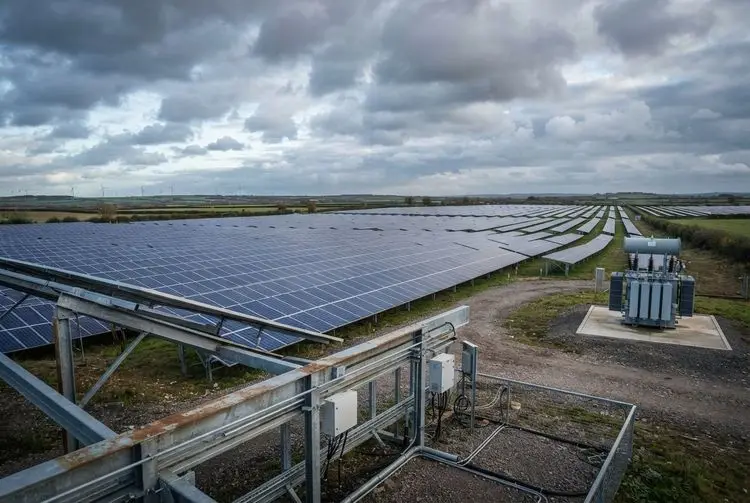
Researchers have developed UQ-SolarT, an uncertainty-quantified solar transformer that produces both point predictions and prediction intervals for photovoltaic power forecasting. The model addresses a persistent gap in solar forecasting: deterministic models provide single-value outputs but fail to communicate confidence boundaries to grid dispatchers.
Published on November 24, 2026, in Systems and Soft Computing, the work by Feng, H., Zhao, J., Du, X., Huo, Z., and Guo, Z. introduces a dual-branch output layer that separates aleatoric uncertainty — the inherent stochastic noise in data — from epistemic uncertainty, which represents the model's lack of knowledge. This endogenous architecture avoids the post-hoc corrections used by existing probabilistic methods such as deep ensembles or conformal prediction.
Architecture and design
UQ-SolarT employs a hierarchical decomposition attention mechanism that models seasonal, daily and residual trends separately. A graph attention network captures spatiotemporal dependencies across multiple PV stations, while mask-aware position encoding handles missing data without requiring imputation.
The model was trained and evaluated on a three-year regional grid dataset comprising 26,304 hourly observations with a baseline capacity of 50 kW. The train/val/test split was 70%/10%/20%. Forecast horizons ranged from 1 to 25 hours ahead. Training used the AdamW optimizer with a cosine annealing scheduler, a learning rate of 0.001, weight decay of 0.01 and a batch size of 32. The model ran for 100 epochs with an early stopping patience of 10 on an NVIDIA A100 Tensor Core GPU using the PyTorch framework.
UQ-SolarT contains 18.6 million parameters and requires 6.2 GB of GPU memory. Each training epoch takes 0.62 hours, while inference runs at 42.5 milliseconds per step — substantially faster than TimeGPT at 158.2 ms and Lag-Llama at 85.4 ms.
Forecast accuracy and probabilistic calibration
The model outperformed LSTM, Informer, TimeGPT and Lag-Llama across multiple metrics. UQ-SolarT achieved a normalized RMSE (nRMSE) of 0.058 and a normalized MAE (nMAE) of 0.042. By comparison, LSTM recorded an RMSE of 0.145. TimeGPT showed error reductions of approximately 0.024 nRMSE and 0.023 nMAE relative to its own baseline. Diebold-Mariano tests with Harvey-Leybourne-Newbold corrections confirmed the statistical superiority of UQ-SolarT over Lag-Llama.
On probabilistic metrics, the prediction interval coverage probability (PICP) approached 0.99, with an average interval width of approximately 0.23. That compares favorably to a deep ensemble interval width of 0.38 and a quantile LSTM interval width of 0.45. The continuous ranked probability score (CRPS) stood at 0.032, and the Winkler Score at 0.195.
The expected calibration error (ECE) at the 95% confidence level was 1.15% for UQ-SolarT, versus 4.35% for the deep ensemble and 7.80% for quantile regression — indicating substantially better probabilistic calibration.
Seasonal performance and edge cases
The model was tested under distinct seasonal conditions. In winter, average irradiance measured 280.6 W/m², with an RMSE of 2.95 kW, a PICP of 97.1% and an interval width of 4.95. In summer, average irradiance reached 680.8 W/m² with volatility of 215.3, an RMSE of 4.12 kW, a width of 7.15 and a PICP of 94.8%.
A power collapse event — where output dropped from 1.0 to 0.3 in two hours — saw prediction bounds expand from 0.1 to 0.8, demonstrating the model's ability to widen uncertainty estimates during rapid ramping events.
Robustness to missing data and physical constraints
UQ-SolarT maintained stability under data loss. With 50% missing data, the error increment was 0.055 and stability remained above 0.82. The mask-aware position encoding allows the model to operate without imputation, a practical advantage for operational PV fleets where sensor gaps are common.
Monte Carlo Dropout quantifies epistemic uncertainty at inference time. A joint loss function balances point prediction precision with probabilistic calibration. Physical constraints in the post-processing layer prevent impossible forecasts — such as negative generation or output exceeding capacity — by clipping values. Approximately 2.4% of interval samples were clipped during peak summer irradiance.
What this means for solar operations
For solar industry professionals and grid operators, UQ-SolarT represents a shift from deterministic point forecasts toward uncertainty-aware predictions that can inform dispatch decisions, reserve sizing and trading strategies. The model's ability to separate aleatoric from epistemic uncertainty gives operators insight into whether forecast risk stems from inherent weather variability or from gaps in the model's training data — information that deterministic models cannot provide.
The computational efficiency — 42.5 ms per inference step — makes the architecture practical for real-time applications across large PV portfolios. The robustness to 50% missing data addresses a common operational pain point where sensor failures or communication dropouts degrade forecast quality in conventional models.