
Tesla Seeks Texas Tax Break for $3.1B Polysilicon Plant as Senate Passes Permitting Reform
Two major developments this week could reshape U.S. solar manufacturing and project development.
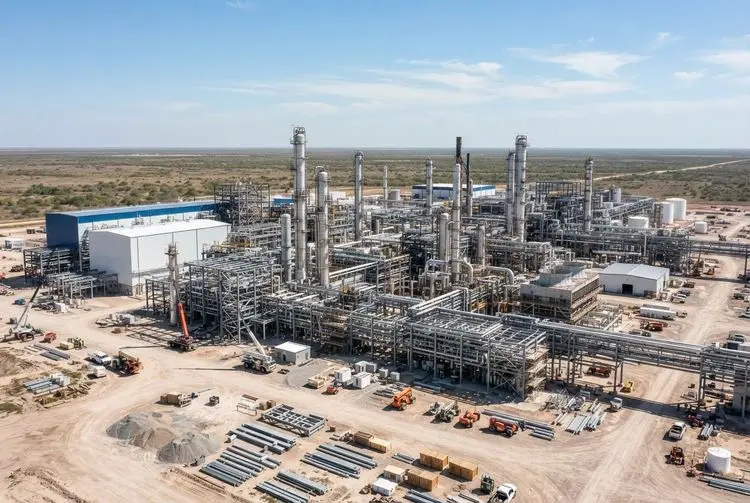
Tesla has filed an application for a property tax limitation in Texas to support a proposed $3.1 billion polysilicon refinery near Robstown in Nueces County, according to documents published by the Texas Comptroller of Public Accounts. The filing, submitted under the state's Jobs, Energy, Technology and Innovation (JETI) program, states that Tesla would not proceed with the investment in Texas without the incentive agreement and that the company is evaluating locations in other jurisdictions.
The facility is described as "under consideration for development" and as the "upstream component of Tesla's vertically integrated domestic solar manufacturing platform." It would produce ultra-high-purity polysilicon for single-crystal silicon ingots and N-type, high-efficiency solar cells. The equipment list includes hydrochlorination and trichlorosilane synthesis units, chlorosilane distillation and purification trains, silicon tetrachloride recycling loops, and Siemens chemical vapor deposition reactors. The filing does not specify the plant's planned production capacity.
Economic Impact and Tax Abatement Schedule
An economic impact analysis prepared for Tesla by EY projects construction between 2027 and 2030, with capital spending of $1.5 billion for engineering and construction, $1.4 billion for equipment, and $183 million for utility infrastructure. More than 80% of that spending would occur in 2028 and 2029. Tesla plans to hire 260 workers in 2030, increasing to 515 when fully operational in 2032, at average total compensation of $130,000. Construction would support an average of 550 direct jobs per year, and EY estimates the project would generate approximately $63.5 billion in economic output in Texas through 2065.
Under the proposed tax abatement schedule, the project's taxable value for school-district maintenance and operations taxes would be reduced to zero from 2028 to 2030 and halved from 2031 through 2040. The Comptroller must review the application, and both the Office of the Governor and the Tuloso-Midway Independent School District board must approve an agreement before it takes effect.
Tesla's Broader Solar Manufacturing Push
The polysilicon refinery application follows Tesla's JETI application for Project Crystal Sun, a proposed solar cell and module factory in Fort Bend County with planned investment of approximately $10.1 billion. That project cleared a key tax hurdle in September when the local school board backed its limitation. Tesla noted in its filing that more than 90% of the world's solar-grade polysilicon is produced in China. The company has been advancing a plan to build 100 GW of U.S. PV manufacturing capacity by 2028, a target that has drawn scrutiny over whether Elon Musk's solar ambitions are achievable. Tesla has taken a similar approach in energy storage, stating in 2025 that its 10 GWh lithium iron phosphate cell factory in Nevada was nearing completion as it reduced reliance on imported cells.
The polysilicon project application comes as U.S. Section 232 tariffs and minimum import prices on polysilicon—including a 15% duty on imported ingots, wafers, cells, and modules—are set to take effect on December 4. The minimum import prices are designed to compel foreign suppliers to match U.S. production costs, raising the value of domestic feedstock in a market where U.S. polysilicon production remains limited. Solar manufacturer Toyo secured U.S. polysilicon supply in January to navigate these trade barriers.
Senate Passes Sweeping Permitting Reform
In a separate but related development, the Senate on Thursday passed sweeping legislation to overhaul federal permitting rules, approving the measure by a vote of 62 to 33. The bill would amend or pare back several landmark environmental statutes to allow for faster federal approvals of long-distance power lines, wind and solar farms, gas-fired power plants, broadband, housing, and other large projects. Experts described the legislation as the biggest change to environmental law in a generation.
All but two Republican senators voted for the bill, which received enthusiastic support from the Trump administration, business groups, energy developers, and labor unions. Most Democrats opposed the measure, with only 15 senators who caucus with the party voting in favor. The legislation was contentious with environmentalists, who said many of its changes would limit communities' ability to use lawsuits to challenge polluting facilities. A large number of Native American tribes also criticized the bill.
The bill must now pass the Republican-controlled House, where its fate is uncertain. Lawmakers will not be in Washington next week and face a tight timeline to fund the government and consider other bills before the new Congress takes office in early January. President Trump has indicated he would sign the permitting overhaul into law if it reaches his desk.
What It Means for the Solar Industry
Together, these developments reflect ongoing efforts to strengthen domestic solar manufacturing capacity and accelerate energy project development in the United States. Tesla's polysilicon refinery application underscores the company's strategy to vertically integrate its solar manufacturing operations and reduce dependence on Chinese supply chains, particularly as new tariffs on imported solar components take effect. The proposed facility would represent a significant addition to U.S. polysilicon production capacity, which currently remains limited relative to global demand.
Meanwhile, the Senate's permitting reform bill could affect the pace at which solar farms, transmission lines, and other energy infrastructure move through federal approval processes. Supporters argue the changes are necessary to meet growing energy demand and accelerate the clean energy transition, while opponents raise concerns about reduced environmental review and diminished community recourse against polluting facilities.
Both stories remain in early stages: Tesla's tax incentive application requires review by the Comptroller and approval from the Governor's office and the school district board, while the permitting bill faces an uncertain path in the House with a compressed legislative calendar. Stakeholders across the solar industry—from manufacturers and developers to installers and investors—will be watching closely as these processes unfold.