
Turkey Awards 2.3 GW in Annual YEKA Wind and Solar Auctions
Solar and wind winners locked in EUR 32.5 and EUR 35 per MWh floor prices, while the IEA sees India at 530 GW by 2030.
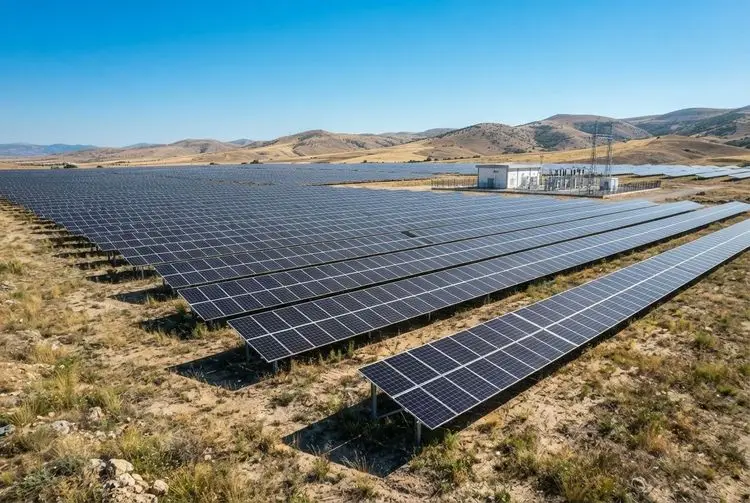
Turkey's Ministry of Energy and Natural Resources has awarded a combined 2.3 GW of wind and solar capacity in the latest annual round of its Renewable Energy Zones auctions, known by the Turkish acronym YEKA. The round allocated 1.5 GW of wind power and 785 MW of photovoltaics (PV), measured in grid connection terms.
All of the capacity was awarded at the floor prices: EUR 35 per MWh for wind and EUR 32.5 per MWh for solar. Once bidding had reached the lowest possible price, the participants still in the running competed instead on a so-called contribution fee for the right to sign the contract, with bidding starting at EUR 10,000 per MW. The auctions are livestreamed, and the ministry collected EUR 113.4 million upfront from the round.
Winners may sell their electricity on the free market for six years in the case of wind and five years for PV plants, while receiving one-way contracts for difference (CfDs) with a guaranteed minimum of EUR 47.5 per MWh. After that period, the projects move into a 20-year scheme at the auction strike price under a power purchase agreement (PPA).
Solar: eleven zones, 785 MW
Nineteen companies submitted 44 applications for the REZ SPP 2026 (YEKA GES 2026) solar tenders, and the commission awarded 11 zones totaling 785 MW. Three sites attracted no applications at all: Malatya 2 (40 MW), Mardin 1 (30 MW) and Kahramanmaraş 1 (45 MW), a combined 115 MW that went unawarded.
Contribution fees in the solar segment totaled EUR 31.6 million, or EUR 37.9 million including value-added tax. The highest fee was EUR 91,000 per MW excluding VAT for the 55 MW Malatya 1 area, won by Ezel Mensucat Sanayi. At the other end of the scale, İklim Invest Enerji is paying only EUR 12,000 per MW for the 30 MW Ankara 2 zone.
Wind: seven zones across four provinces
In the wind segment, 12 companies sent 29 applications for the REZ WPP 2026 (YEKA RES 2026) auctions, which covered 1.5 GW across seven zones in Sivas, Balıkesir, Manisa and Kütahya. Minister Alparslan Bayraktar estimated annual production at 4.6 TWh, equivalent to the needs of two million households, and said the wind farms would prevent EUR 852 million worth of gas imports per year.
Wind winners are paying EUR 62.9 million, or EUR 75.5 million including VAT. The contribution fee for the 140 MW Balikesir 4 zone was the highest at EUR 154,000 per MW, almost as high as all the rest combined, with Fe Girişim Enerji taking the area. Conversely, Egesa Elektrik obtained a 235 MW Balikesir 4 area without competition and therefore without a contribution fee.
Bayraktar put the total at 2.29 GW across 18 predetermined sites. He estimated the investments at USD 1.9 billion, producing 6.1 TWh of annual output, equivalent to 1.22 billion cubic meters of imported natural gas. Turkey intends to launch its first-ever offshore wind auctions in the first quarter of next year.
IEA: India on course for 530 GW by 2030
On Nov. 3, the International Energy Agency (IEA) forecast that India's renewable power capacity will reach about 530 GW by 2030, with solar PV accounting for more than 80% of that growth. The India Renewable Energy Market Report 2026, launched at the Bharat Renewable Energy Summit in New Delhi, puts India's renewable capacity above 300 GW in the fourth quarter of 2026, almost four times the level a decade ago. Solar alone should top 350 GW by 2030, measured in alternating current.
The report's headline figures:
- About 225 GW of annual solar module manufacturing capacity in September 2026, keeping India the world's second-largest maker. - USD 30-35/MWh levelised cost of electricity (LCOE) for utility-scale solar PV, the world's second lowest. - 15 GW of hybrid renewable projects auctioned in 2025, the world's largest volume. - More than 100 GW of distributed solar for self-consumption by 2030, triple today's level. - About 57 GW of renewables a year over 2027-2030 to get from 300 GW to 530 GW, an approximate figure calculated by list.solar.
The IEA frames the expansion as an energy security story. Renewable electricity cut India's coal and gas import bills by more than USD 100 billion in 2011-2025, and cumulative savings are expected to more than double by 2030. Without solar, wind and bioenergy built since 2010, coal imports in 2025 would have been about 110 million tonnes higher.
India added a record 44.61 GW of solar in the fiscal year to March 2026, the Ministry of New and Renewable Energy said in April, nearly double the prior year's total. The PM Surya Ghar Muft Bijli Yojana scheme is accelerating residential rooftop installations, while corporate PPAs should underpin about 20% of utility-scale solar and wind additions by 2030.
"India's renewables expansion is delivering major benefits for its energy security at a time of heightened uncertainty in global energy markets," IEA Executive Director Fatih Birol said.
Variable renewables should supply about 26% of India's power by 2030, up from about 14%. Faster investment in grids, storage and flexibility, healthier utilities and fewer delays could lift 2026-2030 deployment by more than 20%, the IEA said. India is on track for its 500-GW non-fossil capacity target for 2030.
Sunraycer acquires 325 MW of solar projects
In a separate development, Sunraycer has acquired a 325-MW solar project duo from NOVI and Osaka Gas.