
99MW Solar Farm Proposed in West Lindsey Launches Consultation
Elgin's 99MW Stone Pit Lane Solar Farm near Keelby could power up to 40,000 homes.
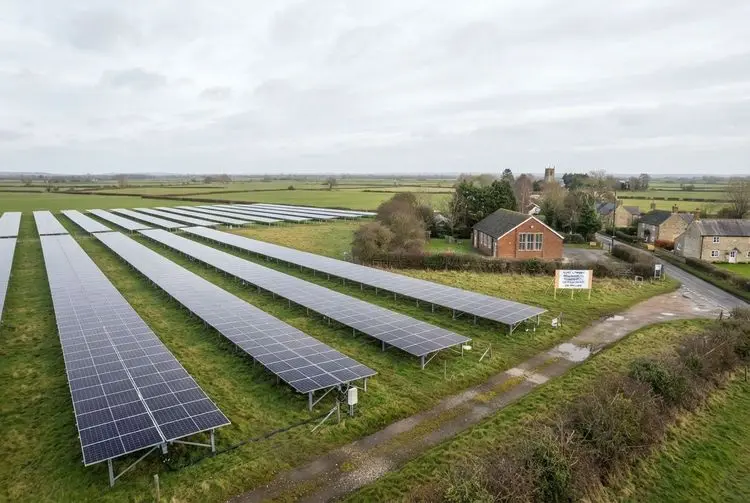
Developer Elgin has launched a public consultation for the 99MW Stone Pit Lane Solar Farm south of Keelby in West Lindsey. The proposed solar farm could generate enough electricity to power up to 40,000 homes.
The consultation runs from 12 November to 10 December. Drop-in sessions will be held at Keelby Village Hall on 18 and 19 November, giving residents and local stakeholders the opportunity to view the emerging plans and provide feedback.
Elgin will submit a planning application to West Lindsey District Council following the consultation period. The company has also pledged a Community Benefit Fund for local groups, though details of the fund's size and structure have not yet been finalised.
Design still evolving
Jamie Andrews, senior development manager at Elgin, said the project is at an early stage. "The plans are at an early stage, meaning the design is evolving and local expertise will play an important role in determining the final scheme," Andrews said.
The developer is seeking input from the local community to help shape the final layout and design of the solar farm. This includes input on landscaping, access routes and the location of solar arrays and associated infrastructure.
Solar development in Lincolnshire
Lincolnshire has become a focal point for large-scale solar development in the UK. Earlier in 2026, a solar farm near Keelby and Healing was approved by North East Lincolnshire Council despite objections. That site spans two council areas, and West Lindsey District Council also approved it subject to conditions.
In April, the Department for Energy Security and Net Zero (DESNZ) approved Springwell Solar Farm, located between Lincoln and Sleaford. Springwell is currently the UK's largest approved solar farm. A legal challenge to the Springwell approval was rejected by the High Court. Lincolnshire County Council and North Kesteven District Council had sought to overturn the approval.
Springwell was classified as a Nationally Significant Infrastructure Project (NSIP), meaning it required central government approval. Smaller projects, such as the proposed Stone Pit Lane Solar Farm, are decided at the local authority level.
Food security concerns
The rapid growth of solar development on agricultural land has drawn criticism from some local politicians. Sean Matthews, leader of Lincolnshire County Council, voiced strong opposition to solar farms on farmland.
"I just don't want them on our farmland," Matthews said. "We've got to think of food security and this government just don't do that."
In August, one farmer told the BBC he had turned to solar to survive, highlighting the economic pressures facing the agricultural sector. Matthews argued that more support is needed to help farmers keep crop growing viable, rather than converting land to solar generation.
What it means for the industry
The Stone Pit Lane Solar Farm represents a typical mid-sized ground-mounted solar project in the UK planning system. At 99MW, it falls below the 50MW threshold in Wales and the 100MW threshold in England that would trigger NSIP status, meaning the decision rests with West Lindsey District Council rather than central government.
For solar industry professionals, the project illustrates the ongoing tension between renewable energy deployment and agricultural land use. The developer's early-stage consultation approach — seeking local input before finalising the design — reflects best practice for community engagement and can help address concerns before a formal planning application is submitted.
The Community Benefit Fund pledge also follows an emerging industry standard, where developers offer direct financial contributions to local communities as part of the planning process. The structure and scale of such funds can vary significantly between projects.
Investors and developers watching the UK solar market will note that Lincolnshire continues to attract significant solar development activity, driven by good irradiance levels, available grid capacity and relatively flat terrain. However, political opposition at the county council level adds a layer of planning risk that developers must navigate carefully.
The consultation period closes on 10 December. Elgin expects to submit the full planning application to West Lindsey District Council shortly thereafter.