
America's Top Solar States: Texas and California Lead 2026 Boom
US solar capacity now powers over 50 million homes as Q2 2026 additions surge 45 percent year-over-year.
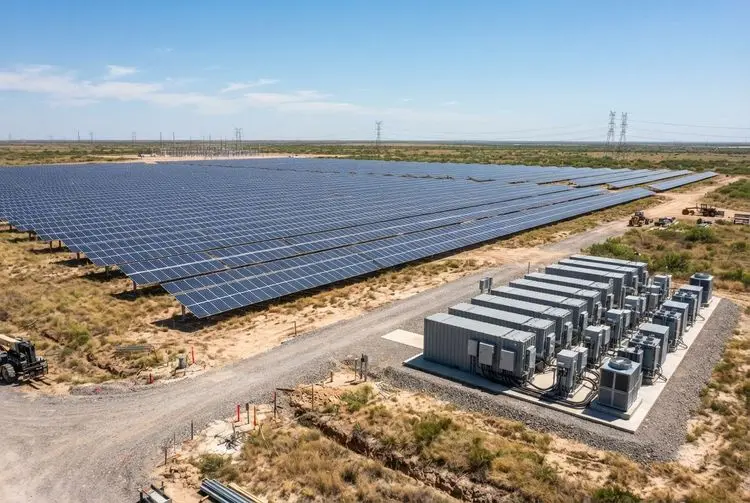
The United States solar industry continues its rapid expansion, with installed capacity now sufficient to power more than 50 million homes, according to the Solar Energy Industries Association (SEIA). In the second quarter of 2026 alone, developers added 11.4 GW of new solar capacity, a 45 percent increase compared to Q2 2025. Utility-scale projects account for the majority of this growth, supported by expanding battery storage and transmission infrastructure.
California and Texas remain the nation's largest solar producers, but several other states are scaling up capacity through ambitious projects, new policies, and grid modernization efforts.
Texas Leads Utility-Scale Solar
Texas dominates utility-scale solar development, accounting for roughly 40 percent of all new utility-scale solar capacity added in 2026. The state's largest project under construction is Tehuacana Creek 1, an 837 MW solar installation paired with 418 MW of battery energy storage. Texas is also on track to add approximately 13 GW of new battery capacity in 2026, helping integrate growing solar generation into the grid.
The Miller and Forest Trail Solar Energy Centers, each 125 MW, will together supply clean electricity to more than 22,000 households. The Eleven Mile Solar Center, a 300 MW solar plant with 1,200 MWh of battery storage, further underscores the trend toward hybrid solar-plus-storage facilities. The Marigold Energy Center combines 600 MW of solar with 400 MW of battery storage and gas-fired generation, illustrating the diverse configurations emerging in the Texas market.
California's Solar Generation Remains Dominant
California generated approximately 90,103 GWh of solar electricity in 2025, the highest of any state. The state has long been a pioneer in solar deployment, and its existing fleet continues to deliver substantial clean energy. Innovative projects such as Project Nexus, a $20 million pilot testing solar panels over irrigation canals, demonstrate California's focus on dual-use solar applications that conserve water while generating power.
The federal Residential Clean Energy Credit expired on December 31, 2025, which may shift residential solar economics going forward. However, California's established market and strong utility-scale pipeline are expected to sustain growth.
Florida, Arizona, and North Carolina Expand Capacity
Florida ranks third nationally in total solar generation. Major utilities including Florida Power & Light, Duke Energy Florida, and the Jacksonville municipal utility JEA continue to expand the state's solar footprint.
Arizona is advancing large desert solar installations. The Salt River Project and the Gila River Indian Community are involved in major developments, and the state offers a tax credit covering 25 percent of solar costs, capped at $1,000. Arizona is also testing solar-over-canal projects similar to California's approach, combining renewable energy generation with water conservation.
North Carolina is advancing microgrid development following the disruptions caused by Hurricane Helene. The state has allocated $5 million for a microgrid initiative that will establish 24 permanent microgrids across six western counties. In November 2026, North Carolina also committed approximately $1.4 million for energy-efficient upgrades, supporting resilience alongside solar expansion.
Nevada Invests in Transmission and Net Metering
Nevada is investing in the Greenlink Nevada transmission program, a major infrastructure project designed to move electricity from renewable energy zones to population centers. The state's BRIGHT program supports community solar development. NV Energy's net metering policy credits solar customers at 75 percent of the retail electricity rate, providing a stable framework for rooftop solar adoption.
New York, Illinois, Georgia, and Virginia Drive Regional Growth
New York reached 8 GW of distributed solar in July 2026 and is targeting 10 GW by 2030, driven by strong state-level incentives and community solar programs.
Illinois enacted a law in January 2026 establishing a 3,000 MW energy storage target, which will support further solar deployment by enabling better grid integration.
Georgia Power signed new solar power purchase agreements (PPAs) in September 2026 totaling 1,137 MW, reflecting growing utility demand for renewable energy in the Southeast.
Virginia continues to expand solar capacity, driven largely by data center electricity demand. The state's clean energy policies and corporate procurement are fueling a steady pipeline of new projects.
Battery Storage and Transmission: The Enabling Infrastructure
Across all leading states, battery storage deployment is accelerating alongside solar. The pairing of storage with solar plants allows developers to shift afternoon generation into evening peak hours, improving project economics and grid reliability. Texas's roughly 13 GW of new battery capacity in 2026 exemplifies this trend.
Transmission upgrades remain a critical bottleneck. Nevada's Greenlink program and similar initiatives in other states aim to connect remote solar resources to load centers. Without adequate transmission capacity, even the most cost-effective solar projects cannot deliver electricity to customers.
The combination of falling battery costs, supportive state policies, and growing corporate demand for clean energy positions the United States for continued solar growth. While California and Texas lead in absolute terms, the geographic diversification of solar development across Florida, Arizona, North Carolina, Nevada, New York, Illinois, Georgia, and Virginia signals a maturing national market.