
ANACE warns new ECR charge could trigger wave of solar litigation
Brazil's new Resource Supplement Charge may spark legal disputes over distributed generation benefits, ANACE warns.
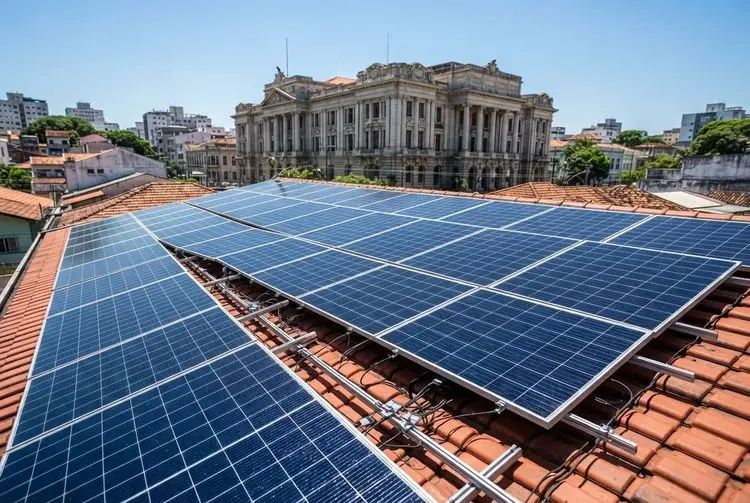
Brazil's new Resource Supplement Charge (ECR), created by Law No. 15.269/2025, could trigger a wave of litigation from distributed generation consumers and self-producers, according to the National Association of Energy Consumers (ANACE).
The charge, which is expected to take effect in 2027, has raised serious legal questions about whether it can override benefits previously granted under existing legislation. ANACE estimates the ECR could reach R$ 6.4 billion in 2027, according to figures from the National Electric Energy Agency (ANEEL).
Legal uncertainty over existing benefits
At the heart of the concern is a fundamental legal question: whether a new law creating a charge can alter benefits that were established by earlier laws without explicitly amending them. The Law No. 15.269/2025 did not alter previous legal benefits, creating a situation that ANACE argues is ripe for legal disputes.
Carlos Alberto Schoeps, technical consultant at ANACE, framed the issue directly. "The question we are raising is this: can a new law, which created the ECR, alter a benefit that was previously granted by another law?" Schoeps said.
"You have one legal order granting a benefit and another creating a charge, without expressly altering the previous order. This situation needs to be clarified in the regulations," he added.
Impact on distributed generation and self-producers
The ECR affects GD1 consumers — those who joined distributed generation under more favorable compensation rules — as well as self-producers who may have legal exemptions from certain charges. The lack of regulatory clarity could open the door to legal challenges from both groups.
Investors who structured solar projects under the previous regulatory framework now face uncertainty about project profitability. The concern extends beyond residential solar owners to commercial and industrial players including supermarket chains, telecoms and water companies, as well as the energy subscription segment that has attracted significant investment.
Regulatory process underway
ANEEL has opened Public Consultation No. 028/2026 to gather input on the ECR implementation. The consultation is ongoing, and stakeholders have an opportunity to shape how the charge will be applied before it takes effect in 2027.
ANACE has proposed a "shadow period" simulation — a mechanism that would allow consumers and market participants to see what the ECR would look like before it is actually implemented. This approach would give affected parties time to understand and prepare for the financial impact.
Schoeps emphasised the importance of giving consumers adequate preparation time. "You can't put a rule into effect without giving consumers time to prepare," he said.
Financing through CDE
The ECR costs are financed through the Energy Development Account (CDE), a fund that supports various energy policy programs. ANACE argues that the reference base for calculating the ECR must adjust in line with changes to the CDE, adding another layer of complexity to the regulatory challenge.
For solar industry professionals and investors, the key issue is the difficulty of estimating ECR amounts from 2027 onwards. Without clarity on how the charge will be calculated and applied, project developers cannot accurately assess the financial viability of new distributed generation installations.
What to watch
The outcome of Public Consultation ANEEL No. 028/2026 will be critical in determining whether the ECR is implemented in a way that avoids widespread litigation. Industry participants should monitor the consultation process closely and consider submitting comments.
If the regulatory uncertainty persists, the solar sector could face a period of legal challenges that may slow distributed generation deployment and deter investment in new projects. The Dunamis solar complex in Santana do Matos, Rio Grande do Norte, and corporate solar investments by companies such as Mercedes-Benz represent the type of large-scale projects that could be affected by the new charge.
ANACE's warning serves as a signal to the industry that the ECR issue requires urgent regulatory attention to prevent a costly and disruptive wave of litigation that could undermine confidence in Brazil's distributed generation market.