
ANEEL proposes hourly tariff for solar and EV charging stations
Brazil's regulator targets 5.7 million low-voltage consumers with time-of-use pricing by 2031.
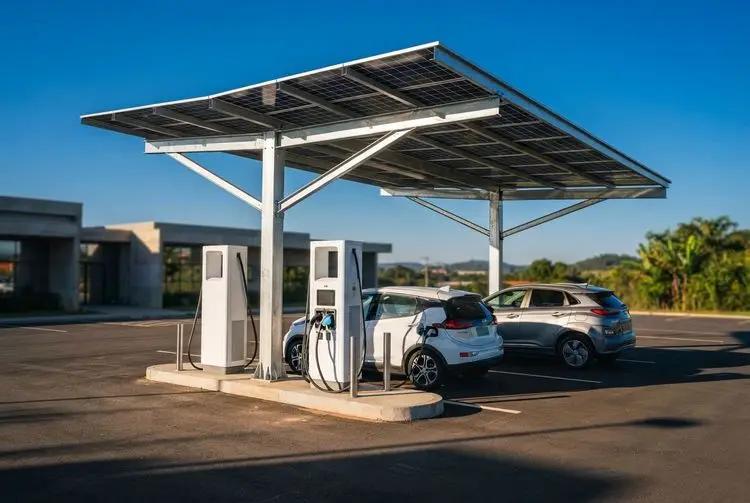
Brazil's National Electric Energy Agency (ANEEL) presented a proposal on Monday (9) that would introduce a mandatory time-of-use tariff for solar self-generation systems and electric vehicle charging stations connected to the low-voltage grid. The new Time-Specific Tariff, known as Tarifa Hora Certa, targets distributed micro and mini-generation (DMM) units and commercial EV charging infrastructure.
Under the proposal, consumer units with DMM systems classified at an average consumption or injection of 500 kWh per month or more would be automatically enrolled in the hourly tariff. New systems joining the Electric Energy Compensation System (SCEE) after a 90-day grace period following the regulation's publication would not be able to opt out. Existing systems, however, can choose to remain on the conventional tariff during a transition window.
Three-phase rollout
ANEEL plans to implement the tariff in three phases. The first phase begins in April 2028 and targets consumer units with 1,800 kWh per month or more, reaching approximately 1 million consumers. The second phase starts in April 2029, covering units with 1,000 kWh per month or more, adding 1.1 million consumers. The third and largest phase begins in April 2031, capturing units with 500 kWh per month or more, bringing in 3.6 million consumers.
By the end of the rollout, ANEEL expects 5.7 million low-voltage consumer units to be under the time-of-use tariff. Brazil currently has roughly 100 million low-voltage consumer units in total.
The first phase represents less than 1 percent of all low-voltage units but accounts for approximately 20 percent of low-voltage electricity consumption. The second phase covers about 1 percent of units and 6 percent of the market. The third phase reaches around 3.4 percent of consumers and 11 percent of energy consumption. Combined, over a third of the low-voltage market would fall under time-of-use pricing.
Three time periods and EV charging economics
The hourly tariff divides the day into three periods: peak, intermediate and off-peak. The specific schedules and prices will vary by concession area. ANEEL will open discussions with distributors in 2027 on recalibrating the tariff structure, including the possibility of introducing a cheaper tier during peak solar generation hours.
For electric vehicle charging, the economics shift significantly under the new tariff. Off-peak charging costs approximately R$0.11 per kilometer, compared to R$0.14 per kilometer under the conventional tariff and R$0.27 per kilometer during peak hours. Monthly savings for off-peak EV charging range from R$32 to R$211, depending on usage patterns.
New commercial EV charging stations would be subject to the mandatory hourly tariff from the outset. This reflects the growing impact of EV charging on the distribution grid and the opportunity to shift charging loads to periods of higher renewable energy availability.
Opt-out rules and transition provisions
Low-income subclasses are explicitly excluded from the mandatory tariff. Consumers with consumption below 500 kWh per month can voluntarily opt into the time-of-use structure. A flat temporary tariff option will be available for two years, with a premium of 3 to 5 percent over the conventional rate. This flat option ends in 2033.
Distributors must install the necessary metering equipment without charging consumers. ANEEL requires that meters be installed for the first group by 2027. Before each phase begins, distributors must provide informative billing for three months to help consumers understand the new tariff structure.
The proposal is based on 85 contributions received through Public Consultation 46/2025. ANEEL's technical areas developed the final text after reviewing stakeholder input from the solar industry, distribution companies and consumer representatives.
What the tariff means for solar prosumers
The time-of-use tariff reflects the changing dynamics of Brazil's electricity grid. Solar and wind expansion has increased daytime renewable energy availability, while demand rises in the early evening when solar generation drops. The conventional tariff charges the same price regardless of the time of day, which does not reflect the actual cost of electricity supply.
By introducing time-of-use pricing, ANEEL aims to align consumer behavior with grid conditions. Solar self-generation units that inject energy during peak solar hours and consume during off-peak periods could benefit, while those that rely heavily on grid power during peak hours may face higher costs.
The proposal marks a significant shift for Brazil's distributed generation market. Installers and system owners should monitor the regulatory timeline closely, particularly the 90-day opt-out window for existing systems and the metering requirements that distributors must fulfill by 2027.