
Kerry: World must follow China's green energy lead as Cop31 opens
John Kerry says China has "hugely accelerated" while the rest of the world stumbles on climate action.
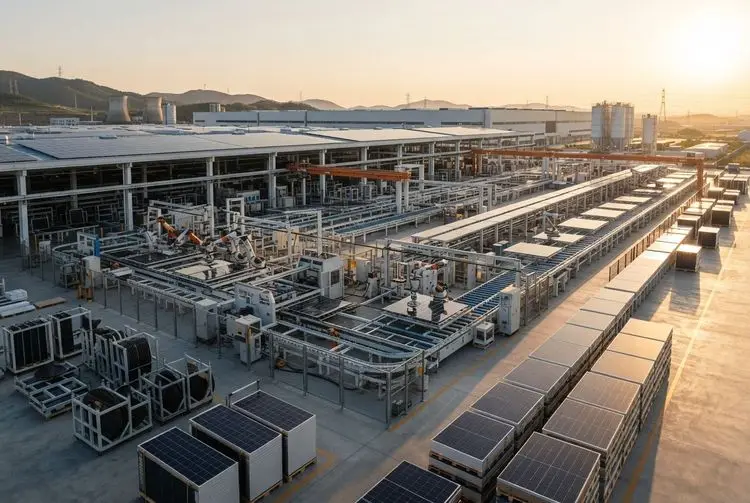
Former US climate envoy John Kerry has called on the world to follow China's lead on green energy, as Cop31 gets underway in Turkey and speculation builds over Beijing's potential climate leadership role.
"The only country that has hugely accelerated is China. The rest of the world is stumbling along while Mother Nature is sending us more powerful signals every week, every day," Kerry told the Guardian.
Kerry's remarks come at a pivotal moment. China's 2026 five-year plan includes a pledge to lead global climate governance, signalling a shift for a country historically reluctant to take on that mantle. Analysts are watching closely to see whether Beijing will translate ambition into concrete commitments on climate finance and a just transition.
China's clean-tech dominance by the numbers
The scale of China's green energy advantage is difficult to overstate. The country accounts for roughly 85 percent of the global solar supply chain capacity and approximately 80 percent of the lithium-ion battery supply chain. Nearly 75 percent of all electric cars made in 2025 were produced in China.
Clean-tech exports surpassed USD 220 billion in 2025, underscoring how green energy has become a key driver of China's post-pandemic export engine. This shift has occurred even as domestic consumption weakness persists, making overseas clean-tech sales an increasingly important economic pillar.
According to analysis by Carbon Brief, China's carbon emissions have been flat or falling since March 2024, a trend that strengthens Beijing's hand in international climate negotiations.
The US under Trump falls behind
While China accelerates, the United States under Donald Trump has fallen badly behind on green energy deployment and policy. The contrast has not gone unnoticed in international climate circles.
Kerry framed the global energy transition as inevitable. "The marketplace has made its decision and globally is moving to electrons, and electrostate status. People are going to electricity and they're going to try to do that as clean as humanly possible. That's the choice that I see being implemented in many different places. It is unstoppable," he said.
Cop31 and the question of leadership
Cop31, hosted in Turkey, has generated speculation about China's willingness to assume a more prominent role. Beijing has indicated it wants the conference to discuss the free flow of green technology, a position that aligns with its status as the world's dominant clean-energy manufacturer.
Li Shuo, director of the China Climate Hub at the Asia Society Policy Institute, framed the challenge facing Beijing. "In a world where climate action was once seen as a constraint on growth but is now increasingly a driver of it, China faces a singular question: will it step into a leadership role not out of obligation, but out of self-interest?" he said.
China is also considering bidding to host Cop33 in 2028, according to reports, which would mark a further step into the centre of global climate diplomacy.
Belt and Road green deals surge
China's Belt and Road Initiative has become a showcase for renewable energy projects globally. Green energy deals signed under the initiative in the first half of 2026 have already surpassed the total for all of 2025, indicating accelerating momentum.
However, China is navigating divergent interests among its global south partners, many of whom have competing priorities around fossil fuel development and energy access. The wars in Ukraine and the Middle East have hardened Beijing's stance on energy transition, while the US dollar's oil-trade privilege faces increasing risk from the global shift to green energy.
What it means for the solar industry
For solar industry professionals, the implications are clear. China's dominance across the solar supply chain — from polysilicon to modules — shows no sign of easing. The country's push for free flow of green technology at Cop31 could open new export markets for Chinese manufacturers while putting pressure on domestic industries in other regions.
The flat-to-falling emissions trend since March 2024, if sustained, would make China's case for leadership more credible. For investors and project developers, the key question remains whether China will use its manufacturing muscle to drive down global solar costs further, or whether geopolitical tensions will fragment supply chains.
As Kerry put it, the marketplace has already decided. The question now is who will shape the rules of the new energy economy.