
California Power Hour Proposal Offers Free Midday Electricity to Cut Solar Waste
Gov.-elect Xavier Becerra's plan would give households up to two hours of free electricity daily to reduce solar curtailment.
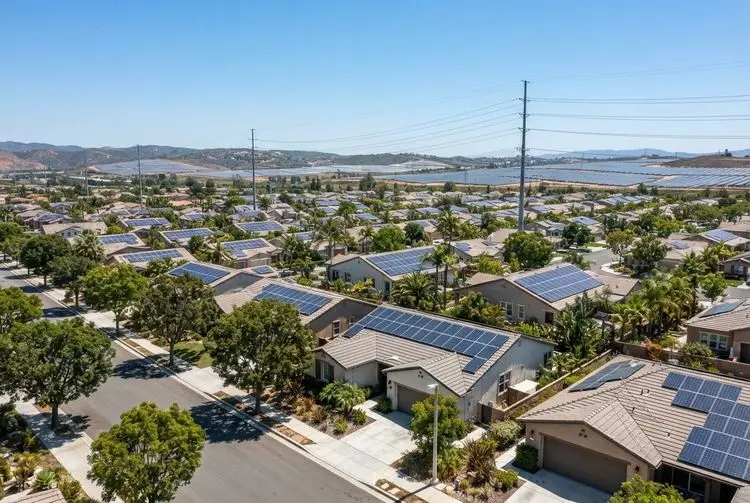
California Governor-elect Xavier Becerra has proposed a "Power Hour" initiative that would provide households with up to two hours of free electricity each day during midday hours. The proposal aims to reduce the growing problem of wasted solar energy, as solar producers increasingly cut output when generation exceeds grid use.
The free electricity window, expected to run during midday hours when solar generation peaks, could save participating households approximately $1,000 annually. Becerra has stated that total costs cannot increase under the plan, meaning utilities would need to recover lost revenue elsewhere.
The Solar Curtailment Problem
The proposal directly addresses a structural issue in California's grid. Solar producers routinely curtail output on mild spring and autumn days when solar generation far exceeds demand. Wholesale electricity prices can even go below zero during these periods, creating negative revenue for generators.
Wholesale power costs account for roughly one-third of a typical customer's electricity bill, according to industry data. The remaining two-thirds covers grid infrastructure, transmission and distribution costs. By offering free power during surplus periods, the Power Hour would effectively zero out the wholesale component for those two hours.
"This is a creative approach to a problem that's only going to get bigger as California adds more solar," said Michael Colvin of the Environmental Defense Fund.
Eligibility and Implementation Questions
The free window may initially be limited to income-qualified households, though details remain under development. California already operates several income-based assistance programs, including the Family Electric Rate Assistance program, the California Alternate Rates for Energy (CARE) program, and the Energy Savings Assistance Program administered by the California Public Utilities Commission (CPUC).
Rebecca Lee of EasyHome noted that most people are not home during midday hours to take advantage of free power, which could limit the program's impact. The Demand Side Grid Support program, which compensates customers for shifting usage, is currently underfunded.
Rate Design Challenges
California's time-of-use pricing structure already charges higher rates for evening electricity, when solar output drops and grid demand peaks. The Power Hour would add another layer to this complex rate design.
Utilities would need to recover the revenue lost from free midday hours through other charges. Becerra has insisted total costs cannot increase, but the mechanism for reallocating those costs remains unclear. Income-qualified discount programs in California are currently funded through charges on other customers' bills, setting a potential precedent.
Claudine Custodio of Vote Solar emphasized that careful program design will be critical to ensure equitable outcomes. The CPUC would need to approve any rate changes, and the proposal is expected to face scrutiny from utilities including NRG Energy and other market participants.
What It Means for Solar Industry
For solar developers and project operators, the Power Hour could reduce curtailment losses by creating a demand signal during surplus periods. If households shift consumption to midday — running appliances, charging electric vehicles, or pre-cooling homes — it could flatten the "duck curve" that forces solar cutoffs.
However, the program's success depends on customer participation during hours when many are away from home. Smart home controls, battery storage and programmable appliances could help bridge that gap, creating potential opportunities for installers and technology providers.
The proposal also raises questions about net metering and rooftop solar economics. If free midday power reduces the value of self-consumed solar generation, it could alter the payback calculations for new residential solar installations.
Next Steps
The Becerra administration has not released a timeline for implementation. The CPUC will likely need to open a rulemaking proceeding to evaluate rate design options, cost allocation mechanisms and eligibility criteria. Industry stakeholders including the Environmental Defense Fund, Vote Solar and consumer advocates are expected to participate.
California's experience with the Power Hour will be closely watched by other states facing similar solar integration challenges. As renewable penetration increases across the US, the question of how to align generation surpluses with customer demand is becoming central to grid operations and electricity market design.