
CALSSA roadmap urges Becerra to expand solar, storage and VPPs
California trade group proposes distributed energy expansion to tackle rising utility rates and affordability crisis.
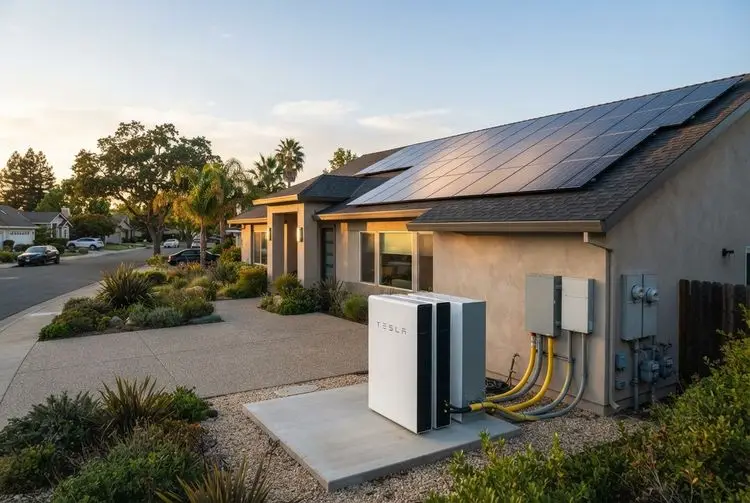
The California Solar & Storage Association (CALSSA) has released a policy roadmap for Governor-elect Xavier Becerra, urging expanded distributed energy resources, virtual power plants (VPPs) and stronger utility oversight to address the state's energy affordability crisis.
The proposal positions customer-sited solar and batteries as the fastest path to lower electricity bills for California residents. CALSSA's plan calls for rapid scaling of VPP programs, leveraging existing legislation under SB 913 and SB 905, with a target of making VPP programs fully operational by 2028.
Existing battery capacity and the Power Hour pledge
California already hosts over 350,000 customer-sited batteries, representing nearly 4 GW of capacity. Approximately 7,000 new battery units are being installed monthly across the state. These distributed batteries already reduce utility costs by cutting peak-hour demand, which lowers the need for expensive grid infrastructure.
CALSSA's roadmap includes a framework to fulfill Becerra's Power Hour campaign pledge, which would provide households with up to two hours of free electricity daily. The association proposes a community storage program featuring local battery installations of 1 MW to 5 MW to support this goal.
Utility charges and interconnection reform
The roadmap explicitly calls for blocking further increases to residential fixed utility charges. CALSSA argues that higher fixed charges disproportionately burden low-income households, renters and seniors, who typically use less electricity but face the same base fees.
On interconnection, the association urges the incoming administration to enforce interconnection deadlines with financial penalties for utilities. Persistent project delays from utility interconnection bottlenecks have stalled solar and storage deployments across the state. CALSSA also proposes exempting non-exporting systems from utility reviews, which would streamline installations for customers who do not send power back to the grid.
New watchdog and CEC staffing
The roadmap recommends establishing an energy deployment watchdog within the Becerra administration to monitor and accelerate clean energy projects. It also calls for funding independent engineering staff at the California Energy Commission (CEC) to improve technical review capacity and reduce permitting backlogs.
Restrictive local permitting rules are flagged as a threat to project costs and jobs. CALSSA warns that inconsistent and burdensome permitting processes across California's municipalities continue to drive up installation costs and slow the transition to distributed energy.
Expiring tax exclusion and low-income programs
A key near-term concern is the property tax exclusion for solar systems, which expires December 31. CALSSA's roadmap urges action to extend or make permanent this exclusion, which reduces the financial burden on homeowners and businesses installing solar.
The proposal also includes low-income battery programs targeting multi-family housing. These programs would expand access to energy storage for disadvantaged communities, helping renters and low-income households benefit from bill savings and backup power.
Industry perspective
CALSSA Executive Director Brad Heavner framed the roadmap as a collaborative offer to the incoming administration.
"We are eager to be a thoughtful partner with the incoming Becerra administration to develop practical and tangible solutions to bring the Governor's energy vision to life," Heavner said.
The roadmap arrives as rising utility rates emerge as a central challenge for the Becerra administration. VPPs, which aggregate distributed solar and batteries to act as a single grid resource, mitigate the need for capital-intensive transmission lines and substations — costs that are ultimately passed to ratepayers. By scaling VPPs and distributed storage, CALSSA argues, California can lower system costs while improving grid reliability.
For solar industry professionals and installers, the roadmap signals potential policy shifts that could accelerate deployment timelines, reduce interconnection friction and open new revenue streams through VPP participation. Investors and engaged homeowners will be watching for early signals from the Becerra administration on fixed charges, the expiring tax exclusion and the pace of VPP program implementation.