
Vietnam raises 2026 solar price ceilings by up to 16.9%
New price ceilings for 2026 solar projects rise 6.9% to 16.9% across all regions and configurations.
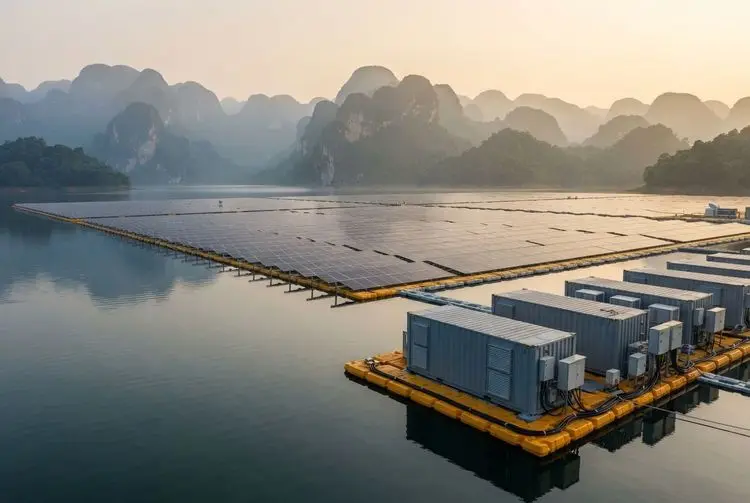
Vietnam's Ministry of Industry and Trade has raised all 12 solar price ceilings for 2026, with increases ranging from 6.9% to 16.9% compared to the previous year's levels. The new price frame, set under Decision 2946/QĐ-BCT signed on November 5, 2026, applies to solar projects across the country's three regions — north, central and south — and covers both ground-mounted and floating solar configurations, with and without battery energy storage.
The ministry posted the decision on November 9, 2026. It replaces the previous price frame under Decision 988/QĐ-BCT dated April 10, 2025, and was issued under the methodology defined in Circular 09/2025/TT-BCT. The ministry approved the ceilings based on a proposal from its Electricity Authority, following four reports submitted by state utility Vietnam Electricity (EVN) between May 5 and October 19, 2026.
All ceilings are expressed in Vietnamese dong per kilowatt-hour and exclude value-added tax.
Highest and lowest ceilings
The highest ceiling for 2026 is VND 2,120.31 ($0.082)/kWh, set for floating solar projects with battery storage in the northern region. The lowest ceiling is VND 1,104.32 ($0.043)/kWh, applied to ground-mounted solar without storage in the southern region.
The spread between the highest and lowest ceilings is substantial — the northern ground-mounted cap sits 44% above the southern one. For ground-mounted projects without storage, the ceilings are VND 1,591.02/kWh in the north, VND 1,293.17/kWh in the centre and VND 1,104.32/kWh in the south.
Central Vietnam saw the largest percentage increases across all configurations. The biggest single jump — 16.9% — applies to ground-mounted solar with batteries in the central region, where the ceiling rose to VND 1,469.90/kWh. The southern region saw the smallest increases.
Battery storage requirements
Projects that include battery storage must meet specific technical conditions under the new price frame. The battery must account for at least 10% of the plant's capacity and provide a minimum of two hours of storage and discharge capability.
The premium for adding battery storage is clearly visible in the ceiling prices. For ground-mounted solar in the north, the battery premium is 14% — the ceiling with storage is VND 1,591.02/kWh versus VND 1,382.7/kWh without storage in 2025. Floating solar commands an additional premium: in the north, floating solar without storage is priced 22% above ground-mounted without storage.
Regional breakdown
The 12 price ceilings cover four configurations — ground-mounted without storage, ground-mounted with batteries, floating without storage and floating with batteries — across three regions. Central floating solar without storage, for example, is set at VND 1,560.63/kWh.
Compared to 2025 levels, the increases are notable across the board. The 2025 ceiling for northern ground-mounted without storage stood at VND 1,382.7/kWh. Floating solar with storage in the north was VND 1,876.57/kWh in 2025, while the southern ground-mounted no-storage ceiling was VND 1,012.0/kWh.
Implementation and transparency
EVN and project generators are jointly responsible for implementing the new price ceilings. The ministry does not publish the underlying plant cost assumptions, output projections or exchange rate inputs used to calculate the ceilings, which limits the ability of developers to independently verify the methodology.
The price frame applies to projects that negotiate power purchase agreements with EVN under the framework set by Circular 09/2025/TT-BCT. Developers and investors will need to factor the regional and technology-specific ceilings into their project economics.
Large-scale project in the pipeline
One notable development in Vietnam's solar sector is the Dak Lak floating solar plant, a 452-MW project planned on the Ea Sup Thuong reservoir in Dak Lak province. The province has approved the investment policy for the plant, though the project has not yet reached financial close or construction.
The size of the Dak Lak project — 452 MW — would make it one of the largest floating solar installations in Southeast Asia if completed. Floating solar is particularly relevant in Vietnam given the country's extensive hydropower reservoir network, which offers surface area for co-located solar generation.
What the new ceilings mean for the market
For solar developers active in Vietnam, the 2026 price ceilings provide a clearer revenue framework for projects that can secure PPAs within the caps. The regional differentiation means that project economics will vary significantly depending on location. Northern projects benefit from the highest ceilings, reflecting higher construction and land costs as well as different solar resource conditions. Southern projects face the tightest ceilings, which may challenge project viability for ground-mounted configurations without storage.
The inclusion of battery storage premiums signals that Vietnam's policymakers are encouraging solar-plus-storage configurations, even though the technical requirements — 10% of capacity and two hours of discharge — are relatively modest by international standards. Developers considering storage will need to assess whether the price uplift adequately compensates for the additional capital expenditure.
The absence of published cost and exchange rate assumptions introduces uncertainty for investors trying to model long-term returns. With the Vietnamese dong subject to depreciation pressure, the effective USD-denominated revenue from VND-denominated PPAs could erode over time, a factor that project financiers will need to hedge against.