
SPONSORED

Croatia's Solar Boom and 247Solar's Hybrid CSP Backup System

Zagreb's Green Energy Fair showcased Croatia's accelerating solar build-out, while US startup 247Solar unveiled a hybrid CSP design with built-in fossil backup.
•• 5 Min
Croatia's Solar Boom and 247Solar's Hybrid CSP Backup System

Two parallel developments illustrate how far the solar industry has come: a record turnout at Croatia's Green Energy Fair in Zagreb and a US startup's plan to give concentrated solar power (CSP) its own fossil-fuel backup. Both point to a sector balancing large-scale deployment, policy support and technical innovation.

Zagreb fair draws regional trade crowd

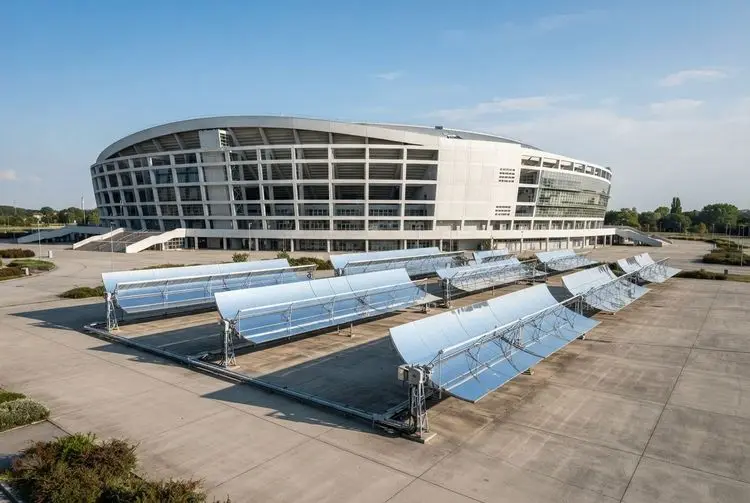
The Green Energy Fair, organised by AleDo TECH at Arena Zagreb, attracted more than 5,000 visitors in only its second edition. The event connected international suppliers with local installers and planners, with most attendees being trade professionals seeking information on solar technology, storage systems and e-mobility. Conference sessions tackled the electricity demand of data centres and the role of nuclear power in the future energy mix — a live question for Croatia, which jointly operates the Krško nuclear plant with Slovenia.

Organiser Domagoj Badanjak said the fair's growth since its 2025 debut showed the transition was moving, joking that even the opening ceremony started a few minutes late when responding to critics who call Croatia's energy transition too slow. "What matters is that we are heading in the right direction and making progress," he said.

EU Energy Commissioner Dan Jørgensen told attendees that renewables now cover almost 60 percent of Croatia's gross electricity consumption, well above the EU average. He called for electrifying transport, buildings and industry, and for adding flexibility through batteries, pumped storage and thermal storage. "Stronger power grids and better-connected markets can help countries share resources, improve security of supply, and bring down prices," Jørgensen added.

Policy backing and grid investment

Željko Krevelj, head of the Energy Directorate at Croatia's Ministry of Economy, framed the transition as a triple goal: security of supply, affordable energy prices and decarbonisation. Croatia has ended imports of Russian oil and gas, instead bringing substantial gas volumes through its LNG terminal on the island of Krk. The country has allocated more than €1.2 billion from its National Recovery and Resilience Plan to the energy transition, with over €570 million earmarked for grid expansion and battery systems. The ministry aims to have more than 250 MWh of battery storage installed by the end of the year and is preparing a new legal framework for renewables.

Transport electrification is advancing alongside the power sector. Tomislav Mihotić of the Ministry of Transport cited contracts signed in January for 68 electric buses serving six cities and one municipality, backed by €41.9 million in EU funding, plus 62 more electric buses ordered for Zagreb. Rail investment totals €117.9 million for 13 trains with alternative drive systems and two charging stations, with a further 30 battery, hybrid or hydrogen trains planned at a cost of €270 million. A 2 MW solar plant is being built along the Zagreb–Macelj motorway to cover most electricity needs of motorway facilities, with similar plans for other motorways. "Croatia has the potential not only to deploy new technologies but also to develop and manufacture them with domestic expertise," Mihotić said.

CSP with built-in backup

Across the Atlantic, 247Solar is reviving CSP with a hybrid twist. CSP uses mirrors, or heliostats, to concentrate sunlight into heat that can drive turbines and be stored for overnight generation, but it lost its competitive edge as PV panel prices plunged. The US startup has contracted with India to build a 1 MW concentrated solar plant that mixes in photovoltaics. Its key innovation: the same hardware that handles solar thermal output can run on fossil fuels as backup.

"Our systems are their own backup," said 247Solar's Mark von Keszycki. "During times of low solar resource—long duration, bad weather, whatever the case may be—they're able to burn a variety of fuels."

The receiver works with ambient-pressure air, outputting air at approximately 970°C for industrial heat, electricity generation or storage. Heat is stored in ceramic pellets roughly the size of golf balls rather than molten salts, avoiding phase-transition issues and providing nine to 20 hours of storage depending on configuration. Hot air feeds a heat exchanger designed as a drop-in replacement for a combustor on a traditional turbine, heating compressed air between the compression and expansion stages. "The heat exchanger does the same job as the combustor did," said 247Solar's Bruce Anderson. "It's in the same place in the turbine assembly as the combustor was: after the compression stage and before the expander."

The first installation pairs two 200 kW generators using standard off-the-shelf turbine packages apart from the heat exchanger. Adding fossil-fuel backup capability costs less than 10 percent of the total system cost, according to von Keszycki. Exhaust air at around 250°C is a separate usable resource for industrial processes and absorption cooling. The system is modular, with 247Solar already engineering a 3 MW facility combining multiple units that share a single tower with multiple receivers and heat storage.

The initial plant is small and mainly intended to validate engineering, with "unknown unknowns" cited as the biggest worry. Few grid incentives exist for around-the-clock renewable energy, and backup costs are often absorbed by other parties. 247Solar is especially targeting remote mining sites that typically rely on expensive shipped-in diesel and may need process heat and emissions accounting.

Two paths, one goal

The two stories highlight a shared reality: the energy transition is advancing, but challenges remain. Croatia's fair shows strong policy support, falling costs and growing regional cooperation, while 247Solar's economics remain uncertain without market incentives for round-the-clock renewables. The Zagreb conference addressed nuclear power as part of the future mix — a topic absent from the 247Solar piece, which focuses purely on solar thermal and fossil backup. Croatia's grid benefits from EU funding and cross-border integration, while 247Solar depends on niche markets like remote mining. Together, they show a sector diversifying its solutions, from large-scale PV and storage to hybrid thermal systems, as it seeks to balance reliability, cost and decarbonisation.

Croatia SolarGreen Energy Fair Zagreb247SolarConcentrated Solar PowerBattery StorageHybrid CspRenewable Energy PolicySolar Thermal Backup

Most Popular News

  1. Greenhushing rises as solar costs fall and grid access becomes king
  2. MIT study: Excess renewable energy could power factories and data centers
  3. IHCL switches on 500-kW solar plant at Taj Fort Aguada in Goa
  4. Adaptive water cooling stabilizes hybrid solar collector across three climates
  5. Section 232 solar tariffs take effect Dec 4, reshaping US supply chain

Disclaimer


Important notice regarding existing conflicts of interest:

We expressly point out that conflicts of interest exist in connection with this publication:

1. Stock Market Media Ltd. and persons closely associated with it hold shares in the companies recommended here and intend to sell them within the scope of, and at any time during, this recommendation. This constitutes a clear and specific conflict of interest.

2. The publisher of this publication and the responsible editors receive financial remuneration for its preparation. This, too, constitutes a clear and specific conflict of interest.

3. Please also note the further statements on existing conflicts of interest in the disclaimer below, inter alia under no. 2.

Important information and mandatory disclosures pursuant to the German Securities Trading Act (Wertpapierhandelsgesetz, WpHG) and pursuant to the German Financial Investment Ordinance (Finanzanlageverordnung, FinAnV).

Stock Market Media Ltd. has notified the German Federal Financial Supervisory Authority (Bundesanstalt für Finanzdienstleistungsaufsicht, “BaFin”), pursuant to the WpHG, of its activity as a producer of investment strategy recommendations within the meaning of Article 3(1) point 34 of Regulation (EU) No 596/2014 or of investment recommendations within the meaning of Article 3(1) point 35 of Regulation (EU) No 596/2014 (formerly “financial analyses”). The obligations of Stock Market Media Ltd. are governed primarily by §§ 85, 86 WpHG, Regulation (EU) No 596/2014 and Delegated Regulation (EU) 2016/958.

Information on the producer(s) of this publication:
Mr Roberto Gonçalves de Albuquerque, as analyst and editor-in-chief, is responsible for the preparation of the texts and contents of this publication. The publisher is Stock Market Media Ltd., 405 Kings Road, Flat 600, London; SW10 0BB, United Kingdom, represented by its Director Roberto Gonçalves de Albuquerque.

Important notes on the preparation of this publication:
This publication contains both facts and factual information on the companies discussed and purely subjective value judgements, interpretations, estimates, projections, forecasts and price targets. We endeavour to distinguish these from one another as transparently as possible in order to avoid misleading statements. Research, preparation and wording are carried out using common digital and AI-supported tools; the review of the content and the editorial responsibility lie with us. The essential bases and standards of our value judgements and valuations of the shares discussed are based on the following approach:

Assessment and valuation of companies according to conventional valuation methods (fundamental valuation approach)

  • Assessment of the potential of the company's future development (growth approach) and projection onto the corresponding valuation potential (price potential analysis) as well as a possible valuation of the company's shares on the basis of potential profit expectations (P/E ratio projection)
  • Assessment of the best-case scenario expected by us in the event of the company's absolute success (blue-sky potential approach)
  • Effect on the share price of the increased awareness of the recommended share expected by us, resulting from a strong rise in demand on the market (particularly decisive in the case of illiquid shares or shares recommended newly or for the first time) on account of the publications (mostly buy recommendations) published by us or by third parties (multiplier / momentum effect, hype), and thereby a disproportionately rising return/share price with a correspondingly rising risk
  • Technical analysis of the share price in accordance with common methods of analysis, mostly for the prediction of price signals (buy or sell signal, breakout of the share, determination of price targets, support or resistance areas, expected minimum movements or minimum counter-movements, prediction of signal points (if-then), etc.), for the most part building on the expected mass psychology (technical approach).

Conventional valuation approaches often cannot be meaningfully applied to young companies or companies that do not yet generate revenue. In valuing such companies we therefore tend to rely on the potential analysis calculated by us and on the assessment of the demand for such shares on the capital market. Ultimately, the market decides on the share price of a company. If extensive recommendations of a share give rise to excessive demand for it, it is possible that the share price will rise at an above-average rate on high trading volume. Although this leads to extreme opportunities for profit, it correspondingly increases the risk of a bubble forming, with a corresponding fall in price. The increased volatility of the share in such situations gives rise to above-average opportunities for profit and loss, both in both trading directions and in the case of recurring counter-movements. Such market developments are also an important part of our trading recommendations and valuation approaches.

This publication deals exclusively with securities of above-average volatility with high potential for profit and also for loss.

Note on sources of information:
The reliability of sources of information is examined by us in detail before they are used and is subjectively assessed by us according to their credibility and significance. In doing so, we decide by our own standards which sources we consider relevant, too conservative or too optimistic. Ultimately, we determine our recommendations on the basis of our personal assessments. In obtaining information we draw on numerous publicly accessible sources such as press releases, ad hoc announcements, company announcements, company presentations, publications and articles on the company discussed, common financial media in Germany and abroad as well as company or sector analyses by third parties.

Our publications use exclusively publicly available information and sources as well as information disseminated by the company itself.

Note on existing conflicts of interest:
We hereby point out that shareholders, editors, employees and persons or companies involved in the preparation of this publication, as well as principals (third parties) commissioning the publication of Stock Market Media Ltd., hold, directly or indirectly, at the time of this publication, interests in securities which are discussed in the respective publication, and are therefore interested in an increase in price and/or turnover, i.e. also in increased trading liquidity, since it is intended to sell these securities in direct connection with this publication and to participate in rising prices and turnover. An increase in the price of the shares of the companies presented may lead to an increase in the assets of these persons. In any case, the share price of the company may be significantly influenced by the discussion of the company. In particular, the share price of the companies discussed is also materially influenced by securities transactions. This applies in particular where the companies concerned are ones whose shares do not have a broad market capitalisation and for which only a narrow market exists. Here, even small order volumes can have considerable effects on prices. However, they are also interested in the price of the company discussed falling if they wish to acquire its shares more cheaply. By law, this gives rise to a conflict of interest, to which we hereby expressly draw attention.

Stock Market Media Ltd. and its employees are furthermore remunerated for the preparation, electronic distribution and publication of this publication as well as for other services. By law, this gives rise to a conflict of interest, to which we hereby expressly draw attention.

This remuneration may be paid by the company about which Stock Market Media Ltd. publishes information, by third parties affiliated with these companies or by other third parties pursuing an interest with regard to the companies discussed in connection with this publication. By law, this gives rise to a conflict of interest, to which we hereby expressly draw attention. This arises, first of all, from the fact that Stock Market Media Ltd. could make its statements in the interest of its principal. Stock Market Media Ltd. and/or companies affiliated with it have entered into an agreement, for a fee, with the company in question or with its shareholders for the preparation of the editorial coverage. By law, this gives rise to a conflict of interest, to which we hereby expressly draw attention.

Note on the handling of internal organisational duties:
Owing to the small size of the publisher's business, internal control of the compliance processes of the employees and other parties contributing to this publication is limited.

Competent supervisory authority:
Stock Market Media Ltd. has notified BaFin of its activity pursuant to § 86 WpHG.