
DTE and sonnen Launch Two-Year Virtual Power Plant Pilot in Michigan
Nearly 100 homes at Veridian at County Farm will pool sonnen batteries into a grid-interactive fleet approved by Michigan regulators.
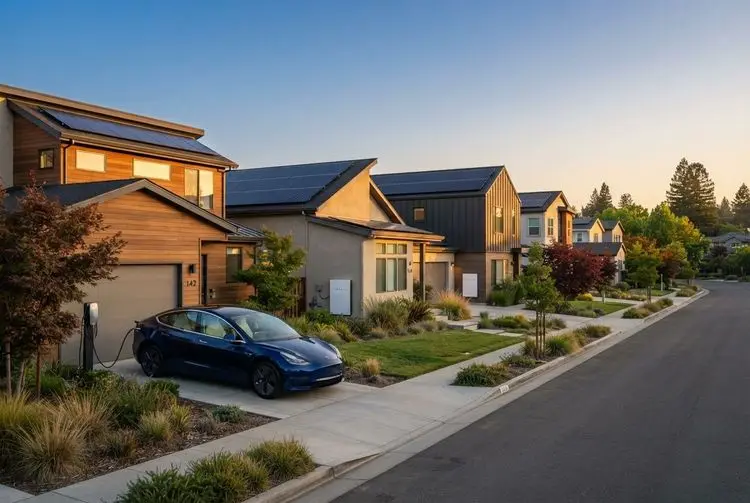
DTE Energy and sonnen have launched a two-year virtual power plant (VPP) pilot in Michigan, pooling residential battery storage across nearly 100 homes into a single grid-interactive resource. The Michigan Public Service Commission (MPSC) approved the project, which the companies describe as Michigan's first VPP of its kind.
Under the pilot, sonnen battery systems installed in each home are coordinated through VPP technology so the fleet can respond to grid conditions in real time. DTE Energy will use the two-year window to assess how the aggregated batteries perform against three priorities it names for the project: meeting demand growth, supporting reliability and keeping electricity affordable.
The pilot site is Veridian at County Farm, a 14-acre all-electric development. The community comprises 170 mixed-income homes, and rooftop solar on the houses produces more electricity than each home consumes. Every home is fitted with a sonnen battery storage system, while Bosch geothermal heat pumps supply heating and cooling. The homes also include electric vehicle (EV) chargers, part of a design intended as a practical model for fossil-fuel-free living.
How the Veridian pilot works
A virtual power plant does not generate electricity itself. Instead, it coordinates batteries and networked devices — in this case, home storage systems — so that a utility can call on them collectively when the grid needs support. That turns a scattered set of behind-the-meter assets into a distributed energy resource (DER) that can be dispatched as a block.
For DTE, the value lies in testing whether customer-owned storage can help absorb demand growth without relying solely on new centralized generation. For sonnen, the pilot is a commercial-scale demonstration of its hardware and management software inside a community that was designed around electrification from the outset.
"The Veridian VPP pilot will be a true demonstration of the decentralized, digitalized and decarbonized energy system of the future," said Blake Richetta, sonnen chairman and CEO. Richetta also credited the utility's approach, adding: "DTE's innovative spirit and firm resolve are making Michigan's first grid-interactive VPP community a reality, and that is a major achievement."
Why utilities are watching VPPs
Advocates of virtual power plants argue that coordinating batteries and networked devices can deliver reliability gains, lower system-wide costs and long-term affordability benefits as electricity demand rises. A central part of that argument is that rooftop solar paired with batteries and energy management software may use existing grid resources more efficiently than building new utility-scale generation.
The concept also lines up with state-level policy direction. The MPSC has recommended maximizing existing grid resources and expanding participation of distributed energy as routes to lower costs, and the Veridian project is aligned with those recommendations.
Veridian at County Farm was developed by Thrive Collaborative, which has worked with sonnen for several years on the community. The development includes vegetable gardens and community natural spaces alongside its all-electric housing.
Affordability framed the utility's rationale. "Across Michigan, families are feeling the pressure of higher costs, and we know affordability matters more than ever," said Joi Harris, president and CEO of DTE Energy.
What to watch
For installers, developers and investors, the pilot is a test of whether aggregated home storage can be treated as dependable capacity rather than a novelty. The questions that matter are operational: how consistently the fleet responds when called, how the software dispatches batteries without compromising household needs, and how the results translate into value for the utility and for participating homeowners.
The two-year timeframe gives DTE room to gather performance data across seasons before drawing conclusions. For the residential storage market, a successful outcome would strengthen the case that new-build communities designed around solar, batteries and electrified heating can serve grid needs directly — and that aggregation software, not additional generation alone, can be part of the answer to rising demand.