
SPONSORED

Egypt Solar Energy: Grid Readiness Tops Storage and Local Manufacturing

Egypt ranks grid readiness above new solar plants, with storage, smart grids and local content targets shaping the next phase.
•• 4 Min
Egypt Solar Energy: Grid Readiness Tops Storage and Local Manufacturing

Egypt's solar sector is shifting its focus from building capacity to absorbing it. Grid readiness now ranks as the top priority, ahead of constructing new plants, according to an assessment attributed to Dr. Iman Mohamed Mustafa and reported by Voice of Emirates. The reasoning is straightforward: without storage and smart grids, daytime solar output cannot be shifted to the evening peak, where demand is highest.

The distinction between nominal installed capacity and actual electricity generated sits at the heart of the debate. Egypt's solar capacity factor ranges from 22% to 27%, a function of irradiation, temperature and system losses. A 100 MW plant therefore produces roughly 190 to 230 million kWh annually — not the 876 million kWh a naive capacity calculation would suggest.

Benban and the Structural Boom

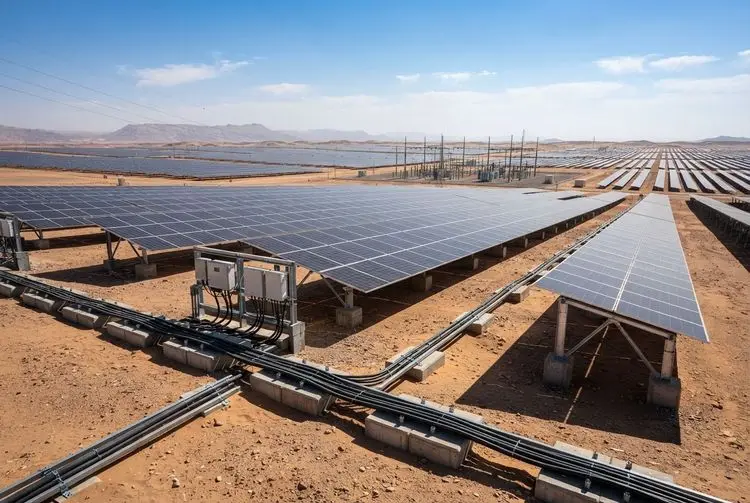
Benban Solar Park in Aswan underpins what the source describes as Egypt's structural solar boom. The country sits in the global solar belt, with irradiation of 2,200 to 2,600 kWh per square metre annually, and global panel prices are declining, easing construction costs. Storage costs, including lithium and sodium batteries, are also falling worldwide.

The economics of displacement are compelling. A 1,000 MW solar plant generates about 2.19 billion kWh annually and saves nearly 375 million cubic metres of gas per year — a range of 350 to 400 million cubic metres across estimates. At an assumed gas export price of $11 per million Btu, that translates into annual savings of more than $140 million.

Three value paths are identified for Egyptian solar beyond pure electricity supply: green hydrogen and ammonia, desalination, and industrial linkage. Energy accounts for 40% to 50% of desalination operating costs, which makes solar and concentrating solar power (CSP) attractive there. CSP can also supply industrial process steam at temperatures of 150°C to 400°C, offsetting 30% to 50% of gas and fuel oil use in that segment.

Rooftop Economics and Payback

For commercial and industrial customers, the numbers are already persuasive. A 100 kW rooftop system requires an investment of about 1.9 million Egyptian pounds and produces roughly 170,000 kWh annually, cutting a factory's electricity bill by more than 540,000 EGP per year. That implies a payback of about 3.5 to 4 years, while the source puts the broader rooftop payback range at 4 to 6 years.

Net metering strengthens the case by reducing the need for costly battery storage, since surplus generation is credited against consumption rather than stored on site. Levelised cost of electricity (LCOE) remains the standard yardstick for viability, and panels now last beyond 25 years — a warranty of at least 25 years, with a performance guarantee, is the benchmark buyers should demand.

Local Content From 30% to 60%

Egypt has an industrial and assembly base but limited core component manufacturing. The localisable share covers mounting structures, cables, connectors, transformers and panel assembly. Imported content includes silicon cells, chips, smart inverters, storage systems and lithium batteries. The stated target is graduated local content rising from 30% to 60%, supported by joint ventures and industrial zones offering tax and customs incentives.

Chinese manufacturers retain a scale advantage measured in tens of gigawatts annually, and panel technology is shifting from PERC to TOPCon and heterojunction. Rising interest rates and exchange rate fluctuations complicate project financing, which matters for anyone modelling Egyptian returns.

Grid Constraints and Curtailment

The duck curve and frequency and voltage stability are the key grid challenges. Forced curtailment becomes a real risk when the grid cannot absorb surplus output, which is precisely why grid readiness outranks new build. Pumped storage at Gabal El-Attaka, battery energy storage systems (BESS), load shifting and regional interconnection form the mitigation toolkit.

Three quick measures are proposed: faster grid connection, storage incentives and corporate power purchase agreements (PPAs). On the technical side, nanocoatings, waterless robotic cleaning and thermal-imaging drones reduce losses — dust and degradation can cut productivity by more than 15% to 20% without cleaning.

Common installation errors include cheap components, bad design, and missing grounding and protection. Certification through IEC or TÜV, anti-islanding protection, bi-directional meters and distribution company approval are the non-negotiables. With the EU Carbon Border Adjustment Mechanism (CBAM) in implementation, low-carbon Egyptian aluminium, cement, chemicals and textiles gain competitiveness — and solar becomes an input to export value, not just a power cost line.

Egypt Solar EnergyGrid ReadinessBenban Solar ParkBattery StorageLocal Content ManufacturingRooftop Solar PaybackGreen Hydrogen EgyptCBAM

Most Popular News

  1. Greenhushing rises as solar costs fall and grid access becomes king
  2. MIT study: Excess renewable energy could power factories and data centers
  3. IHCL switches on 500-kW solar plant at Taj Fort Aguada in Goa
  4. Adaptive water cooling stabilizes hybrid solar collector across three climates
  5. Section 232 solar tariffs take effect Dec 4, reshaping US supply chain

Disclaimer


Important notice regarding existing conflicts of interest:

We expressly point out that conflicts of interest exist in connection with this publication:

1. Stock Market Media Ltd. and persons closely associated with it hold shares in the companies recommended here and intend to sell them within the scope of, and at any time during, this recommendation. This constitutes a clear and specific conflict of interest.

2. The publisher of this publication and the responsible editors receive financial remuneration for its preparation. This, too, constitutes a clear and specific conflict of interest.

3. Please also note the further statements on existing conflicts of interest in the disclaimer below, inter alia under no. 2.

Important information and mandatory disclosures pursuant to the German Securities Trading Act (Wertpapierhandelsgesetz, WpHG) and pursuant to the German Financial Investment Ordinance (Finanzanlageverordnung, FinAnV).

Stock Market Media Ltd. has notified the German Federal Financial Supervisory Authority (Bundesanstalt für Finanzdienstleistungsaufsicht, “BaFin”), pursuant to the WpHG, of its activity as a producer of investment strategy recommendations within the meaning of Article 3(1) point 34 of Regulation (EU) No 596/2014 or of investment recommendations within the meaning of Article 3(1) point 35 of Regulation (EU) No 596/2014 (formerly “financial analyses”). The obligations of Stock Market Media Ltd. are governed primarily by §§ 85, 86 WpHG, Regulation (EU) No 596/2014 and Delegated Regulation (EU) 2016/958.

Information on the producer(s) of this publication:
Mr Roberto Gonçalves de Albuquerque, as analyst and editor-in-chief, is responsible for the preparation of the texts and contents of this publication. The publisher is Stock Market Media Ltd., 405 Kings Road, Flat 600, London; SW10 0BB, United Kingdom, represented by its Director Roberto Gonçalves de Albuquerque.

Important notes on the preparation of this publication:
This publication contains both facts and factual information on the companies discussed and purely subjective value judgements, interpretations, estimates, projections, forecasts and price targets. We endeavour to distinguish these from one another as transparently as possible in order to avoid misleading statements. Research, preparation and wording are carried out using common digital and AI-supported tools; the review of the content and the editorial responsibility lie with us. The essential bases and standards of our value judgements and valuations of the shares discussed are based on the following approach:

Assessment and valuation of companies according to conventional valuation methods (fundamental valuation approach)

  • Assessment of the potential of the company's future development (growth approach) and projection onto the corresponding valuation potential (price potential analysis) as well as a possible valuation of the company's shares on the basis of potential profit expectations (P/E ratio projection)
  • Assessment of the best-case scenario expected by us in the event of the company's absolute success (blue-sky potential approach)
  • Effect on the share price of the increased awareness of the recommended share expected by us, resulting from a strong rise in demand on the market (particularly decisive in the case of illiquid shares or shares recommended newly or for the first time) on account of the publications (mostly buy recommendations) published by us or by third parties (multiplier / momentum effect, hype), and thereby a disproportionately rising return/share price with a correspondingly rising risk
  • Technical analysis of the share price in accordance with common methods of analysis, mostly for the prediction of price signals (buy or sell signal, breakout of the share, determination of price targets, support or resistance areas, expected minimum movements or minimum counter-movements, prediction of signal points (if-then), etc.), for the most part building on the expected mass psychology (technical approach).

Conventional valuation approaches often cannot be meaningfully applied to young companies or companies that do not yet generate revenue. In valuing such companies we therefore tend to rely on the potential analysis calculated by us and on the assessment of the demand for such shares on the capital market. Ultimately, the market decides on the share price of a company. If extensive recommendations of a share give rise to excessive demand for it, it is possible that the share price will rise at an above-average rate on high trading volume. Although this leads to extreme opportunities for profit, it correspondingly increases the risk of a bubble forming, with a corresponding fall in price. The increased volatility of the share in such situations gives rise to above-average opportunities for profit and loss, both in both trading directions and in the case of recurring counter-movements. Such market developments are also an important part of our trading recommendations and valuation approaches.

This publication deals exclusively with securities of above-average volatility with high potential for profit and also for loss.

Note on sources of information:
The reliability of sources of information is examined by us in detail before they are used and is subjectively assessed by us according to their credibility and significance. In doing so, we decide by our own standards which sources we consider relevant, too conservative or too optimistic. Ultimately, we determine our recommendations on the basis of our personal assessments. In obtaining information we draw on numerous publicly accessible sources such as press releases, ad hoc announcements, company announcements, company presentations, publications and articles on the company discussed, common financial media in Germany and abroad as well as company or sector analyses by third parties.

Our publications use exclusively publicly available information and sources as well as information disseminated by the company itself.

Note on existing conflicts of interest:
We hereby point out that shareholders, editors, employees and persons or companies involved in the preparation of this publication, as well as principals (third parties) commissioning the publication of Stock Market Media Ltd., hold, directly or indirectly, at the time of this publication, interests in securities which are discussed in the respective publication, and are therefore interested in an increase in price and/or turnover, i.e. also in increased trading liquidity, since it is intended to sell these securities in direct connection with this publication and to participate in rising prices and turnover. An increase in the price of the shares of the companies presented may lead to an increase in the assets of these persons. In any case, the share price of the company may be significantly influenced by the discussion of the company. In particular, the share price of the companies discussed is also materially influenced by securities transactions. This applies in particular where the companies concerned are ones whose shares do not have a broad market capitalisation and for which only a narrow market exists. Here, even small order volumes can have considerable effects on prices. However, they are also interested in the price of the company discussed falling if they wish to acquire its shares more cheaply. By law, this gives rise to a conflict of interest, to which we hereby expressly draw attention.

Stock Market Media Ltd. and its employees are furthermore remunerated for the preparation, electronic distribution and publication of this publication as well as for other services. By law, this gives rise to a conflict of interest, to which we hereby expressly draw attention.

This remuneration may be paid by the company about which Stock Market Media Ltd. publishes information, by third parties affiliated with these companies or by other third parties pursuing an interest with regard to the companies discussed in connection with this publication. By law, this gives rise to a conflict of interest, to which we hereby expressly draw attention. This arises, first of all, from the fact that Stock Market Media Ltd. could make its statements in the interest of its principal. Stock Market Media Ltd. and/or companies affiliated with it have entered into an agreement, for a fee, with the company in question or with its shareholders for the preparation of the editorial coverage. By law, this gives rise to a conflict of interest, to which we hereby expressly draw attention.

Note on the handling of internal organisational duties:
Owing to the small size of the publisher's business, internal control of the compliance processes of the employees and other parties contributing to this publication is limited.

Competent supervisory authority:
Stock Market Media Ltd. has notified BaFin of its activity pursuant to § 86 WpHG.