
Goldi Solar Plans ₹5,000-10,000 Crore Full-Stack Manufacturing Push
Indian manufacturer moves beyond its 15.2 GW module base into cells, ingots and wafers, with investment spread over three to five years.
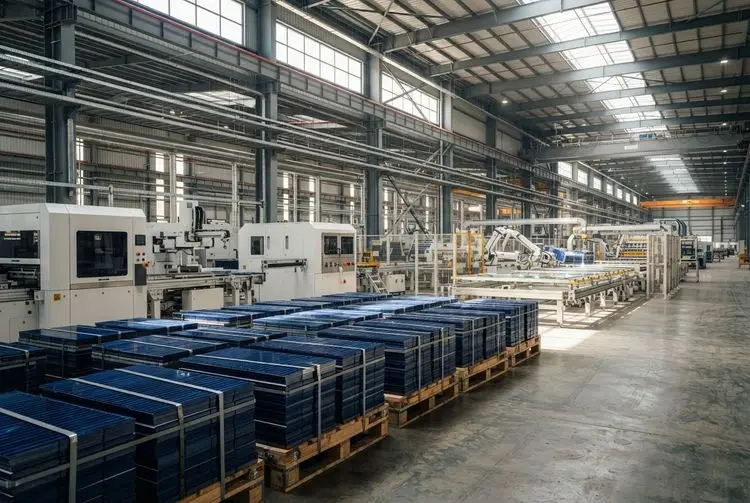
Goldi Solar intends to invest ₹5,000-10,000 crore in full-stack manufacturing over the next three to five years, extending its footprint from modules into solar cells, ingots and wafers. The 15-year-old Indian manufacturer disclosed the plan through its Global CEO, Mahesh Ramanujan, in an interview with ET Energyworld at the Bharat Renewable Energy Summit 2026.
"We plan ₹5,000-10,000 crore investment in full-stack manufacturing over next 3-5 years," Ramanujan said.
The company already operates 15.2 GW of module manufacturing capacity, a base it built up over the last two to two and a half years. The new spending would push it upstream into the three stages that sit before module assembly in the crystalline-silicon value chain — cells first, followed by ingots and wafers.
Backward integration, cell first
Goldi's backward integration strategy starts with solar cells, the stage where India's domestic manufacturing base has historically been thinnest relative to module assembly. Ingots and wafers — the upstream steps where polysilicon is crystallised into ingots and then sliced into wafers — follow in sequence.
The company frames the build-out on a deployment timeline of the next two to three years. India remains the first priority for the new capacity, with global markets identified as a possible additional location for manufacturing rather than a substitute for domestic expansion.
For installers and developers, the significance lies in supply chain depth rather than headline capacity. A domestic cell line reduces exposure to imported cell pricing and to the customs and logistics variables that sit between a module order and a project commissioning date. Wafer and ingot capacity goes a step further, though those stages are the most capital-intensive and technically demanding in the chain.
AI-enabled lines and the quality argument
Goldi positions automation as a differentiator rather than a cost exercise. The company says its first AI-enabled machine line gave it a first-mover advantage, and that AI adoption reduced quality issues and costs while upgrading employee skills. The wider industry has since followed, with AI-enabled automated manufacturing lines now broadly adopted across solar production.
Quality is tied directly to asset life in the company's framing. Solar infrastructure is expected to operate for 30-35 years, which makes defect rates at the cell and wafer stage a long-duration financial risk rather than a manufacturing metric alone. That argument carries weight with investors underwriting power purchase agreements (PPAs) and with lenders assessing degradation assumptions over multi-decade horizons.
Exports, policy and partnerships
On exports, Goldi attributes its US market success to quality, traceability and long-term contracts, and describes support between the US and Indian solar industries as reciprocal in nature. Europe is described as opening up but remaining highly regulation-centric, a characterisation familiar to suppliers navigating the bloc's compliance and documentation requirements.
The company is seeking a quality-centric policy framework and a level playing field — a positioning that places standards enforcement, rather than capacity targets, at the centre of its policy ask.
On building out capacity, Goldi prefers integration and partnerships with local manufacturers over a solo build-out. It also states that it values Chinese partners and maintains a good working relationship with them, while describing localisation as both a privilege and a priority, framed around India's Atmanirbhar Bharat self-reliance initiative.
What to watch
Goldi treats current module overcapacity as a short-term concern rather than a structural, long-term condition — a view that underpins its willingness to commit capital upstream. Battery energy storage systems (BESS) are flagged as a future opportunity, and the company says it is tracking emerging demand from data centres and artificial intelligence.
The open questions for the market are sequencing and financing: whether cell capacity arrives on the stated two-to-three-year deployment timeline, and whether ingot and wafer lines follow at the same pace. For buyers, the practical test will be whether domestic cell supply translates into contracted volumes and traceable documentation that export markets and long-tenor project financiers will accept.