
India's 500 GW target hinges on long-duration energy storage scale-up
New IESA report warns LDES deployment must increase nearly 50-fold to meet 2030 goals.
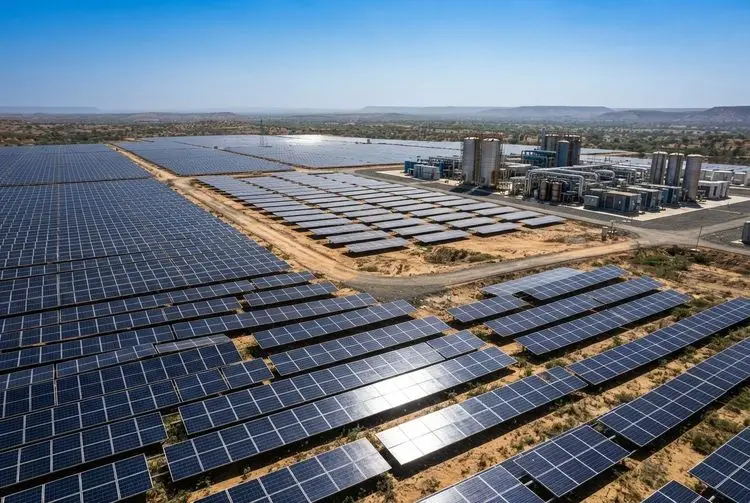
India's ambition to reach 500 GW of non-fossil fuel capacity by 2030 faces a critical bottleneck: the lack of long-duration energy storage (LDES). A new report from the India Energy Storage Alliance (IESA), produced in association with Customized Energy Solutions, warns that without a rapid scale-up of LDES, the country's renewable energy targets will remain out of reach.
The report, titled "Long-Duration Energy Storage: Global Outlook and India's Deployment Pathway", highlights that India already curtailed 2.3 TWh of solar energy in the first eight months of 2025 alone. That curtailment stems from grid and storage constraints — electricity generated by solar plants simply cannot be absorbed or stored when the sun is shining. As renewable capacity grows, that problem will intensify.
Debmalya Sen, IESA President, said: "India's journey toward a clean and reliable energy future depends on our ability to integrate renewables efficiently and flexibly. Long-duration energy storage is the linchpin that will enable us to maximise renewable utilisation, enhance grid stability, and build resilience into our power system."
Global LDES gap is enormous
The global picture is equally stark. The IESA report, drawing on data from the LDES Council, finds that the world needs 8 TW of LDES capacity with 140 TWh of storage by 2040. Currently, only 117 GW of LDES is operational globally — a figure that must increase nearly 50-fold to meet the target.
The capital investment required is estimated at USD 4 trillion. However, the report notes that deploying LDES at scale could yield annual system-wide savings of USD 540 billion, primarily through avoided curtailment, reduced fossil fuel reliance and improved grid efficiency.
The current global project pipeline stands at just 0.22 TW, or roughly 3 percent of the 8 TW target. That gap underscores the urgency of policy action and investment.
India's storage landscape
India's battery energy storage system (BESS) requirement stands at 34.5 GWh by FY2027, according to the Central Electricity Authority (CEA). To date, only 9.3 GWh of BESS capacity has been commissioned in the country. However, a further 195 GWh of BESS projects have been awarded or are under tender, signalling strong momentum.
Most of the current BESS pipeline consists of short-duration solutions, typically one to four hours of discharge. For grid stability and round-the-clock renewable integration, India needs storage that can discharge for eight hours or more — the domain of LDES.
Several LDES technologies are available. Flow batteries can provide 8 to 12 hours of daily storage cycles. Iron-air batteries offer multi-day flexibility. Pumped hydro, compressed air energy storage and thermal energy storage are suited for large-scale, long-duration applications. The optimal technology mix, the report notes, depends on grid applications, economics and environmental factors.
Policy gaps remain
Despite the clear need, India currently has no formal statutory definition for long-duration storage. There is also no dedicated funding mechanism for storage systems with eight hours or more of discharge duration. The IESA report identifies viability gap funding (VGF) in FY28 as a key enabler for LDES deployment, but that mechanism has yet to be formalised.
Without a definition and a funding pathway, project developers face uncertainty when planning LDES investments. The report argues that technology-neutral policy support and innovative business models are essential to bridge the gap.
Debmalya Sen added: "With the right policy support, innovative business models, and technology-neutral investment, India can set a global benchmark for sustainable energy integration and system reliability."
What it means for the solar industry
For solar project developers and investors, the LDES gap represents both a risk and an opportunity. Curtailment of 2.3 TWh in eight months is a direct revenue loss for solar plant operators. As India adds more solar capacity toward the 500 GW target, curtailment will rise unless storage is deployed in parallel.
The shift in focus from capacity addition to optimisation and integration of renewables is already underway. LDES enables surplus electricity capture and dispatch, which is vital for grid reliability. For installers and system integrators, the growing pipeline of 195 GWh in BESS projects signals a rapidly expanding market — but one that will increasingly demand longer-duration solutions.
The IESA report makes clear that the window for action is narrow. With global LDES deployment needing to increase nearly 50-fold and India's own storage requirements climbing steeply, the policy and investment decisions made in the next two to three years will determine whether the 2030 target is met.