
Kazakhstan to Commission 92 MW of Solar in 2026 as Pipeline Hits 900 MW
Five solar plants totaling over 92 MW will come online in Kazakhstan by end of 2026.
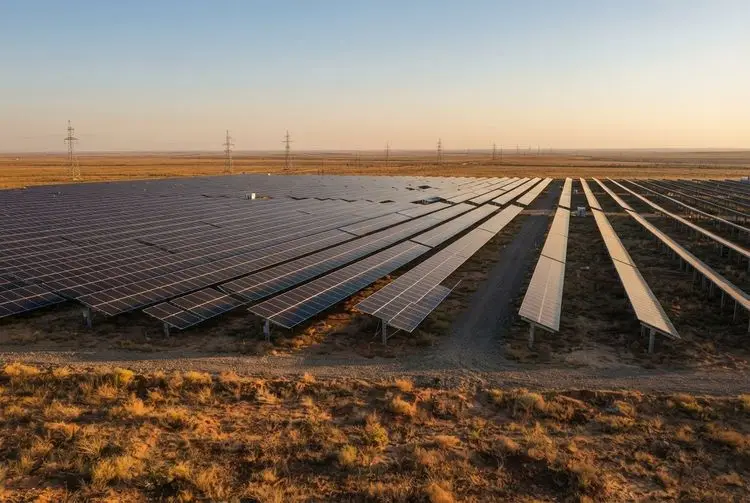
Kazakhstan is pushing ahead with solar deployment, planning to commission five new solar power plants with a combined capacity exceeding 92 MW by the end of 2026, according to the Kazakh Ministry of Energy. The announcement, reported Nov. 23, highlights the Central Asian nation's effort to diversify its energy mix and expand renewable generation under directives from President Kassym-Jomart Tokayev.
Tokayev has stressed the need to accelerate renewable energy development, particularly solar, in his state-of-the-nation address. The president's directive frames solar expansion as both a decarbonization measure and a core element of strengthening Kazakhstan's electricity supply to meet rising demand.
Current renewable capacity and generation
Kazakhstan's total installed renewable energy capacity now stands at 3.7 GW, of which 1.3 GW is solar power, the Energy Ministry reported. From January to September 2026, renewable energy facilities generated 7.8 billion kWh of electricity, with solar plants accounting for 1.9 billion kWh of that total.
2026 commissioning progress
Kazakhstan initially planned to commission 10 renewable energy facilities with a combined capacity of 245 MW this year. Seven facilities are already operational, including three solar power plants with a total capacity of 62.6 MW:
- Stellar Energy LLP: a 20 MW solar plant in the Mangystau Region - Altyn Solar Energy LLP: a 22.6 MW solar plant in the Kostanai Region - Jetisu Terra Power LLP: a 20 MW solar plant in the Zhetisu Region
Two additional solar plants developed by Alkhena LLP, with a combined capacity of 30 MW, are scheduled to begin operations in the Kyzylorda Region before the end of the year. Together with the three operational plants, these five solar projects account for the 92 MW of solar capacity being commissioned in 2026.
Project pipeline and major initiatives
Beyond this year's completions, Kazakhstan is building a pipeline of prospective solar projects with a combined capacity of approximately 900 MW. Major initiatives under consideration include a 300 MW solar plant planned by China Energy and projects developed by Tumar Commerce with a combined capacity of up to 1 GW. These projects signal growing international and private-sector interest in Kazakhstan's solar market, with Chinese energy firms and domestic developers both positioning for large-scale deployment.
Long-term targets to 2035
By the end of 2035, Kazakhstan aims to commission at least 8.4 GW of new renewable energy capacity, including approximately 1.8 GW of solar generation. The target reflects the country's ambition to scale renewables substantially over the next decade while maintaining a diversified energy portfolio.
Grid integration challenges ahead
The expansion comes as Kazakhstan moves into the next phase of its energy transition, with a growing focus on integrating renewable sources into the national power system. As solar and wind generation increase, developing transmission infrastructure, energy storage and grid flexibility will become increasingly important to ensure a stable electricity supply. For installers, developers and investors, these grid-related requirements represent both a challenge and an opportunity, as storage and flexibility solutions become essential complements to generation capacity.
Regional context
Kazakhstan's solar push occurs against the backdrop of its dominant role in regional fossil fuel production. Earlier reporting by Qazinform noted that Kazakhstan accounted for approximately 88% of Central Asia's total oil production in 2025, according to Eni's World Energy Review 2026. The country's renewable energy expansion therefore represents a strategic diversification rather than a wholesale shift away from hydrocarbons, with solar positioned as a growing pillar of a broader energy strategy.
Outlook
With 62.6 MW of solar already online in 2026 and another 30 MW expected from Alkhena's Kyzylorda projects before year-end, Kazakhstan is on track to meet its 92 MW solar commissioning target for the year. The approximately 900 MW pipeline, combined with the 1.8 GW solar goal for 2035, indicates a sustained multi-year procurement and construction cycle that should draw continued interest from EPC contractors, module suppliers, trackers, inverters and energy storage providers. The emphasis on transmission infrastructure and grid flexibility suggests that ancillary equipment and software markets will grow alongside generation capacity, making Kazakhstan a market worth watching for solar industry professionals across the value chain.