
SPONSORED

Macquarie Backs 1 GW Scottish BESS as Norfolk Solar Faces Opposition

UK energy storage investment surges while a major solar and data centre project meets fierce local resistance.
•• 6 Min
Macquarie Backs 1 GW Scottish BESS as Norfolk Solar Faces Opposition

The UK's renewable energy landscape is pulling in two directions this week. Macquarie Capital has entered a joint venture to develop a 1 GW battery storage portfolio in Scotland, while a 4,695-acre solar farm and data centre proposal in Norfolk faces unified opposition from local councillors and residents. The contrasting developments highlight the balancing act between grid-scale clean energy investment and community concerns over land use and food security.

Macquarie Capital and Revera Energy Partner on 1 GW Scottish BESS Portfolio

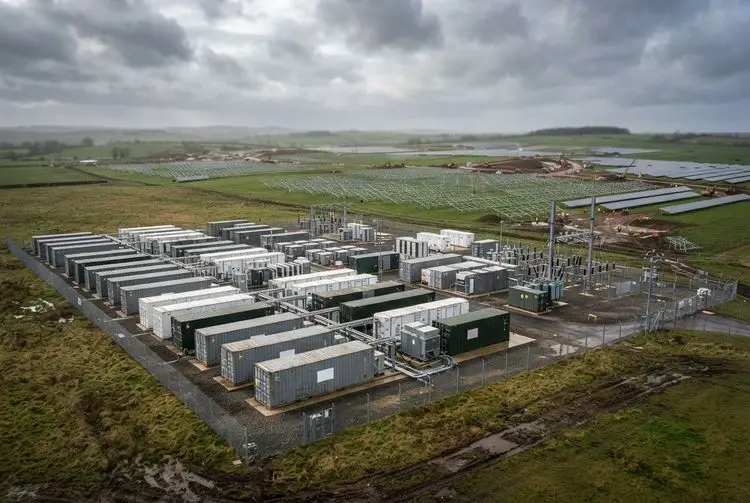
Independent energy platform Revera Energy and Macquarie Capital, the investment arm of Macquarie Group, have formed a partnership to develop Revera's 1 GW battery energy storage system (BESS) portfolio in Scotland. Under the joint venture, Macquarie Capital will make an initial investment in two grid-connected BESS projects currently under construction.

The Windyhill BESS (200 MW / 400 MWh) in Bearsden is expected to reach commercial operations in Q4 2027. The Hunterston BESS (400 MW / 800 MWh) in North Ayrshire is the larger of the two initial investments. Revera will manage construction, commercialisation and ongoing operations for both sites.

Project financing milestones are already in place. Revera closed project financing for Hunterston in September 2026, securing funds from Santander, Barclays, Commonwealth Bank of Australia and NatWest. The company took Final Investment Decision (FID) on Windyhill in March 2026.

These two facilities are part of three BESS projects Revera is building in Scotland. The third, a 400 MW / 800 MWh project at Kincardine in Fife, is expected to begin construction in Q1 2027. Combined, the three projects will deliver 1 GW / 2 GWh of capacity and represent £500 million of investment, according to the company.

The projects are designed to provide grid-scale storage infrastructure and could help address the mismatch between renewable energy generation in Scotland and areas of high electricity demand in England.

David Roseman, global head of Macquarie Capital Infrastructure, said: "The UK BESS market is one of the most attractive globally, supported by growing demand for flexibility as the electricity system becomes increasingly complex. While we see significant opportunity in the sector as a whole, Windyhill and Hunterston stood out through the quality of their development and strategic locations within the UK grid."

Macquarie's UK renewables footprint extends beyond this deal. In May 2025, Macquarie Asset Management acquired full ownership of Island Green Power (IGP), the UK-based renewables developer behind the 600 MW Cottam and 480 MW West Burton solar farms. Separately, Macquarie-funded Cero Generation backed the UK's first solar power plant connected to the transmission network — the 50 MW Larks Green solar PV site, co-located with a 49.5 MW / 99 MW BESS and developed with Enso Energy.

Norfolk Solar and Data Centre Plans Draw Unified Local Opposition

In eastern England, plans for one of the country's largest solar farms paired with a massive data centre near King's Lynn, Norfolk, have generated significant community backlash. The Longmarsh Green Energy (LGE) developments would cover 4,695 acres (1,900 hectares) of farmland across two sites.

Approximately 550 people watched a King's Lynn and West Norfolk Borough Council meeting on Monday, which was also livestreamed, to discuss the infrastructure proposals. Councillors voted unanimously against the schemes and agreed to five recommendations, including writing to the Secretary of State for Energy Security and Net Zero to ask that local communities "be at the heart" of planning decisions. The council also said it would evaluate any final government decisions, including pursuing potential legal challenges.

However, because of the development's scale, it qualifies as a nationally significant infrastructure project, meaning final approval rests with the government rather than the local authority.

Local residents voiced strong opposition. Karen Stone, 62, who raised her family in Tilney St Lawrence, said she was "absolutely shocked" by the plans, citing "the noise, the size of it." She pointed to the agricultural productivity of the land: "We heard tonight, if you take all of the land they're talking about, [that's] 25 million loaves. We'll want to be paying five or six pound a loaf, will we? When we can't actually get any of that because we don't have the land?"

Lindy O'Dwyer, 66, argued that data centres should not be built on "prime agricultural land. They can go elsewhere." Paul Rugg, 60, suggested alternative locations, pointing to France where "they're putting solar panels over car parks on top of buildings."

Natural England classifies the affected area as grade one, meaning it is "excellent quality agricultural land." James Kitchen, a fourth-generation farmer whose 600-acre family farm in Tilney-cum-Islington would border the proposed data centre and solar farm, said he was "devastated" and worried about compulsory purchase. Three pylons would cross the edge of his fields. "We cannot afford to lose this highly productive land," Kitchen said. "It is vital for the sake of national food security that this land remains producing food." He added: "It's not what they're proposing here, it's the scale."

Independent councillor Simon Ring, the authority's deputy leader, said he was a "fan of data centres" in the right place, suggesting they should be attached to swimming pools, schools or newly constructed villages to share waste heat, or paired with greenhouses to support food security. Councillor Jo Rust, Independent cabinet member for people and communities, called the solar panel scheme a "Trojan horse idea to get the data centre on board" and described the impact on residents as "incredibly oppressive."

The debate unfolds against rising data centre demand, driven partly by AI requiring more processing power. There are currently about 477 data centres across the UK, and construction researchers Barbour ABI estimate that number will increase by roughly 100, mostly in London and the south east of England. The government's Data Centre Covenant states: "Countries that can host and power data centres will ensure their sovereignty, strengthen economic resilience, and be better placed to capture the benefits of the digital economy, and help shape the future of AI."

A spokesperson for LGE defended the project: "Longmarsh Green Energy will make an important contribution to helping the UK build a cleaner, lower cost and more secure energy system as well as supporting the online networks we all rely on — from emails, banking and streaming services to national defence and our NHS records. We recognise the importance of local community input into the design of our proposals and are currently consulting on the project prior to submitting a Development Consent Order application."

A public online consultation on the west Norfolk project is open until 26 November. An application is due to be submitted by April 2027. The Planning Inspectorate could take six months to examine the plans, with a decision potentially made by July 2028.

Divergent Paths, Shared Challenges

While the Scottish BESS projects and the Norfolk solar farm differ in technology and geography, both illustrate the tension between national energy and digital infrastructure goals and local land-use priorities. The Scottish projects benefit from strategic grid locations and strong investor confidence in the UK storage market, with Macquarie citing "growing demand for flexibility" as a key driver. The Norfolk project faces challenges around agricultural preservation, community impact and development scale — concerns that will ultimately be weighed by the Secretary of State given the project's nationally significant status.

Both cases underscore the importance of planning processes, community engagement and the need to balance renewable energy expansion with food security and local environmental considerations as the UK pursues its net-zero targets.

Macquarie CapitalRevera EnergyBESSBattery StorageScotlandNorfolk Solar FarmLongmarsh Green EnergyUk Energy StorageSolar Farm Opposition

Most Popular News

  1. Greenhushing rises as solar costs fall and grid access becomes king
  2. MIT study: Excess renewable energy could power factories and data centers
  3. IHCL switches on 500-kW solar plant at Taj Fort Aguada in Goa
  4. Adaptive water cooling stabilizes hybrid solar collector across three climates
  5. Section 232 solar tariffs take effect Dec 4, reshaping US supply chain

Disclaimer


Important notice regarding existing conflicts of interest:

We expressly point out that conflicts of interest exist in connection with this publication:

1. Stock Market Media Ltd. and persons closely associated with it hold shares in the companies recommended here and intend to sell them within the scope of, and at any time during, this recommendation. This constitutes a clear and specific conflict of interest.

2. The publisher of this publication and the responsible editors receive financial remuneration for its preparation. This, too, constitutes a clear and specific conflict of interest.

3. Please also note the further statements on existing conflicts of interest in the disclaimer below, inter alia under no. 2.

Important information and mandatory disclosures pursuant to the German Securities Trading Act (Wertpapierhandelsgesetz, WpHG) and pursuant to the German Financial Investment Ordinance (Finanzanlageverordnung, FinAnV).

Stock Market Media Ltd. has notified the German Federal Financial Supervisory Authority (Bundesanstalt für Finanzdienstleistungsaufsicht, “BaFin”), pursuant to the WpHG, of its activity as a producer of investment strategy recommendations within the meaning of Article 3(1) point 34 of Regulation (EU) No 596/2014 or of investment recommendations within the meaning of Article 3(1) point 35 of Regulation (EU) No 596/2014 (formerly “financial analyses”). The obligations of Stock Market Media Ltd. are governed primarily by §§ 85, 86 WpHG, Regulation (EU) No 596/2014 and Delegated Regulation (EU) 2016/958.

Information on the producer(s) of this publication:
Mr Roberto Gonçalves de Albuquerque, as analyst and editor-in-chief, is responsible for the preparation of the texts and contents of this publication. The publisher is Stock Market Media Ltd., 405 Kings Road, Flat 600, London; SW10 0BB, United Kingdom, represented by its Director Roberto Gonçalves de Albuquerque.

Important notes on the preparation of this publication:
This publication contains both facts and factual information on the companies discussed and purely subjective value judgements, interpretations, estimates, projections, forecasts and price targets. We endeavour to distinguish these from one another as transparently as possible in order to avoid misleading statements. Research, preparation and wording are carried out using common digital and AI-supported tools; the review of the content and the editorial responsibility lie with us. The essential bases and standards of our value judgements and valuations of the shares discussed are based on the following approach:

Assessment and valuation of companies according to conventional valuation methods (fundamental valuation approach)

  • Assessment of the potential of the company's future development (growth approach) and projection onto the corresponding valuation potential (price potential analysis) as well as a possible valuation of the company's shares on the basis of potential profit expectations (P/E ratio projection)
  • Assessment of the best-case scenario expected by us in the event of the company's absolute success (blue-sky potential approach)
  • Effect on the share price of the increased awareness of the recommended share expected by us, resulting from a strong rise in demand on the market (particularly decisive in the case of illiquid shares or shares recommended newly or for the first time) on account of the publications (mostly buy recommendations) published by us or by third parties (multiplier / momentum effect, hype), and thereby a disproportionately rising return/share price with a correspondingly rising risk
  • Technical analysis of the share price in accordance with common methods of analysis, mostly for the prediction of price signals (buy or sell signal, breakout of the share, determination of price targets, support or resistance areas, expected minimum movements or minimum counter-movements, prediction of signal points (if-then), etc.), for the most part building on the expected mass psychology (technical approach).

Conventional valuation approaches often cannot be meaningfully applied to young companies or companies that do not yet generate revenue. In valuing such companies we therefore tend to rely on the potential analysis calculated by us and on the assessment of the demand for such shares on the capital market. Ultimately, the market decides on the share price of a company. If extensive recommendations of a share give rise to excessive demand for it, it is possible that the share price will rise at an above-average rate on high trading volume. Although this leads to extreme opportunities for profit, it correspondingly increases the risk of a bubble forming, with a corresponding fall in price. The increased volatility of the share in such situations gives rise to above-average opportunities for profit and loss, both in both trading directions and in the case of recurring counter-movements. Such market developments are also an important part of our trading recommendations and valuation approaches.

This publication deals exclusively with securities of above-average volatility with high potential for profit and also for loss.

Note on sources of information:
The reliability of sources of information is examined by us in detail before they are used and is subjectively assessed by us according to their credibility and significance. In doing so, we decide by our own standards which sources we consider relevant, too conservative or too optimistic. Ultimately, we determine our recommendations on the basis of our personal assessments. In obtaining information we draw on numerous publicly accessible sources such as press releases, ad hoc announcements, company announcements, company presentations, publications and articles on the company discussed, common financial media in Germany and abroad as well as company or sector analyses by third parties.

Our publications use exclusively publicly available information and sources as well as information disseminated by the company itself.

Note on existing conflicts of interest:
We hereby point out that shareholders, editors, employees and persons or companies involved in the preparation of this publication, as well as principals (third parties) commissioning the publication of Stock Market Media Ltd., hold, directly or indirectly, at the time of this publication, interests in securities which are discussed in the respective publication, and are therefore interested in an increase in price and/or turnover, i.e. also in increased trading liquidity, since it is intended to sell these securities in direct connection with this publication and to participate in rising prices and turnover. An increase in the price of the shares of the companies presented may lead to an increase in the assets of these persons. In any case, the share price of the company may be significantly influenced by the discussion of the company. In particular, the share price of the companies discussed is also materially influenced by securities transactions. This applies in particular where the companies concerned are ones whose shares do not have a broad market capitalisation and for which only a narrow market exists. Here, even small order volumes can have considerable effects on prices. However, they are also interested in the price of the company discussed falling if they wish to acquire its shares more cheaply. By law, this gives rise to a conflict of interest, to which we hereby expressly draw attention.

Stock Market Media Ltd. and its employees are furthermore remunerated for the preparation, electronic distribution and publication of this publication as well as for other services. By law, this gives rise to a conflict of interest, to which we hereby expressly draw attention.

This remuneration may be paid by the company about which Stock Market Media Ltd. publishes information, by third parties affiliated with these companies or by other third parties pursuing an interest with regard to the companies discussed in connection with this publication. By law, this gives rise to a conflict of interest, to which we hereby expressly draw attention. This arises, first of all, from the fact that Stock Market Media Ltd. could make its statements in the interest of its principal. Stock Market Media Ltd. and/or companies affiliated with it have entered into an agreement, for a fee, with the company in question or with its shareholders for the preparation of the editorial coverage. By law, this gives rise to a conflict of interest, to which we hereby expressly draw attention.

Note on the handling of internal organisational duties:
Owing to the small size of the publisher's business, internal control of the compliance processes of the employees and other parties contributing to this publication is limited.

Competent supervisory authority:
Stock Market Media Ltd. has notified BaFin of its activity pursuant to § 86 WpHG.