
Norfolk solar farm and data centre faces petition of nearly 50,000
Council considers legal challenge against 1.3GW Longmarsh Green Energy Project near King's Lynn
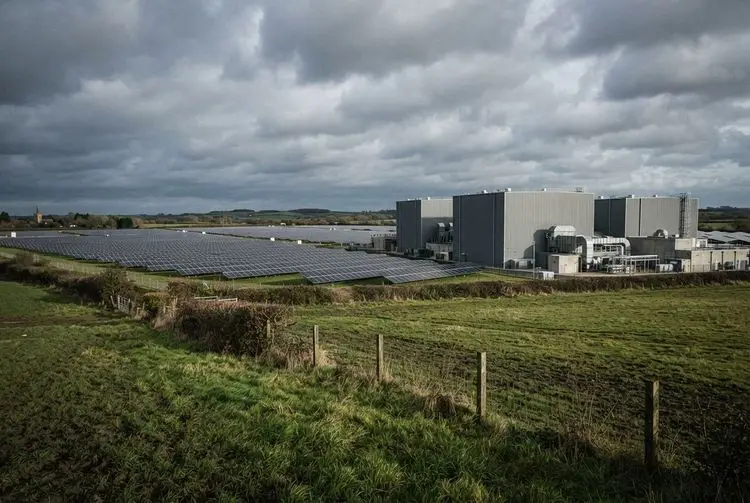
Nearly 50,000 people have signed a petition opposing a £25 billion proposal to build a 1.3GW solar farm and data centre complex in Norfolk, as the Borough Council of King's Lynn and West Norfolk prepares to discuss how to fight major energy schemes that lack local support.
Councillors will meet on Monday evening at 17:00 GMT at King's Lynn Minster, with the session also livestreamed on YouTube. The extraordinary meeting follows a report from council leader Alistair Beales that calls for Norfolk councils to lobby the energy secretary and potentially challenge ministerial decisions in court.
Seven major projects in the area
The Longmarsh Green Energy Project, developed by Evolution Power Limited (EPL), would cover 4,695 acres (1,900 hectares) across two sites near King's Lynn — at Tilney St Lawrence and Fincham/Barton Bendish. The solar farm would have a capacity of 1.3GW, while the accompanying data centre would require up to 1GW of power at any one time.
The proposal is one of seven major infrastructure projects planned for the area. Others include The Droves solar farm, Redmere wind farm, the Wisbech incinerator project, National Grid upgrades and the Fens Reservoir. The concentration of developments has fuelled local opposition.
James Wild, Conservative MP for North West Norfolk, said the plans "could represent further large-scale industrialisation of the landscape."
Council seeks stronger powers
The council report, proposed by Beales, asks councillors to oppose projects that lack local backing. It also explores options for the council to challenge decisions made by ministers in court, though final approval for nationally significant infrastructure projects rests with central government, not local authorities.
The meeting comes as communities across East Anglia face a wave of renewable energy and grid infrastructure proposals driven by national net-zero targets and growing electricity demand from data centres.
For solar industry professionals, the Norfolk case highlights a growing tension between the UK's need for large-scale solar capacity and local resistance to landscape change. The 1.3GW Longmarsh project would be one of the largest solar farms in the country if built, but the strength of local opposition — reflected in the near-50,000-signature petition — could influence how ministers weigh national energy policy against local sentiment.
Evolution Power Limited has stated that the scheme is "critical for future UK economic growth" and that it would create thousands of construction jobs. However, the company's claims face scrutiny from a council that appears increasingly willing to use legal avenues to resist developments it considers inappropriate.
What this means for the solar market
The situation in Norfolk is not an isolated case. As the UK pushes toward its 2035 clean power target, solar developers are encountering more frequent opposition from communities and local authorities concerned about the scale of projects and their impact on rural landscapes. The outcome of the Longmarsh proposal could set a precedent for how councils engage with nationally significant solar developments.
Investors and developers should watch Monday's meeting closely. If the council formally resolves to oppose the project and pursue legal challenges, it could delay the scheme and add regulatory risk to large-scale solar investments in the region. Conversely, if central government overrules local opposition, it would signal that the national interest in renewable energy capacity takes priority over local planning concerns.
The meeting also underscores the importance of community engagement for solar developers. With seven major projects converging on a single region, the cumulative impact on landscape and local infrastructure is becoming a central issue in planning debates. Developers may need to invest more heavily in local benefit schemes and grid coordination to build social licence for large projects.
For engaged homeowners and installers, the Norfolk case reflects broader trends in the UK solar market: utility-scale projects are growing in size and number, but they increasingly face organised opposition. Local planning dynamics are becoming as important as technology costs and grid connection timelines in determining project viability.