
Solar Politics in Taiwan and Sodium-Ion Storage in the US Take Center Stage
Taiwan's pre-election attacks on solar and a US sodium-ion startup highlight divergent energy storage trends.
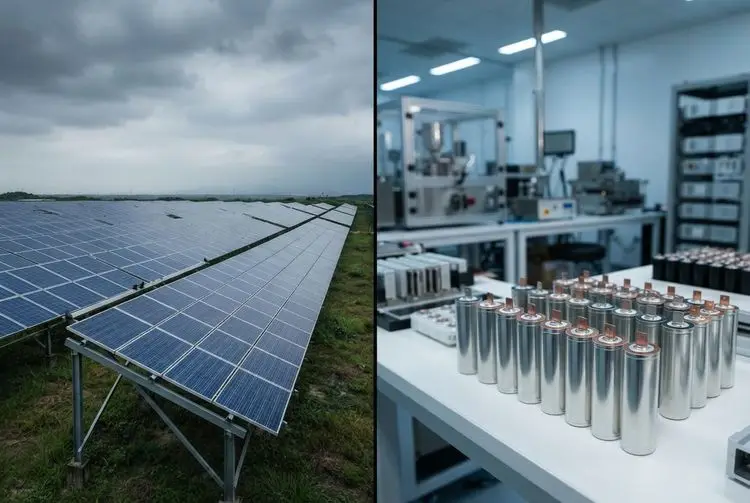
Two developments on separate continents reveal the competing forces shaping solar deployment and energy storage markets. In Taiwan, solar energy has become a political flashpoint ahead of elections, while in the United States, a San Diego startup is positioning sodium-ion batteries to fill gaps that lithium-ion cannot serve.
Taiwan: Solar Under Political Fire
Taiwan's Kuomintang (KMT) passed a NT$20,000 cash handout to the public in the legislature shortly before elections, according to reporting by New Bloom Magazine. The Taiwan People's Party (TPP) broke from the KMT on the measure at the last minute, but it passed because insufficient Democratic Progressive Party (DPP) legislators were present. President Lai Ching-te called for opposition to the handouts, though the DPP has previously resisted such measures before pivoting to take credit once they proved popular.
Beyond the cash handout, the KMT has pushed what the article characterizes as drastic cuts to the government budget in both the previous and current years, including defense and social services. The KMT claims fiscal balance necessitates such cuts.
Solar energy has become a central battleground. The KMT increasingly attacks solar as new, untested and dangerous, while presenting nuclear power as the only clean and safe alternative and alleging DPP corruption in solar projects. AI-generated disinformation circulating online claims solar panels are radioactive and shows birds apparently dying after drinking water near typhoon-damaged panels — despite the depicted bird species not existing in Taiwan.
In local races, the conflict is visible. In Tainan, KMT candidate Hsieh Lung-chieh has attacked floating photovoltaic farms at Wushantou Reservoir, suggesting cleaning chemicals would endanger the water supply. In Taipei, Cultural Affairs division director Tsai Shih-ping published AI-generated images of solar panels installed on the National Palace Museum, prompting the museum to demand a policy clarification. Mayor Chiang Wan-an faced criticism for not knowing his own administration's policies, since his mayorship led to solar panels being installed on historic buildings such as Longshan Temple in Wanhua.
The article argues that the KMT's advocacy for nuclear energy is rooted not in science but in nostalgia for a period when the KMT was the sole ruling party, the economy was booming, and Taiwan depended more on nuclear energy. The party frames newer forms of energy as threats to traditionalist reliance on nuclear power.
United States: Sodium-Ion Targets Lithium-Ion Gaps
On the technology front, San Diego-based Unigrid, spun out of University of California, San Diego research, aims to commercialize sodium-ion battery storage for markets where lithium-ion is less suitable. CEO Darren Tan told PV Magazine USA that sodium-ion chemistries offer better safety — they are non-flammable — along with extremely long cycle and calendar life and wide thermal tolerance, though they are heavier and bulkier than lithium-ion.
Unigrid's 48V Na+ Casa series batteries for commercial and residential storage have a discharge temperature range of about -100°F to +140°F and charge down to about -68°F. They are UN38.3 certified and tested to UL 9540A at the cell level. The fire resistance of sodium-ion makes it suitable for indoor deployment in settings such as hospitals and multi-unit housing.
Lithium-ion dominates residential and commercial storage and the midrange duration segment of roughly two to six hours. Its bankability with financiers may deter adoption of more appropriate technologies. However, growth in AI is creating demand for short-duration, high-power storage — demand response, uninterruptible loads, load shifting — that requires frequent cycling up to 10-20 times a day, which lithium-ion handles poorly.
Lithium-titanate oxide (LTO) batteries are the prevailing solution for high-power cycling but cost about 20 times more than lithium-ion. Tan says sodium-ion "checks all the boxes" on power, cycle life, temperature range, safety and price.
Unigrid's biggest challenges are passing third-party testing and securing U.S. regulatory certification — hurdles lithium-ion suppliers have already cleared. The company is using European and other international installations to support its U.S. market plans.
A Wood Mackenzie study identifies sodium-ion as the most promising emerging alternative for stationary storage, with cell-level cost parity to lithium iron phosphate expected by late 2026 and module/system-level parity not until after 2030.
The Role of AI in Both Stories
A notable contrast between the two developments is the role of artificial intelligence. In Taiwan, AI is cited as a source of disinformation — AI-generated images of solar panels on historic buildings — and as a justification for cash handouts framed as distributing the dividends of Taiwan's AI windfall. In the U.S., AI is a driver of new storage demand, creating technical requirements that lithium-ion struggles to meet and opening opportunities for sodium-ion.
What to Watch
In Taiwan, the trajectory of solar policy will depend on electoral outcomes and the KMT's continued framing of solar as dangerous. In the U.S., Unigrid's progress through third-party testing and regulatory certification will determine whether sodium-ion can move from niche to mainstream in the short-duration storage segment. Wood Mackenzie's forecast of cell-level cost parity by late 2026 provides a timeline against which to measure that progress.