
Spain's November 29 election sets high stakes for solar investors
Six energy policy issues will shape business decisions for 2027 as Spain heads to the polls.
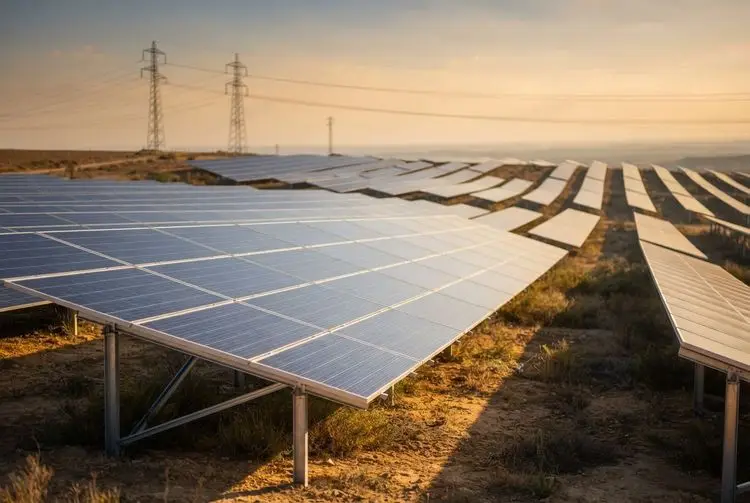
Spain's general election on Sunday, November 29, arrives at a critical juncture for the country's solar energy sector. The energy agenda across all major parties focuses on grid integration and project profitability, with six key issues set to shape business decisions through 2027.
The stakes are high. Spain's solar industry has matured rapidly, but the next government's policy choices will determine whether that growth translates into sustainable returns for developers, investors and installers.
The capacity market question
A capacity market was created by Order TED/966/2026, yet none of the main parties have specified the conditions under which it would operate. That uncertainty hangs over project economics, particularly for solar plants that rely on merchant exposure.
Álvaro Simon of ASB Renewables delivered a stark assessment: "The pure solar model as we have been doing it is exhausted, and there are many projects that will not reach the date of commercial operation with the expectation with which they were born."
Competitiveness now depends on sustainable income streams rather than installed capacity alone, Simon indicated.
Party positions diverge sharply
The conservative Partido Popular (PP) has proposed repealing the data center royal decree approved on November 20, which covers sustainability and digital sovereignty. The PP also promises to unblock grid connections within 18 months — a timeline that would address one of the sector's most persistent bottlenecks.
As of October 1, grid access had been granted to 6,329 MW of data center capacity and 5,838 MW of industrial capacity. Marc Pons noted that data centers could obtain up to 80% of their energy demand. Meanwhile, €17 billion in grid infrastructure execution remains pending.
The PP further proposes eliminating the 7% electricity production tax and introducing an 80% discount on industrial tolls. On nuclear policy, the party promises to process plant life extensions within 100 days. It would also set a minimum of 100 jobs as a threshold for strategic investments.
The ruling Socialist Party (PSOE) targets 22 GW of storage capacity by 2030 and ratifies the nuclear phase-out by 2035. The Almaraz nuclear plant is currently authorized to operate until June 2030.
Vox prioritizes hydroelectric storage and defends maintaining the nuclear park. Frente Amplio proposes three hours of free solar electricity daily and a digital services tax.
Storage and grid realities
Spain's storage pipeline is growing but faces headwinds. A BOE survey in October identified 930 MW of storage projects. However, 700 MW of renewable projects were left out of portfolios. Hydroelectric storage currently stands at 7.6 GW, according to Marc Pons, while 7.5 GW of projects have secured European aid.
Xavier López of RMM Energy Advisors noted that adjustment services cost €22 per MWh, rising to €24 per MWh in October. BESS projects could compress price differentials, which would affect merchant revenues for solar plants.
Electricity futures for 2027 trade in a range of €88 to €113 per MWh, López added.
What the numbers mean for solar
The 2030 Electricity Plan has already been approved, but execution depends on the next government's priorities. For solar developers, the key variables are grid access timelines, the shape of the capacity market, and whether the 7% production tax survives.
Collective self-consumption rules allow solar projects of 2 to 5 MW within a maximum distance of 5 km. That segment could expand if grid connection bottlenecks persist for larger plants.
Spain has allocated €200 million for renewables manufacturing, a modest sum that signals early-stage industrial policy rather than a full manufacturing build-out.
Opportunities beyond pure solar
The source material identifies several growth areas beyond traditional utility-scale PV: wind repowering, self-consumption, storage and demand management. These segments may benefit regardless of which party forms the next government.
For comparison, Argentina's capacity market reference price stands at USD 9,000 per MW-month, with a firm power target of 1,850 to 2,950 MW by 2032. Spain's capacity market design remains undefined, leaving investors to watch the post-election landscape closely.
The November 29 vote will not resolve every uncertainty, but it will set the policy direction for the critical 2027 investment cycle. For solar professionals across the value chain, the outcome determines whether Spain's grid can absorb new capacity profitably — or whether the pure solar model truly has reached its limit.