
SPONSORED

Türkiye Awards 785 MW Solar at Floor Price, UK Solar Pays Back Consumers

Two markets show solar's maturing economics: Turkish auction clears at 3.25 ct/kWh floor, UK farms net contributors.
•• 6 Min
Türkiye Awards 785 MW Solar at Floor Price, UK Solar Pays Back Consumers

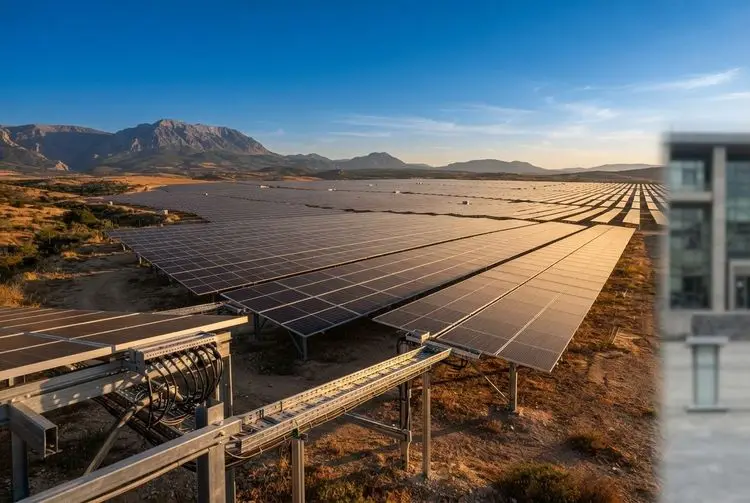
Two developments on opposite sides of Europe this week underscore how far utility-scale solar has come in terms of cost competitiveness. Türkiye allocated 785 MW of grid capacity across 11 sites at its minimum bid price, while in the United Kingdom, solar farms have collectively paid back more to consumers than they received in support under the Contracts for Difference (CfD) scheme.

Türkiye's YEKA GES-2026 Auction Clears at Floor Price

Türkiye's Ministry of Energy and Natural Resources announced on November 3, 2026, that 785 MW of utility-scale solar connection capacity had been awarded across nine provinces. Nineteen companies submitted 44 bids for the 11 sites on offer.

Every single site was awarded at the floor price of 3.25 euro cents per kWh. Energy Minister Alparslan Bayraktar confirmed that this was the minimum acceptable price. With price competition exhausted at the floor, bidders competed instead on a contribution fee pledged per megawatt of capacity. Those pledges total €31.585 million before 20% VAT, or €37.9 million ($42.7 million) including VAT.

The auction structure gives winners a 60-month merchant period from contract signing, during which they can sell power on the open market. After that, plants must deliver electricity to the transmission system for 20 years at the fixed price of 3.25 euro cents per kWh. The ministry did not disclose when winners will sign their YEKA contracts.

The design mirrors the earlier 800-MW YEKA GES-2024 solar round, which also used a ceiling price of 5.50 US cents per kWh and a floor of 3.25 US cents before switching to contribution offers.

Winners and Capacity Distribution

Egesa Enerji emerged as the largest winner, securing 200 MW in Diyarbakır, 120 MW in Mardin and 25 MW in Batman — a total of 345 MW, or 44 percent of the entire round, according to list.solar calculations. Temmuz Güneş Enerji took 30 MW in Denizli and two sites in Kahramanmaraş totaling 135 MW. İş Enerji Yatırımları won 110 MW in Konya. Ezel Mensucat Sanayi won 55 MW in Malatya with the highest per-MW pledge. Erser Grup Tarım and İklim Invest Enerji took Ankara's 40-MW and 30-MW sites respectively, and Ecogreen Enerji won 40 MW in Elazığ.

The average site size was 71.4 MW. The average contribution pledge before VAT stood at €40,236 ($45,334) per MW, per list.solar calculations. Per-MW pledges ranged from €12,000 at the Ankara-2 site to €91,000 at Malatya-1.

The 785 MW awarded equals 2.8 percent of Türkiye's total installed solar capacity of 28,222 MW at the end of September, based on ministry data.

The solar auction followed a separate YEKA RES-2026 wind round on November 2, which allocated 1,500 MW at seven sites at 3.50 euro cents per kWh after 72 months of merchant sales. Combined, the two rounds allocated 2,285 MW at 18 sites. Bayraktar said they would bring $1.9 billion of new investment and generate 6.1 billion kWh annually.

Solar made up 22.2 percent of Türkiye's 127,355 MW of total generating capacity at the end of September, second only to hydropower.

UK Solar Farms Become Net Contributors Under CfD

In the United Kingdom, Solar Energy UK reported that solar farms have collectively paid back £26.3 million more to consumers through the CfD scheme than they have received in support over the past decade. The trade association presented the figures as evidence that the two-sided CfD mechanism — often described as a subsidy — has resulted in net payments flowing from generators to consumers.

This year alone, solar farms have reduced consumer bills by at least £29.4 million, with savings expected to rise as more capacity comes online. Payments to first-round CfD solar farms, built between 2015 and 2017, came to just under £700,000 so far this year. Meanwhile, projects from the fourth, fifth and sixth auction rounds paid back £31.7 million over 2026. Solar was not included in the second and third CfD rounds.

The CfD system guarantees a price for power over 15 to 20 years, with the strike price driven down through competitive auctions. When wholesale prices fall below the strike price, generators receive top-up payments. When market prices rise above it, generators pay back the difference, protecting consumers from price spikes. Solar Energy UK attributed recent high power costs to geopolitical disruptions including wars in Iran and Ukraine.

The consumer bill savings come on top of avoided costs from natural gas generation, which sets the wholesale price of electricity in Great Britain and is the most expensive source. From March to the end of August, solar farms and rooftop panels across Great Britain generated an estimated 16 terawatt-hours of energy. Generating the same electricity via natural gas would have cost around £1.36 billion at daily wholesale prices, according to Solar Energy UK's analysis.

Energy Minister Michael Shanks told the Lords' Environment and Climate Change Committee on November 3 that the CfD system has been adopted by other countries "partly because the two-sided nature of it means there's investor certainty in revenues. But we also as consumers benefit if the wholesale price goes beyond that."

Energy Independence Bill and Industry Concerns

The results of CfD Allocation Round 8 (AR8) will be disclosed before the end of the year. However, Shanks indicated a pause to review the system before opening AR9, linked to reinforcing the electricity grid. He noted that wind power can currently be curtailed in one location while gas turbines are spun up in another — a waste he blamed on grid operators and limited energy storage capacity.

The Energy Independence Bill announced this week includes provisions for a statutory regime for community benefits from solar and wind farms. The government previously indicated a minimum of £700/MW for solar farms, though it is unclear whether this is expressed as AC or DC capacity. The bill also requires developers to potentially offer a stake of up to 20 percent of capital costs to local people for projects over one megawatt.

Other provisions include strengthening Ofgem's regulatory powers; facilitating Reformed National Pricing following the Review of Electricity Market Arrangements; requiring battery energy storage systems sold in Great Britain to have smart charging and discharging capability; removing certain charges on stored and re-exported electricity; streamlining grid reinforcement access rights; establishing a Warm Homes Agency; requiring electricity suppliers to provide services to community energy groups; changes to Renewable Electricity Guarantees of Origin and Feed-in Tariff administration; and moving legacy Renewables Obligation payments from bills to the Exchequer.

Solar Energy UK welcomed much of the package but raised concerns about mandating an unduly high level of community benefits. Gemma Grimes, Director of Policy and Delivery at Solar Energy UK, said the industry has argued for £400/MW of AC capacity lasting 20 years instead of £700/MW. "We believe this would be the most appropriate level to allow industry to continue to deliver low-cost, homegrown electricity through ground-mounted solar," she said. She also noted "practical concerns about selling stakes in projects to local people, which could expose them to financial risk."

The Energy Independence Bill is expected to complete its passage through Parliament by July 2027, based on the timeline of previous legislation.

Two Markets, One Trend

Both developments point to solar's growing cost-competitiveness. Türkiye's auction cleared at a floor price of 3.25 euro cents per kWh, while UK solar farms are now net contributors under a two-sided CfD mechanism. Both markets use competitive auction structures designed to drive down costs. The Turkish round emphasizes merchant exposure followed by long-term fixed-price delivery, while the UK CfD offers strike-price certainty with payback obligations when prices rise.

The combined message for solar industry professionals is clear: utility-scale solar is no longer a technology that requires ongoing subsidy. In Türkiye, developers are willing to accept the lowest possible electricity price and compete on upfront payments. In the UK, existing solar farms are writing checks back to consumers.

Türkiye Solar AuctionYeka Ges-2026Utility-Scale SolarContracts For DifferenceSolar Cost CompetitivenessUk Solar FarmsSolar Energy Economics

Most Popular News

  1. Greenhushing rises as solar costs fall and grid access becomes king
  2. MIT study: Excess renewable energy could power factories and data centers
  3. IHCL switches on 500-kW solar plant at Taj Fort Aguada in Goa
  4. Adaptive water cooling stabilizes hybrid solar collector across three climates
  5. Section 232 solar tariffs take effect Dec 4, reshaping US supply chain

Disclaimer


Important notice regarding existing conflicts of interest:

We expressly point out that conflicts of interest exist in connection with this publication:

1. Stock Market Media Ltd. and persons closely associated with it hold shares in the companies recommended here and intend to sell them within the scope of, and at any time during, this recommendation. This constitutes a clear and specific conflict of interest.

2. The publisher of this publication and the responsible editors receive financial remuneration for its preparation. This, too, constitutes a clear and specific conflict of interest.

3. Please also note the further statements on existing conflicts of interest in the disclaimer below, inter alia under no. 2.

Important information and mandatory disclosures pursuant to the German Securities Trading Act (Wertpapierhandelsgesetz, WpHG) and pursuant to the German Financial Investment Ordinance (Finanzanlageverordnung, FinAnV).

Stock Market Media Ltd. has notified the German Federal Financial Supervisory Authority (Bundesanstalt für Finanzdienstleistungsaufsicht, “BaFin”), pursuant to the WpHG, of its activity as a producer of investment strategy recommendations within the meaning of Article 3(1) point 34 of Regulation (EU) No 596/2014 or of investment recommendations within the meaning of Article 3(1) point 35 of Regulation (EU) No 596/2014 (formerly “financial analyses”). The obligations of Stock Market Media Ltd. are governed primarily by §§ 85, 86 WpHG, Regulation (EU) No 596/2014 and Delegated Regulation (EU) 2016/958.

Information on the producer(s) of this publication:
Mr Roberto Gonçalves de Albuquerque, as analyst and editor-in-chief, is responsible for the preparation of the texts and contents of this publication. The publisher is Stock Market Media Ltd., 405 Kings Road, Flat 600, London; SW10 0BB, United Kingdom, represented by its Director Roberto Gonçalves de Albuquerque.

Important notes on the preparation of this publication:
This publication contains both facts and factual information on the companies discussed and purely subjective value judgements, interpretations, estimates, projections, forecasts and price targets. We endeavour to distinguish these from one another as transparently as possible in order to avoid misleading statements. Research, preparation and wording are carried out using common digital and AI-supported tools; the review of the content and the editorial responsibility lie with us. The essential bases and standards of our value judgements and valuations of the shares discussed are based on the following approach:

Assessment and valuation of companies according to conventional valuation methods (fundamental valuation approach)

  • Assessment of the potential of the company's future development (growth approach) and projection onto the corresponding valuation potential (price potential analysis) as well as a possible valuation of the company's shares on the basis of potential profit expectations (P/E ratio projection)
  • Assessment of the best-case scenario expected by us in the event of the company's absolute success (blue-sky potential approach)
  • Effect on the share price of the increased awareness of the recommended share expected by us, resulting from a strong rise in demand on the market (particularly decisive in the case of illiquid shares or shares recommended newly or for the first time) on account of the publications (mostly buy recommendations) published by us or by third parties (multiplier / momentum effect, hype), and thereby a disproportionately rising return/share price with a correspondingly rising risk
  • Technical analysis of the share price in accordance with common methods of analysis, mostly for the prediction of price signals (buy or sell signal, breakout of the share, determination of price targets, support or resistance areas, expected minimum movements or minimum counter-movements, prediction of signal points (if-then), etc.), for the most part building on the expected mass psychology (technical approach).

Conventional valuation approaches often cannot be meaningfully applied to young companies or companies that do not yet generate revenue. In valuing such companies we therefore tend to rely on the potential analysis calculated by us and on the assessment of the demand for such shares on the capital market. Ultimately, the market decides on the share price of a company. If extensive recommendations of a share give rise to excessive demand for it, it is possible that the share price will rise at an above-average rate on high trading volume. Although this leads to extreme opportunities for profit, it correspondingly increases the risk of a bubble forming, with a corresponding fall in price. The increased volatility of the share in such situations gives rise to above-average opportunities for profit and loss, both in both trading directions and in the case of recurring counter-movements. Such market developments are also an important part of our trading recommendations and valuation approaches.

This publication deals exclusively with securities of above-average volatility with high potential for profit and also for loss.

Note on sources of information:
The reliability of sources of information is examined by us in detail before they are used and is subjectively assessed by us according to their credibility and significance. In doing so, we decide by our own standards which sources we consider relevant, too conservative or too optimistic. Ultimately, we determine our recommendations on the basis of our personal assessments. In obtaining information we draw on numerous publicly accessible sources such as press releases, ad hoc announcements, company announcements, company presentations, publications and articles on the company discussed, common financial media in Germany and abroad as well as company or sector analyses by third parties.

Our publications use exclusively publicly available information and sources as well as information disseminated by the company itself.

Note on existing conflicts of interest:
We hereby point out that shareholders, editors, employees and persons or companies involved in the preparation of this publication, as well as principals (third parties) commissioning the publication of Stock Market Media Ltd., hold, directly or indirectly, at the time of this publication, interests in securities which are discussed in the respective publication, and are therefore interested in an increase in price and/or turnover, i.e. also in increased trading liquidity, since it is intended to sell these securities in direct connection with this publication and to participate in rising prices and turnover. An increase in the price of the shares of the companies presented may lead to an increase in the assets of these persons. In any case, the share price of the company may be significantly influenced by the discussion of the company. In particular, the share price of the companies discussed is also materially influenced by securities transactions. This applies in particular where the companies concerned are ones whose shares do not have a broad market capitalisation and for which only a narrow market exists. Here, even small order volumes can have considerable effects on prices. However, they are also interested in the price of the company discussed falling if they wish to acquire its shares more cheaply. By law, this gives rise to a conflict of interest, to which we hereby expressly draw attention.

Stock Market Media Ltd. and its employees are furthermore remunerated for the preparation, electronic distribution and publication of this publication as well as for other services. By law, this gives rise to a conflict of interest, to which we hereby expressly draw attention.

This remuneration may be paid by the company about which Stock Market Media Ltd. publishes information, by third parties affiliated with these companies or by other third parties pursuing an interest with regard to the companies discussed in connection with this publication. By law, this gives rise to a conflict of interest, to which we hereby expressly draw attention. This arises, first of all, from the fact that Stock Market Media Ltd. could make its statements in the interest of its principal. Stock Market Media Ltd. and/or companies affiliated with it have entered into an agreement, for a fee, with the company in question or with its shareholders for the preparation of the editorial coverage. By law, this gives rise to a conflict of interest, to which we hereby expressly draw attention.

Note on the handling of internal organisational duties:
Owing to the small size of the publisher's business, internal control of the compliance processes of the employees and other parties contributing to this publication is limited.

Competent supervisory authority:
Stock Market Media Ltd. has notified BaFin of its activity pursuant to § 86 WpHG.