
SPONSORED

UK BESS Augmentation Financing Wave Expected Within a Few Years

Panellists at a London battery asset management summit say refinancing cycles will trigger widespread augmentation of UK battery storage sites.
•• 4 Min
UK BESS Augmentation Financing Wave Expected Within a Few Years

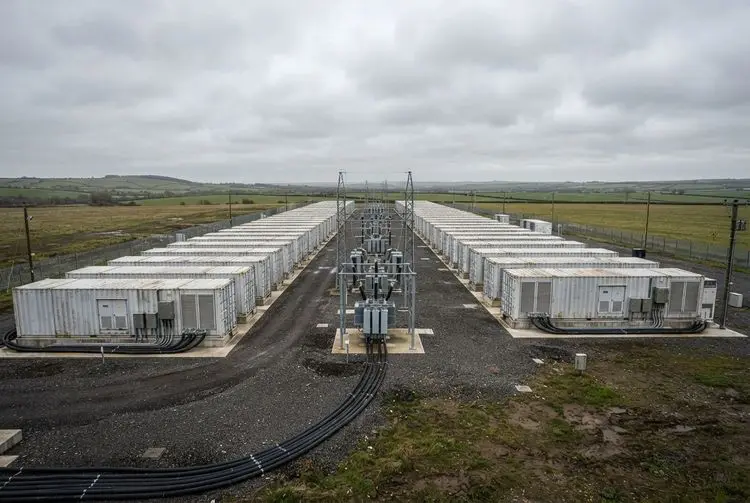
A wave of financing activity linked to the augmentation of UK battery energy storage system (BESS) assets is expected within a few years, according to speakers at the Battery Asset Management Summit UK & Ireland 2026. The two-day event, held in London last month by Solar Media, part of Informa Connect, put augmentation at the centre of its agenda. The write-up is shortened from a piece published on sister site Energy-Storage.news Premium.

Augmentation — adding capacity or power to an existing battery site — is moving from an afterthought to a core assumption in asset models. Developers and owners at the summit argued that the timing of augmentation is increasingly dictated not by technology alone, but by the structure of project debt.

Refinancing as the trigger point

Pablo Zalvide, structured finance and M&A lead for UK BESS at Fotowatio Renewable Ventures (FRV), expects a refinancing wave to pull augmentation with it. "In a few years, there will be a wave of projects needing refinancing. Even where debt sizing was based on a 15-year warranty duration, most financing in place today is structured as mini-perm, around seven years. That means a wave of projects will come up for refinancing, potentially with outdated duration assumptions by that point. I'd expect a good portion of those projects to pursue augmentation at the point of refinancing."

The mismatch is structural. Debt sized against a 15-year warranty duration sits inside a mini-perm facility of roughly seven years, so the loan matures long before the warranty does. When that facility comes up for renewal, the asset's original duration assumptions may no longer reflect the market, the technology or the revenue stack.

BW ESS told the summit that augmentation assumptions should be built into the financial model from the outset rather than retrofitted later. The company also said it tracks the market continuously, and that supply-side developments are making augmentation planning easier than it once was.

Manufacturers are helping on that front by defaulting to 4-hour systems, which supports a strategy of delaying augmentation. A longer-duration system at the point of construction reduces the urgency of adding capacity early in an asset's life.

Contract flexibility versus revenue certainty

Ricardo Folgado, managing partner at TagEnergy, warned that long-term contracts can strip out the optionality owners need later. TagEnergy avoids long-term service agreements (LTSAs), and Folgado said that choice comes with a trade-off in lost flexibility around augmentation and recontracting. "You want to sell the assets, you want to recontract, you want to augment, you want to do something, and you're locked in, so they're not ideal. That's probably an obvious thing to say, but my advice would probably be to not enter into a long-term contract."

For investors, the tension is familiar: contracted revenue supports debt capacity, but rigid terms can constrain the operational decisions that protect asset value over a multi-decade life.

Control systems under strain

David Harris, senior asset manager at Gore Street Capital, focused on what happens operationally once a site is augmented in stages. "I think when it comes to state of health (SOH), the point where it really matters is when you start to augment your sites because then you have a site that's in two halves where you might be able to dispatch at full power one half of your site for a full hour, but then your more degraded older part of the site might only last 50 minutes."

That split creates a dispatch problem that a strong energy management system (EMS) has to solve. Harris argued that a robust EMS is essential once sites are augmented in two halves, because the controller must reconcile differing states of health across the asset.

Gore Street also flagged that augmentation and repowering risk is currently under-priced in the market — a signal that investors may be underestimating the cost and complexity of mid-life upgrades.

Technology provider obsolescence adds a further layer. When the original equipment supplier's platform ages out, integrating new hardware with existing EMS and power plant controller (PPC) architecture becomes harder, and the risk of stranded control functionality rises.

What to watch

For developers, the practical takeaway is to model augmentation from day one, align debt tenor with realistic duration assumptions, and treat control architecture as a long-term asset rather than a construction detail. For investors, the refinancing calendar over the next several years is the point at which those assumptions will be tested.

The summit's framing suggests augmentation is no longer a technical footnote but a financing event — one that will shape how UK BESS portfolios are valued, refinanced and operated. Related coverage from the same newsroom includes the National Wealth Fund leading Invinity Energy Systems' £25 million fundraise and Foresight's investment in a 40GWh long-duration energy storage (LDES) cap-and-floor winning Scottish pumped hydro project.

Uk Bess AugmentationBattery Storage FinancingMini-Perm RefinancingBattery Asset Management SummitEnergy Storage AugmentationGore Street CapitalFrv BessTagenergy Ltsa

Most Popular News

  1. Hoa Phat expands Hung Yen rooftop solar to 7.5 MWp
  2. HgTe quantum dots enable 70% EQE lateral IR photodetectors
  3. Solar resilience hubs bring energy justice to West Virginia's West Side
  4. Molecular locking strategy stabilizes perovskite solar cells at 26.73% efficiency
  5. EU inverter ban could slow CEE solar by 6%, Wood Mackenzie finds

Disclaimer


Important notice regarding existing conflicts of interest:

We expressly point out that conflicts of interest exist in connection with this publication:

1. Stock Market Media Ltd. and persons closely associated with it hold shares in the companies recommended here and intend to sell them within the scope of, and at any time during, this recommendation. This constitutes a clear and specific conflict of interest.

2. The publisher of this publication and the responsible editors receive financial remuneration for its preparation. This, too, constitutes a clear and specific conflict of interest.

3. Please also note the further statements on existing conflicts of interest in the disclaimer below, inter alia under no. 2.

Important information and mandatory disclosures pursuant to the German Securities Trading Act (Wertpapierhandelsgesetz, WpHG) and pursuant to the German Financial Investment Ordinance (Finanzanlageverordnung, FinAnV).

Stock Market Media Ltd. has notified the German Federal Financial Supervisory Authority (Bundesanstalt für Finanzdienstleistungsaufsicht, “BaFin”), pursuant to the WpHG, of its activity as a producer of investment strategy recommendations within the meaning of Article 3(1) point 34 of Regulation (EU) No 596/2014 or of investment recommendations within the meaning of Article 3(1) point 35 of Regulation (EU) No 596/2014 (formerly “financial analyses”). The obligations of Stock Market Media Ltd. are governed primarily by §§ 85, 86 WpHG, Regulation (EU) No 596/2014 and Delegated Regulation (EU) 2016/958.

Information on the producer(s) of this publication:
Mr Roberto Gonçalves de Albuquerque, as analyst and editor-in-chief, is responsible for the preparation of the texts and contents of this publication. The publisher is Stock Market Media Ltd., 405 Kings Road, Flat 600, London; SW10 0BB, United Kingdom, represented by its Director Roberto Gonçalves de Albuquerque.

Important notes on the preparation of this publication:
This publication contains both facts and factual information on the companies discussed and purely subjective value judgements, interpretations, estimates, projections, forecasts and price targets. We endeavour to distinguish these from one another as transparently as possible in order to avoid misleading statements. Research, preparation and wording are carried out using common digital and AI-supported tools; the review of the content and the editorial responsibility lie with us. The essential bases and standards of our value judgements and valuations of the shares discussed are based on the following approach:

Assessment and valuation of companies according to conventional valuation methods (fundamental valuation approach)

  • Assessment of the potential of the company's future development (growth approach) and projection onto the corresponding valuation potential (price potential analysis) as well as a possible valuation of the company's shares on the basis of potential profit expectations (P/E ratio projection)
  • Assessment of the best-case scenario expected by us in the event of the company's absolute success (blue-sky potential approach)
  • Effect on the share price of the increased awareness of the recommended share expected by us, resulting from a strong rise in demand on the market (particularly decisive in the case of illiquid shares or shares recommended newly or for the first time) on account of the publications (mostly buy recommendations) published by us or by third parties (multiplier / momentum effect, hype), and thereby a disproportionately rising return/share price with a correspondingly rising risk
  • Technical analysis of the share price in accordance with common methods of analysis, mostly for the prediction of price signals (buy or sell signal, breakout of the share, determination of price targets, support or resistance areas, expected minimum movements or minimum counter-movements, prediction of signal points (if-then), etc.), for the most part building on the expected mass psychology (technical approach).

Conventional valuation approaches often cannot be meaningfully applied to young companies or companies that do not yet generate revenue. In valuing such companies we therefore tend to rely on the potential analysis calculated by us and on the assessment of the demand for such shares on the capital market. Ultimately, the market decides on the share price of a company. If extensive recommendations of a share give rise to excessive demand for it, it is possible that the share price will rise at an above-average rate on high trading volume. Although this leads to extreme opportunities for profit, it correspondingly increases the risk of a bubble forming, with a corresponding fall in price. The increased volatility of the share in such situations gives rise to above-average opportunities for profit and loss, both in both trading directions and in the case of recurring counter-movements. Such market developments are also an important part of our trading recommendations and valuation approaches.

This publication deals exclusively with securities of above-average volatility with high potential for profit and also for loss.

Note on sources of information:
The reliability of sources of information is examined by us in detail before they are used and is subjectively assessed by us according to their credibility and significance. In doing so, we decide by our own standards which sources we consider relevant, too conservative or too optimistic. Ultimately, we determine our recommendations on the basis of our personal assessments. In obtaining information we draw on numerous publicly accessible sources such as press releases, ad hoc announcements, company announcements, company presentations, publications and articles on the company discussed, common financial media in Germany and abroad as well as company or sector analyses by third parties.

Our publications use exclusively publicly available information and sources as well as information disseminated by the company itself.

Note on existing conflicts of interest:
We hereby point out that shareholders, editors, employees and persons or companies involved in the preparation of this publication, as well as principals (third parties) commissioning the publication of Stock Market Media Ltd., hold, directly or indirectly, at the time of this publication, interests in securities which are discussed in the respective publication, and are therefore interested in an increase in price and/or turnover, i.e. also in increased trading liquidity, since it is intended to sell these securities in direct connection with this publication and to participate in rising prices and turnover. An increase in the price of the shares of the companies presented may lead to an increase in the assets of these persons. In any case, the share price of the company may be significantly influenced by the discussion of the company. In particular, the share price of the companies discussed is also materially influenced by securities transactions. This applies in particular where the companies concerned are ones whose shares do not have a broad market capitalisation and for which only a narrow market exists. Here, even small order volumes can have considerable effects on prices. However, they are also interested in the price of the company discussed falling if they wish to acquire its shares more cheaply. By law, this gives rise to a conflict of interest, to which we hereby expressly draw attention.

Stock Market Media Ltd. and its employees are furthermore remunerated for the preparation, electronic distribution and publication of this publication as well as for other services. By law, this gives rise to a conflict of interest, to which we hereby expressly draw attention.

This remuneration may be paid by the company about which Stock Market Media Ltd. publishes information, by third parties affiliated with these companies or by other third parties pursuing an interest with regard to the companies discussed in connection with this publication. By law, this gives rise to a conflict of interest, to which we hereby expressly draw attention. This arises, first of all, from the fact that Stock Market Media Ltd. could make its statements in the interest of its principal. Stock Market Media Ltd. and/or companies affiliated with it have entered into an agreement, for a fee, with the company in question or with its shareholders for the preparation of the editorial coverage. By law, this gives rise to a conflict of interest, to which we hereby expressly draw attention.

Note on the handling of internal organisational duties:
Owing to the small size of the publisher's business, internal control of the compliance processes of the employees and other parties contributing to this publication is limited.

Competent supervisory authority:
Stock Market Media Ltd. has notified BaFin of its activity pursuant to § 86 WpHG.