
UNEZA members build 50% more grid in 2025 as connection backlog grows
Grid expansion accelerates but 1,700GW of renewables still await connection, UNEZA data shows.
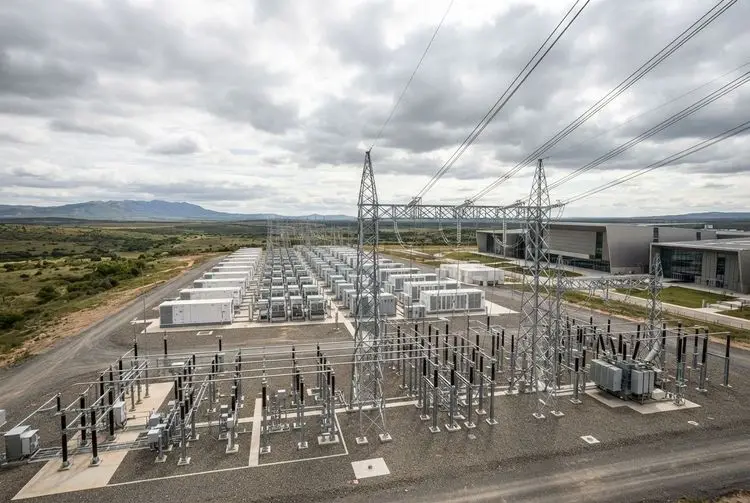
Members of the Utilities for Net Zero Alliance (UNEZA) installed 21,000km of new grid in 2025, a 50% increase over the 14,000km delivered in 2024, according to announcements made at COP31.
The 89-utility alliance, co-chaired by Abu Dhabi's TAQA and the UK's SSE, raised its combined annual investment plans to $156 billion. That figure is 5% higher than last year and 35% above 2024 levels. UNEZA, launched at COP28, aims to channel over $1 trillion into energy transition investment by 2030.
Grid constraints threaten renewable deployment
Despite the acceleration, grid bottlenecks remain a critical barrier. Almost 90,000km of transmission cable will be needed by 2030 to meet climate targets, the alliance said. At the end of 2025, 1,700GW of advanced renewable projects were awaiting grid connection, alongside 600GW of utility-scale batteries.
The International Energy Agency (IEA), in a September report, warned that existing network use must receive equal priority alongside expansion. Grid-enhancing technologies could unlock up to 330GW of that connection queue without building new lines, the IEA found.
Francesco La Camera, director-general of the International Renewable Energy Agency (IRENA), underscored the stakes.
"Power grids will make or break not only the energy transition, but also the ambition to raise global electrification to 35% by 2035," La Camera said.
Electrification targets face political headwinds
The 35% global electrification rate target by 2035 has secured commitments from roughly 80 countries, including China. However, COP31 failed to reach consensus on the goal, leaving its formal adoption uncertain.
The 1,500GW renewable energy pledge made at COP29 remains below what analysts say is needed. UNEZA members aim to more than triple installed renewable energy capacity by 2030.
For small island developing states (SIDS), the SIDS Lighthouses initiative set a target of 30GW of renewables by 2035. A maritime electrification goal calls for 20% electricity share in shipping by the same year.
Battery storage surges as grid integration tool
Energy storage deployment hit a record in 2025, with 118GW added globally, of which 108GW was battery storage. If that pace is sustained to 2030, total installed energy storage would reach 1,020GW.
Since COP29, 2030 battery and storage targets have nearly tripled to 822GW. Battery storage is increasingly recognised as essential for integrating solar and wind generation, particularly as revenue cannibalisation emerges as a risk in markets with high renewable penetration.
Sonia Dunlop, CEO of the Global Solar Council, highlighted the remaining obstacles for solar deployment.
"But challenges still remain: Grids can't connect projects fast enough, capital costs far more in the countries that need solar most, and trade barriers push up costs," Dunlop said. "From here, the test is delivery: national grid and storage plans with dates and funding, and finance that makes solar affordable wherever it's built."
New finance coalition aims to close investment gap
The Electrify Now Finance Coalition launched at COP31, backed by the COP31 presidency and COP32 host Ethiopia. It aims to mobilise $1.2 billion for electrification and grid projects in underserved markets.
Other initiatives include the COP-PILOT project, which turns isolated energy assets into grid-ready resources, and development of isothermal compressed air energy storage technology.
The Global Renewables Alliance, chaired by Ben Backwell (who also serves as CEO of the Global Wind Energy Council), continues to coordinate industry positions across technology sectors. Enlit Europe 2026 is expected to provide a further forum for grid and storage discussions.
For solar industry professionals, the UNEZA data signals that while grid build-out is accelerating, the pace still lags behind project development. The 1,700GW connection queue represents years of potential revenue for solar and storage developers — if transmission and permitting hurdles can be cleared. Investors and project financiers will watch for national grid plans with concrete dates and funding commitments, as Dunlop noted, to assess whether the gap between installed capacity and connected capacity can close.