
€28 Million Loan Package Funds 62 MWp Solar Portfolio in Benin
Proparco and IFC each lend €14 million for four solar plants totalling 62 MWp in Benin.
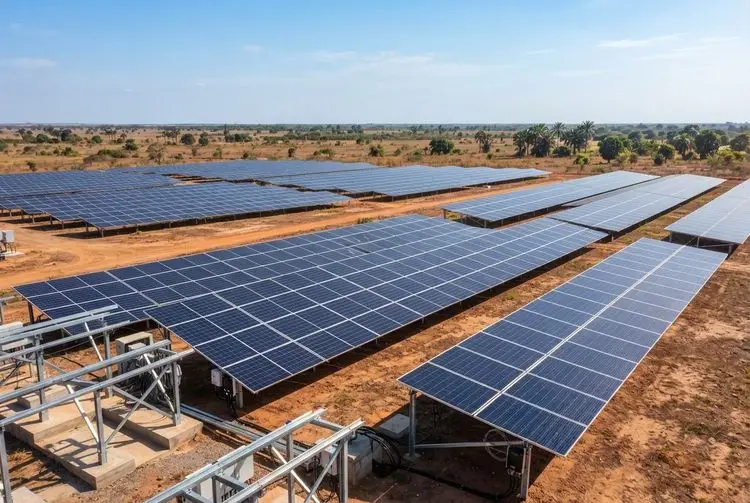
French development finance institution Proparco and the International Finance Corporation (IFC) have each committed approximately €14 million ($15.7 million) in debt financing for four utility-scale solar photovoltaic plants in Benin. The combined €28 million ($31 million) loan package supports the construction of 62 MWp of solar capacity across four sites, marking the country's first independent power producer (IPP) project in the solar segment.
The plants are located in Parakou and Bohicon (15 MWac each) and Natitingou and Djougou (10 MWac each). With a total module capacity of 62 MWp and a grid-connected capacity of 50 MWac, the portfolio operates at a DC-to-AC ratio of 1.24, a common design choice that allows the inverters to operate closer to their rated capacity for more hours of the day.
AXIAN Energy Green, a subsidiary of pan-African energy group AXIAN Energy, owns 80 percent of the project vehicles. Sika Capital holds the remaining 20 percent. The state-owned utility Société Béninoise de Production d'Électricité (SBPE) will purchase the electricity under four separate 20-year power purchase agreements (PPAs).
Project structure and construction
French technology group Sagemcom is responsible for building the plants and will also handle operations and maintenance during the first two years of commercial operation. Construction is expected to take approximately 12 months, though no specific commissioning date has been announced.
The total investment cost stands at approximately €45 million, according to AXIAN, or €44.9 million as stated by the IFC. The €28 million in senior debt thus covers roughly 62 percent of the project budget, equating to about €450,000 ($506,000) per MWp of installed capacity.
The IFC's contribution is split between a standard loan and a concessional loan from the Clean Technology Fund (CTF), a climate finance vehicle. The CTF portion effectively provides a subsidy of roughly 7 percent of total project costs, the IFC indicated.
Benin's solar ambitions
The four plants together will add capacity equivalent to roughly 10 percent of Benin's current installed power generation fleet. The projects are expected to avoid approximately 62,000 tonnes of CO₂ emissions annually and improve electricity access for around 50,000 households.
Benin generated just 48 GWh of solar electricity in 2023, representing approximately 3 percent of the country's total power generation of 1,388 GWh. The West African nation has set a target of reaching 30 percent renewable energy in its electricity mix by 2030, a goal that will require substantial additional solar and other renewable capacity.
The IFC has described the transaction as Benin's first successful utility-scale solar IPP tender. The project was originally sponsored by GreenYellow, a renewable energy company, before AXIAN Energy acquired it in 2024.
Sadio Dicko, Proparco's West Africa director, commented: "By supporting Benin's first independent power producer project, we are helping to increase local generation of competitive renewable energy."
The project is structured through two special-purpose vehicles: ParaBo SAS, which covers the Parakou and Bohicon plants, and NatiDjo SAS, which covers the Natitingou and Djougou plants. This dual-vehicle structure is a common approach in African project finance to ring-fence risks and facilitate separate debt arrangements.
Regional context
The Benin portfolio is part of a broader push by development finance institutions to scale up private-sector solar generation in West Africa. The IFC has been active in structuring similar IPP transactions across the region. In neighbouring Senegal, the IFC recently supported the Kolda project, a 60 MW solar plant paired with a 72 MWh battery energy storage system (BESS), illustrating the growing trend of pairing solar with storage in the region.
For solar industry observers, the Benin transaction demonstrates that utility-scale solar IPPs are becoming viable in smaller West African markets, provided that development finance institutions provide concessional capital and that long-term PPAs with state utilities are in place. The 20-year PPA tenor and the involvement of a creditworthy off-taker in SBPE were likely critical factors in securing the debt financing.
The 1.24 DC/AC ratio also reflects a design optimisation typical for the region's solar resource profile, where high irradiation allows plant operators to oversize the module capacity relative to inverter capacity without incurring excessive curtailment losses.