
PNE Sells 250MW Solar Project in South Africa as Nova Scotia Opens Capacity Call
German developer exits 250MW South African PV asset while Canadian province launches tech-neutral procurement to replace coal.
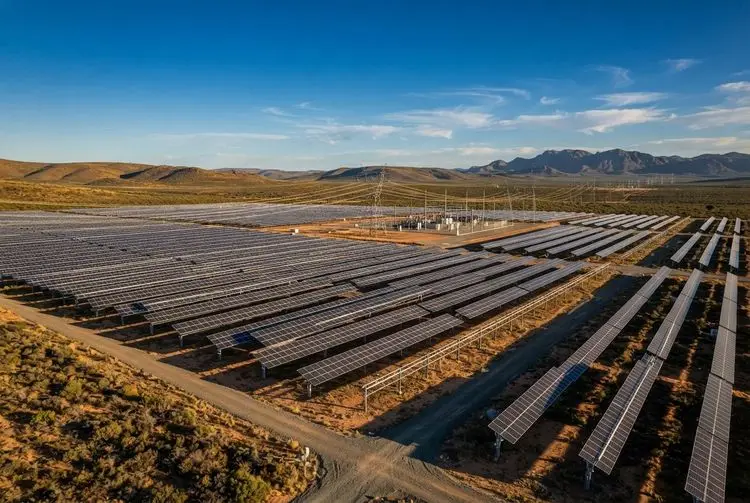
Two developments on opposite sides of the Atlantic this week highlight the breadth of activity in global renewable energy markets: a completed solar project sale in South Africa and a major procurement launch in Canada designed to replace coal-fired generation.
German renewables developer Pure New Energy (PNE) has sold a 250MW solar PV project in South Africa to an undisclosed independent power producer, PV Tech reported. Financial terms and the buyer's identity were not disclosed. The transaction signals continued investor appetite for utility-scale solar assets in a market with strong irradiation and growing clean energy ambitions.
In Canada, the Nova Scotia Independent Energy System Operator (IESO Nova Scotia) opened a technology-neutral call for on-demand capacity on Oct. 30, inviting battery storage, pumped hydro, long-duration storage, geothermal, biomass, thermal generation, hydrogen combustion, hydrogen fuel cells, small modular reactors and hybrid facilities to bid, PV Magazine USA reported. The province aims to shut its coal plants by 2030.
Nova Scotia's technology-neutral procurement framework
Projects must be at least 10 MW in size, with submissions due by Jan. 30, 2027. Eligible technologies include hybrid facilities, meaning storage co-located with wind or solar can participate. The scoring system has been adjusted to recognize a range of storage durations, and the operator broadened the development experience that counts toward qualification.
IESO Nova Scotia has not specified how much capacity it intends to procure through the call. The operator said it received feedback from more than 20 organizations before finalizing the framework.
"There is no single technology that can meet all of Nova Scotia's future electricity needs," said Chris Milligan, vice president of planning and procurement at IESO Nova Scotia. "Different resources contribute in different ways to the grid's reliability, and they come at different costs."
Bids will be assessed alongside the operator's separate gas procurement through energy system modeling to determine the most cost-effective mix. That tender, launched in July as IESO Nova Scotia's first competitive procurement, seeks up to 600 MW from one or two 300 MW gas-fired plants in Pictou County. The gas plants must be designed to switch to non-fossil fuels. The deadline has been extended to Jan. 21, 2027, with commercial operation targeted by July 2030 but dates up to July 2032 also considered.
In September, IESO Nova Scotia said feedback that competing technologies should be considered more fully had contributed to its decision to accelerate and expand storage procurement into the technology-neutral call. Qualified bidders are expected to move to the next stage in spring 2027.
Coal phase-out drives urgency
Coal supplies about 40% of Nova Scotia's electricity. Provincial law requires coal to be phased out and 80% of generation to come from renewables by 2030. The operator said Nova Scotia needs new on-demand capacity to avoid rotating outages during low-wind periods, "which can last for days at a time."
The province's Clean Power Plan calls for roughly 1,000 MW of new onshore wind, at least 300 MW of larger-scale solar and 300 MW to 400 MW of battery storage by 2030. Nova Scotia Power inaugurated three 50 MW/200 MWh batteries in September, and IESO Nova Scotia's resource plan includes 250 MW of further battery procurement.
IESO Nova Scotia was created under the province's More Access to Energy Act in 2024 and took over system planning, procurement and grid operations from Nova Scotia Power, the province's main utility. In September, the province launched a second round of its Green Choice renewable procurement program, which allows large electricity customers to buy power from new renewable projects.
What the developments mean for solar and storage
For solar industry professionals, the Nova Scotia procurement offers several signals. The inclusion of hybrid projects means solar developers can pair generation with storage to participate in capacity markets, potentially improving project economics. The explicit recognition of storage duration in scoring could favor projects with longer-duration capabilities, though battery storage remains eligible. The requirement for Mi'kmaw participation and economic development introduces a community engagement dimension that developers may need to incorporate into project planning.
The parallel gas procurement highlights the complexity of the transition. While the province is accelerating storage and renewable procurement, it is simultaneously seeking up to 600 MW of gas-fired capacity that must be designed to switch to non-fossil fuels. This dual-track approach illustrates the practical challenges grid operators face in maintaining reliability while phasing out coal.
In South Africa, the PNE transaction demonstrates ongoing liquidity in the solar project market, with independent power producers actively acquiring shovel-ready assets. The sale of a 250MW project signals that utility-scale solar remains a sought-after asset class in markets with strong irradiation and supportive policy frameworks.
Both developments point to a renewable energy sector that is maturing in its financial transactions and evolving in its policy frameworks, moving beyond simple generation targets toward more sophisticated, reliability-focused procurement that values diversity of resources and duration of storage.