
Alight Sells Swedish Rooftop Portfolio as US Small-Scale Solar Output Quintuples
Swedish developer Alight pivots to utility-scale solar while US rooftop generation hits 92,979 GWh in 2025.
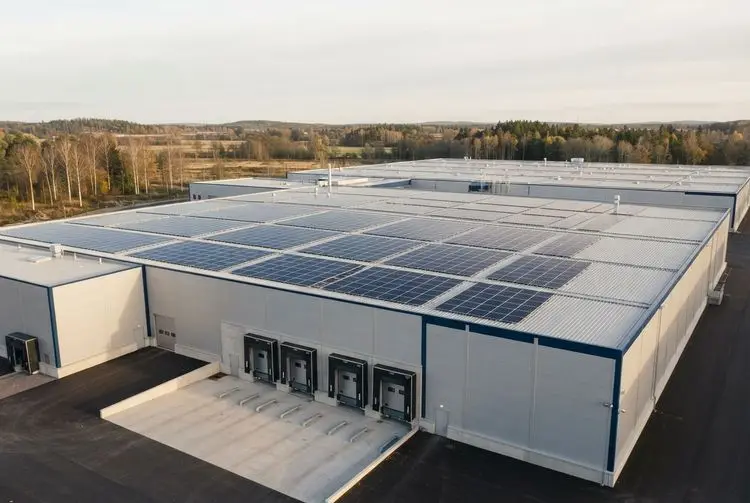
The Nordic solar market is undergoing a strategic realignment as Swedish developer Alight sells 36 rooftop solar systems to solar-as-a-service provider Bright Sunday. The transaction, announced on 10 November, marks a clear pivot for Alight toward utility-scale solar parks and battery storage, while Bright Sunday expands its distributed generation portfolio. Meanwhile, new data from the US Energy Information Administration (EIA) shows small-scale solar installations produced 92,979 gigawatt-hours in 2025 — nearly five times the 18,812 gigawatt-hours recorded in 2016.
Alight, which pioneered the solar-as-a-service model in Sweden alongside financing partner Infranode, sold systems that serve businesses, housing cooperatives and public buildings. The installations were early proof that commercial and public sector organizations wanted solar power, according to Alight CEO Warren Campbell. “These installations laid the foundation for Alight’s business of selling solar power to companies with high electricity consumption,” he said. One notable system sits on Kingspan’s insulation factory at Stigamo, outside Jönköping, where the building materials group opted for a 25-year power purchase agreement (PPA) rather than outright ownership.
The sale frees up capital for Infranode to invest in new projects. “Together with Alight, we pioneered this industry and built the portfolio from the ground up,” said Johan Tiselius, partner at Infranode. Alight is now turning its focus to large solar parks and battery storage, selling power to corporate customers on long-term contracts. The company built the 64 MW Ax-el park near Hallstavik — Sweden’s largest when it opened last year — and has set a target of 5 GW of PPA-backed capacity by 2030.
Bright Sunday expands in the opposite direction
Bright Sunday, which has sold solar as a service for a decade and also operates in Spain and Portugal, is moving in the opposite direction from Alight. The Stockholm-based company has been majority-owned by the Niam Infra Fund since 2023, when its portfolio stood at 65 projects and around 20 MW. It expects the Swedish rooftop assets to restore its position among the leading names in Nordic on-site solar and storage. “These are well-run installations with stable customers on long-term contracts, exactly the kind of assets we own and manage today,” said CEO Ludwig Ekström.
The transaction underscores the maturation of the Nordic solar market, where the PPA model for on-site solar has proven viable. Alight’s shift to utility-scale projects reflects growing opportunities in large solar parks and battery storage, while Bright Sunday’s acquisition signals continued demand for distributed solar assets.
US rooftop solar output surges fivefold since 2016
In the United States, small-scale solar installations — defined as systems smaller than one megawatt, mainly rooftop panels — produced 92,979 gigawatt-hours in 2025, up from 18,812 gigawatt-hours in 2016, according to the EIA. That nearly fivefold increase means US rooftop solar output in 2025 equaled about 70 percent of Sweden’s total electricity use of 134.2 terawatt-hours. Just under a quarter of all US solar power in 2025 came from small installations.
California accounted for 37 percent of US small-scale solar production, generating 34,411 gigawatt-hours in 2025. The state’s capacity grew from 18 to 20 gigawatts in a single year. Arizona ranked second with 5,795 gigawatt-hours, just over 6 percent of US production. Texas grew from 391 gigawatt-hours in 2016 to 5,408 in 2025, while Florida rose from 205 to 5,198 gigawatt-hours over the same period. Production increased every year, with particularly strong growth in 2022 — 25 percent year-over-year — partly driven by California’s Net Energy Metering 2.0 program before it was replaced in April 2023. Growth has slowed since 2022.
States with less solar irradiation, such as New York, New Jersey, Massachusetts and Illinois, are also expanding rooftop solar through incentive programs. New York ranks fifth nationally for rooftop solar despite being in a less sunny region, attributed to capacity growth, better technology and state incentives. Arizona offers a 25 percent state income tax credit up to $1,000, while Texas and Florida provide property tax exemptions alongside other incentives. The EIA estimates production using calculation models from the federal energy laboratory NREL, since utilities do not always know how much electricity customer rooftop panels generate.
Two markets, one trajectory
Both stories highlight a global trend: solar adoption is accelerating, driven by supportive policies and falling costs. While Sweden’s market sees consolidation and a strategic shift toward utility-scale projects, the US rooftop sector continues rapid growth, albeit at a slower pace since 2022. The comparison between US rooftop output and Swedish total electricity use underscores the sheer scale of distributed solar in the US, even as Sweden’s market focuses on large-scale deployment.
For solar industry professionals, the Swedish transaction demonstrates how the PPA model for commercial and public-sector rooftops has matured to the point where portfolios can be traded as institutional-grade assets. Alight’s 5 GW target and Bright Sunday’s acquisition strategy both point to a market where developers increasingly specialise — some chasing scale in utility solar and storage, others consolidating distributed generation assets. In the US, the EIA data confirms that rooftop solar has become a significant contributor to the national energy mix, with states from California to New York building on incentive programs and improving technology to drive adoption.