
Brazilian entities warn mandatory hourly tariff will raise electricity bills
25 state organisations sign open letter against ANEEL's mandatory Tarifa Hora Certa for low-voltage consumers
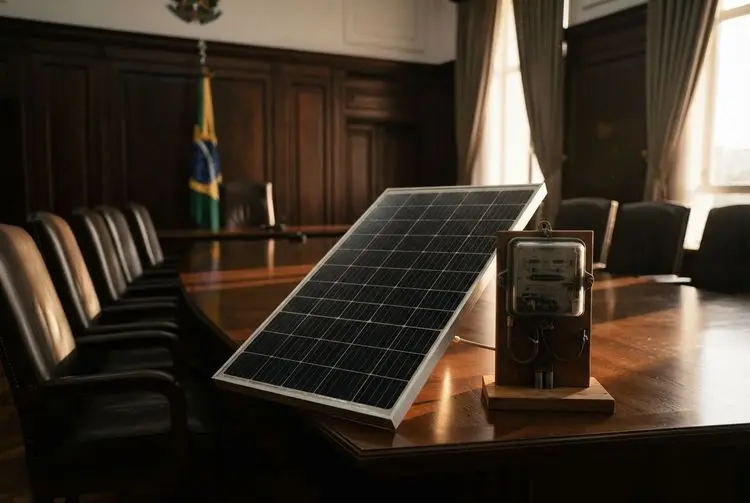
A coalition of 25 state-level entities led by the Free Solar Movement (MSL) has issued an open letter warning that Brazil's proposed mandatory hourly electricity tariff will increase costs for millions of households and small businesses. The measure, known as Tarifa Hora Certa (Specific Time Tariff), is scheduled for a vote by the ANEEL board in December.
The regulation would require low-voltage consumers with monthly consumption of 500 kWh or more to adopt time-based pricing. Under the model, electricity becomes more expensive during peak hours and cheaper during off-peak periods. However, affected consumers — approximately 5.7 million consumer units — would have no option to remain on the current conventional tariff.
Hewerton Martins, president of MSL, said consumers who installed solar energy to reduce their bills face a double penalty under the new rules. "Those who installed solar energy to avoid higher bills risk being penalized twice. First, by the 'Tarifa Hora Certa' (Specific Time Tariff), because credits generated during the day become worth less. Then, by the 'Encargo de Complemento de Recursos' (ECR) (Resource Supplement Charge), whose value is still unclear, to consumers who already pay for the grid, according to Law 14.300," Martins said.
Transitional modality adds costs
The transitional tariff modality introduces additional fees: approximately 8% on the TUSD (network usage fee) and 10% on the TE (energy fee). Solar photovoltaic system credits will be valued by time slot under the new rules, reducing the value of daytime generation. New distributed generation plants or charging stations installed 90 days after the resolution's publication would be subject directly to the new tariff structure.
Martins also noted the historical context of the proposal. "The 'Hora Certa' tariff, when it was called the 'Tarifa Branca' (White Tariff), had low adoption when it was optional. In other words, people did not approve of the model. Now, it has changed its name, been renamed, and is being imposed on the vast majority of consumers, even without having had voluntary adoption," he said.
Industry representation questioned
The organisations behind the open letter have raised concerns about the regulatory process behind Public Consultation No. 046/2025. Of the 862 total contributions submitted, over 70% came from electricity sector agents. Notably absent from the technical workshops were representatives from Sebrae, CNC and Fecomércios — entities that represent small businesses and commerce.
Anderson Mendonça, president of FPGD (São Paulo Distributed Generation Front), said the coalition is working across multiple spheres to ensure affected consumers have a voice. "Today, we are working in all spheres, in a voluntary movement, so that decisions about electricity bills are not made without the voice of those most impacted. We have seen in our journey that multi-sectoral unity with common interests brings regulatory and legislative results," Mendonça said.
The regulatory impact report accompanying the proposal lacks economic-financial modelling, according to the signatories. This absence makes it difficult to assess the real cost impact on the 5.7 million consumer units that would be affected.
Batteries and the peak-hour challenge
A technical note from ANEEL acknowledges that batteries can relieve grid stress during peak hours. Battery technology costs have dropped over 86% between 2013 and 2025, making storage more accessible. However, the current proposal does not include tariff benefits or public calls for small-scale storage deployment.
The timing of peak pricing poses particular challenges for small businesses and delivery services. Many small businesses and delivery operations start their activities around 6 pm, coinciding with peak tariff hours. iFood alone has over 400 partner establishments that would be affected by the new pricing structure.
Unlike large industrial consumers, which can concentrate operations during business hours, families and small businesses cannot easily shift their electricity consumption to night-time off-peak periods. This inflexibility means the tariff structure would disproportionately impact residential and commercial users.
Call for action
The organisations are asking consumers, trade associations and parliamentarians to take action before the December vote. They are requesting greater transparency from ANEEL and the National Congress regarding the economic impact analysis and the decision-making process.
The Encargo de Complemento de Recursos (ECR), or Resource Supplement Charge, remains another point of uncertainty. Governed by Law No. 14.300/2022, which regulates photovoltaic system credits, the ECR's final value has not yet been determined. This adds another layer of cost uncertainty for consumers who have already invested in solar generation.
For solar industry professionals and investors, the December ANEEL vote represents a pivotal moment for Brazil's distributed generation market. The mandatory hourly tariff could fundamentally alter the economics of rooftop solar for the 5.7 million consumer units above the 500 kWh threshold, while the treatment of solar credits by time slot introduces new complexity to system sizing and financial projections.