
GridPoint targets 2 GW distributed battery storage for commercial sites
Virginia-based GridPoint launches on-site battery storage program for multi-site commercial clients across more than 20,000 locations.
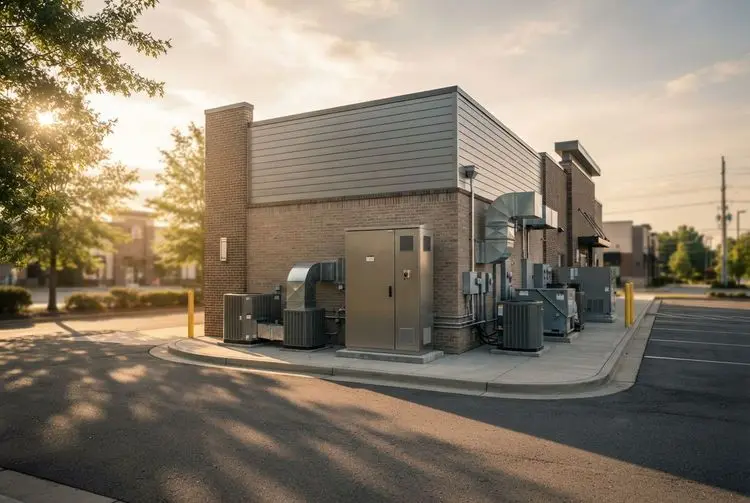
GridPoint, a Virginia-based energy management company, has launched a major initiative to deploy on-site battery storage across its commercial client base. The company targets 2 GW of distributed battery capacity at more than 20,000 sites nationwide.
The move marks a significant shift for GridPoint, whose core business has focused on HVAC, refrigeration and lighting management for multi-site operators. Its clients include Panda Express, Walgreens and Wendy's. The company provides a hardware and software package designed to cut energy costs for these businesses.
GridPoint had previously moved away from battery storage due to unfavorable economics in the early 2000s. However, the company has been re-evaluating battery economics over the last 18 months, as falling input costs dramatically shifted the landscape.
"Battery costs followed a similar pattern as PV cost declines," the company noted, drawing a parallel to the well-known trajectory of solar photovoltaic price reductions.
Data advantage and three use cases
GridPoint brings a unique asset to the table: more than a decade of load profile data on its clients. This data allows the company to design battery systems more accurately and quickly than competitors starting from scratch.
Adrian De Luca, co-founder and CEO of GridPoint, explained the company's edge: "We have collected in some cases over a decade of load profile data on these multi-site businesses. That data allows us to design more accurately and more quickly than someone else starting from scratch."
The battery initiative targets three primary use cases: bill optimization, participation in grid services programs, and resilience. Commercial energy bills have risen more than 40 percent over the past four years, making cost reduction a pressing concern for multi-site operators.
GridPoint will finance, install and manage the battery systems itself, using off-the-shelf batteries initially before moving toward more integrated offerings. The company aims to avoid what it calls "boom-and-bust cycles" that have characterized parts of the storage market.
Customer value proposition
The company's approach is designed to minimize the burden on its commercial clients. While customers see clear value in battery storage, they do not want additional operational responsibility.
"Customers love the value propositions that these assets represent," De Luca said. "The ability to drive down further savings on energy bills, the ability to participate in this growing number of grid services programs and get some revenue back into their facilities groups, and in some cases provide resilience. But they don't want to have additional responsibility for managing these new assets."
GridPoint's strategy prioritizes bill savings as the primary value driver. Grid services participation and resilience serve as secondary and tertiary benefits.
De Luca outlined the company's approach: "We want to be thoughtful about how we participate in these programs and use them as the second and third pieces of the stack. The first piece, the largest piece, the most predictable and easily underwritable piece, is what we're doing on the bill savings side."
Market context
The initiative comes at a time when distributed energy resources are gaining traction across the commercial sector. Battery storage, when co-located with existing energy management systems, can help businesses reduce demand charges, shift consumption to lower-cost periods and generate revenue through grid services.
GridPoint's decade-plus of operational data gives it a significant advantage in sizing and siting batteries for maximum economic return. For multi-site operators with hundreds or thousands of locations, even small per-site savings can translate into substantial portfolio-wide gains.
The company is backed by I Squared Capital, a global infrastructure investment firm. With 2 GW of distributed capacity as its target, GridPoint is positioning itself as a major player in the commercial battery storage space — a segment that has historically lagged behind utility-scale and residential storage deployment.
For solar industry professionals and commercial installers, GridPoint's move signals growing confidence in behind-the-meter battery economics for the C&I sector. The falling cost of lithium-ion batteries, combined with rising electricity rates and expanding grid services markets, is making distributed storage increasingly viable for multi-site businesses.