
SPONSORED

Ohio Election, UK Policy Pause Reshape Global Solar Landscape

Political shifts in Ohio and UK auction uncertainty mark a pivotal week for solar markets worldwide.
•• 6 Min
Ohio Election, UK Policy Pause Reshape Global Solar Landscape

The global solar industry faces a complex mix of political opportunity and regulatory headwinds, as developments in the United States, the United Kingdom, and China signal both progress and persistent obstacles for the renewable energy transition.

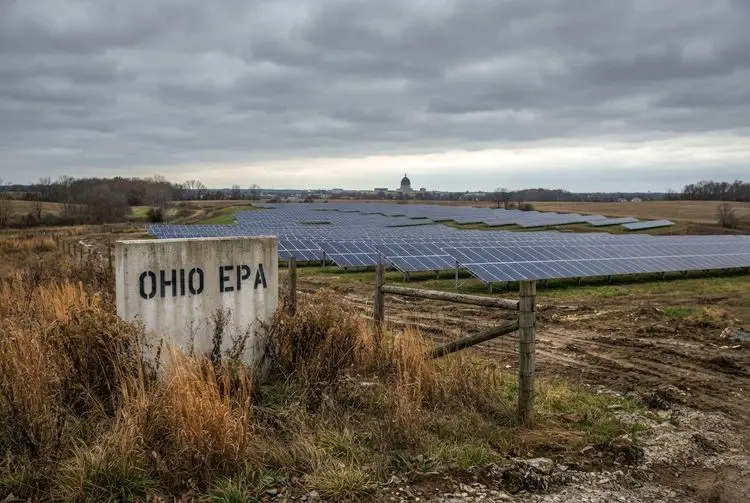
In the United States, Democrats ended Republicans' 15-year trifecta in Ohio by electing Amy Acton as governor — the first woman to hold that office. While the GOP retains control of both legislative chambers, Democrats broke the Republican supermajority in the Ohio House, meaning the party can no longer unilaterally override the governor's vetoes.

According to Canary Media, this shift could significantly alter Ohio's energy trajectory, which has been "particularly hostile toward solar and wind" since 2011. Acton campaigned on promoting "the lowest-cost and cleanest sources of energy readily available" and pledged to reinstate energy efficiency measures, renewable portfolio standards, and demand response programs.

The main obstacle to utility-scale solar in Ohio has been 2021's Senate Bill 52, which allows counties to ban almost all new projects within their territories. Over a third of Ohio counties have designated large swaths of land as off-limits to renewables. Acton cannot change SB 52 on her own, as doing so requires legislative action.

However, the governor-elect will appoint leaders for key regulatory agencies, including the directors of the Ohio EPA and departments of health, natural resources, agriculture, and development. These five agency directors will make up a majority of the voting members of the Ohio Power Siting Board, which issues permits for electric generation projects. Acton will also eventually pick the remaining two board members, including the chair of the Public Utility Commission of Ohio.

Clean energy advocates are optimistic. "It's a brand-new day here," said Neil Waggoner, Midwest manager for the Sierra Club's Beyond Coal campaign. However, a lame-duck session remains, with proposals like House Bill 1024 (shifting agency rule review authority to lawmakers), House Joint Resolution 11 (letting simple majorities override vetoes), and Senate Bill 294 (requiring a 50% minimum capacity factor for solar and wind) posing potential threats before the new governor takes office.

UK Solar Faces CfD Pause and VAT Hike

Across the Atlantic, the UK solar industry is responding to two significant policy developments. Energy minister Michael Shanks announced a pause in the Contracts for Difference (CfD) scheme before Allocation Round 9 (AR9), according to Solar Power Portal. While The Telegraph framed this as a "climbdown" from net zero obligations, transcripts show Shanks told Parliament's Environment and Climate Change Committee that while AR7 and AR8 "ran in broadly the same terms as previous auction rounds, we do now want to pause before AR9 and look at whether we need some more significant changes."

The CfD scheme has been crucial for UK solar development — 60% of solar capacity built in the UK over the last three years has received a CfD. Solar farms have collectively paid back £26.3 million more to consumers through the scheme than they have received in support over the past decade.

Industry experts expressed concern. Angus Widdowson of SmartestEnergy said the pause "will come as a blow to generators and puts the future of the energy transition into question." Sam Hollister of LCP Delta noted that AR8 may be the last opportunity to secure a CfD for some time.

Separately, The Guardian reported that UK households face a rush to find green energy installers to beat an April VAT hike. Ministers plan to scrap the 5% VAT exemption on home heat pumps, solar panels, and batteries from 1 April, potentially adding up to £1,530 to a smart home energy system. Industry groups warned this could trigger a demand surge before the deadline, creating "feast and famine" upheaval for installers. Chris Hewett of Solar Energy UK said the rise would "raise the cost of the loans scheme that has only just been launched" and called it a "perverse incentive" since domestic electricity bills are now zero-rated until July next year.

China's Clean-Tech Dominance and COP31 Dynamics

On the global stage, former US climate envoy John Kerry told The Guardian that China is leading the world in moving away from fossil fuels, and the rest of the globe — including the US — must now follow. In 2025, China's clean-tech exports surpassed $220 billion. The country accounts for about 85% of solar and 80% of lithium-ion battery supply chain production capacity, and nearly 75% of electric cars were manufactured there.

Kerry credited China's push for energy independence and noted a massive uptick in renewables deployment worldwide, sarcastically thanking Donald Trump. "The marketplace has made its decision and globally is moving to electrons, and electrostate status," Kerry said. "It is unstoppable."

However, China has generally held back from policy ambition at COP forums. As COP31 opens in Turkey, analysts will watch whether China steps into a leadership role. Li Shuo of ASPI framed China's question as whether it will lead "not out of obligation, but out of self-interest."

Euronews reported that COP31 host Türkiye is home to one of Europe's largest solar farms — the Kalyon Karapınar YEKA-1 Solar Power Plant in Konya, with over three million solar panels generating enough electricity to meet about 0.7% of the country's power demand. Yet coal remained Türkiye's largest source of electricity last year at 33% of generation. Campaigners say Türkiye lacks a roadmap for phasing out coal, which is incompatible with its pledge to reach net-zero emissions by 2053. The Climate Action Tracker has described Türkiye's climate targets as "critically insufficient."

Market Realities: Solar Costs, Battery Passports, and Regional Growth

In market analysis, BGR reported that solar power is not actually the cheapest form of energy — onshore wind is cheaper at $49 per megawatt-hour compared to solar's $60/MWh as of 2024, according to Our World in Data. However, renewable costs have fallen dramatically: wind dropped 74% and solar fell 88% since 2009. The article cautioned that lower renewable costs alone will not solve climate change due to rising global energy demand and continued fossil fuel use.

In the battery storage sector, pv Europe reported that from 18 February 2027, every industrial battery above 2 kWh sold in the EU must have a digital passport under EU Battery Regulation (EU) 2023/1542. GAZ Energy, a Czech BESS manufacturer, announced a partnership with Minespider to build digital records into its industrial battery systems, with projects totaling more than 2 GWh across Germany, Finland, Czechia, Poland, Slovakia, and Romania.

On a positive note, Gulf News reported that the UAE is expected to become the world's largest producer of solar electricity per capita by 2031, exceeding 4,000 kilowatt-hours per person, according to the IEA's Renewables 2026 report. The UAE raised its clean energy target to 35% by 2030–2031. Solar power is expected to account for more than three-quarters of global renewable electricity capacity growth, with total global renewable capacity projected to increase by nearly 85% by 2031.

The week's developments reveal a global solar industry at a crossroads. While political shifts in Ohio and China's clean-tech dominance offer reasons for optimism, policy uncertainty in the UK and Türkiye's continued coal reliance highlight persistent challenges. Solar and renewable energy are economically competitive and growing rapidly, but political will, grid infrastructure, and consistent policy support remain critical to accelerating the transition.

Ohio Solar PolicyUk Cfd PauseChina Clean-Tech ExportsSolar Vat HikeCop31 TurkeyEu Battery PassportUae Solar Per Capita

Most Popular News

  1. Hoa Phat expands Hung Yen rooftop solar to 7.5 MWp
  2. HgTe quantum dots enable 70% EQE lateral IR photodetectors
  3. Solar resilience hubs bring energy justice to West Virginia's West Side
  4. Molecular locking strategy stabilizes perovskite solar cells at 26.73% efficiency
  5. EU inverter ban could slow CEE solar by 6%, Wood Mackenzie finds

Disclaimer


Important notice regarding existing conflicts of interest:

We expressly point out that conflicts of interest exist in connection with this publication:

1. Stock Market Media Ltd. and persons closely associated with it hold shares in the companies recommended here and intend to sell them within the scope of, and at any time during, this recommendation. This constitutes a clear and specific conflict of interest.

2. The publisher of this publication and the responsible editors receive financial remuneration for its preparation. This, too, constitutes a clear and specific conflict of interest.

3. Please also note the further statements on existing conflicts of interest in the disclaimer below, inter alia under no. 2.

Important information and mandatory disclosures pursuant to the German Securities Trading Act (Wertpapierhandelsgesetz, WpHG) and pursuant to the German Financial Investment Ordinance (Finanzanlageverordnung, FinAnV).

Stock Market Media Ltd. has notified the German Federal Financial Supervisory Authority (Bundesanstalt für Finanzdienstleistungsaufsicht, “BaFin”), pursuant to the WpHG, of its activity as a producer of investment strategy recommendations within the meaning of Article 3(1) point 34 of Regulation (EU) No 596/2014 or of investment recommendations within the meaning of Article 3(1) point 35 of Regulation (EU) No 596/2014 (formerly “financial analyses”). The obligations of Stock Market Media Ltd. are governed primarily by §§ 85, 86 WpHG, Regulation (EU) No 596/2014 and Delegated Regulation (EU) 2016/958.

Information on the producer(s) of this publication:
Mr Roberto Gonçalves de Albuquerque, as analyst and editor-in-chief, is responsible for the preparation of the texts and contents of this publication. The publisher is Stock Market Media Ltd., 405 Kings Road, Flat 600, London; SW10 0BB, United Kingdom, represented by its Director Roberto Gonçalves de Albuquerque.

Important notes on the preparation of this publication:
This publication contains both facts and factual information on the companies discussed and purely subjective value judgements, interpretations, estimates, projections, forecasts and price targets. We endeavour to distinguish these from one another as transparently as possible in order to avoid misleading statements. Research, preparation and wording are carried out using common digital and AI-supported tools; the review of the content and the editorial responsibility lie with us. The essential bases and standards of our value judgements and valuations of the shares discussed are based on the following approach:

Assessment and valuation of companies according to conventional valuation methods (fundamental valuation approach)

  • Assessment of the potential of the company's future development (growth approach) and projection onto the corresponding valuation potential (price potential analysis) as well as a possible valuation of the company's shares on the basis of potential profit expectations (P/E ratio projection)
  • Assessment of the best-case scenario expected by us in the event of the company's absolute success (blue-sky potential approach)
  • Effect on the share price of the increased awareness of the recommended share expected by us, resulting from a strong rise in demand on the market (particularly decisive in the case of illiquid shares or shares recommended newly or for the first time) on account of the publications (mostly buy recommendations) published by us or by third parties (multiplier / momentum effect, hype), and thereby a disproportionately rising return/share price with a correspondingly rising risk
  • Technical analysis of the share price in accordance with common methods of analysis, mostly for the prediction of price signals (buy or sell signal, breakout of the share, determination of price targets, support or resistance areas, expected minimum movements or minimum counter-movements, prediction of signal points (if-then), etc.), for the most part building on the expected mass psychology (technical approach).

Conventional valuation approaches often cannot be meaningfully applied to young companies or companies that do not yet generate revenue. In valuing such companies we therefore tend to rely on the potential analysis calculated by us and on the assessment of the demand for such shares on the capital market. Ultimately, the market decides on the share price of a company. If extensive recommendations of a share give rise to excessive demand for it, it is possible that the share price will rise at an above-average rate on high trading volume. Although this leads to extreme opportunities for profit, it correspondingly increases the risk of a bubble forming, with a corresponding fall in price. The increased volatility of the share in such situations gives rise to above-average opportunities for profit and loss, both in both trading directions and in the case of recurring counter-movements. Such market developments are also an important part of our trading recommendations and valuation approaches.

This publication deals exclusively with securities of above-average volatility with high potential for profit and also for loss.

Note on sources of information:
The reliability of sources of information is examined by us in detail before they are used and is subjectively assessed by us according to their credibility and significance. In doing so, we decide by our own standards which sources we consider relevant, too conservative or too optimistic. Ultimately, we determine our recommendations on the basis of our personal assessments. In obtaining information we draw on numerous publicly accessible sources such as press releases, ad hoc announcements, company announcements, company presentations, publications and articles on the company discussed, common financial media in Germany and abroad as well as company or sector analyses by third parties.

Our publications use exclusively publicly available information and sources as well as information disseminated by the company itself.

Note on existing conflicts of interest:
We hereby point out that shareholders, editors, employees and persons or companies involved in the preparation of this publication, as well as principals (third parties) commissioning the publication of Stock Market Media Ltd., hold, directly or indirectly, at the time of this publication, interests in securities which are discussed in the respective publication, and are therefore interested in an increase in price and/or turnover, i.e. also in increased trading liquidity, since it is intended to sell these securities in direct connection with this publication and to participate in rising prices and turnover. An increase in the price of the shares of the companies presented may lead to an increase in the assets of these persons. In any case, the share price of the company may be significantly influenced by the discussion of the company. In particular, the share price of the companies discussed is also materially influenced by securities transactions. This applies in particular where the companies concerned are ones whose shares do not have a broad market capitalisation and for which only a narrow market exists. Here, even small order volumes can have considerable effects on prices. However, they are also interested in the price of the company discussed falling if they wish to acquire its shares more cheaply. By law, this gives rise to a conflict of interest, to which we hereby expressly draw attention.

Stock Market Media Ltd. and its employees are furthermore remunerated for the preparation, electronic distribution and publication of this publication as well as for other services. By law, this gives rise to a conflict of interest, to which we hereby expressly draw attention.

This remuneration may be paid by the company about which Stock Market Media Ltd. publishes information, by third parties affiliated with these companies or by other third parties pursuing an interest with regard to the companies discussed in connection with this publication. By law, this gives rise to a conflict of interest, to which we hereby expressly draw attention. This arises, first of all, from the fact that Stock Market Media Ltd. could make its statements in the interest of its principal. Stock Market Media Ltd. and/or companies affiliated with it have entered into an agreement, for a fee, with the company in question or with its shareholders for the preparation of the editorial coverage. By law, this gives rise to a conflict of interest, to which we hereby expressly draw attention.

Note on the handling of internal organisational duties:
Owing to the small size of the publisher's business, internal control of the compliance processes of the employees and other parties contributing to this publication is limited.

Competent supervisory authority:
Stock Market Media Ltd. has notified BaFin of its activity pursuant to § 86 WpHG.