
Silfab Solar restarts chemical operations after eight-month safety pause
Silfab Solar has resumed chemical commissioning at its Fort Mill plant after an eight-month halt due to chemical leaks.
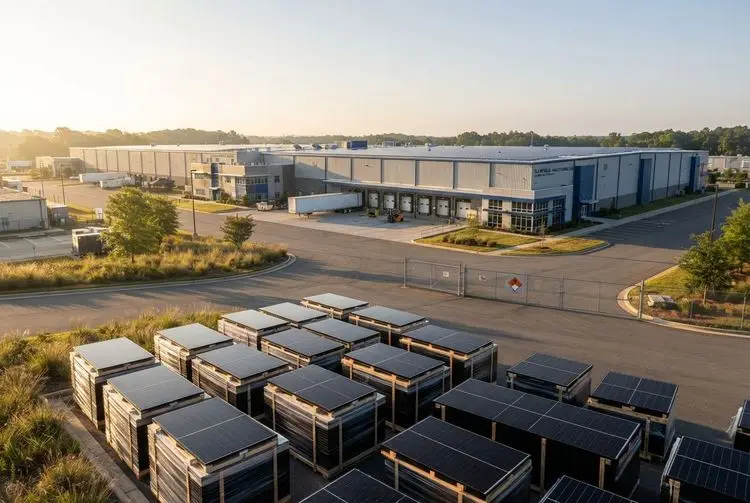
Silfab Solar has restarted chemical commissioning at its solar cell and module manufacturing facility in Fort Mill, South Carolina, ending an eight-month operational pause triggered by back-to-back chemical leaks in March 2026. The company submitted a mandatory 72-hour notice to the South Carolina Department of Environmental Services (SCDES) before resuming operations.
The $150 million facility had been restricted to panel assembly only since state and federal authorities halted chemical processes following leaks of potassium hydroxide and hydrofluoric acid that occurred within the same week in March. The incidents prompted a multi-agency investigation involving state regulators and the U.S. Environmental Protection Agency (EPA).
Safety review and compliance
As part of the conditions for restart, Silfab Solar completed a third-party safety review conducted by TRC Engineers. The company also entered into a compliance agreement with state regulators to reassess its chemical handling protocols and facility safety systems.
The back-to-back nature of the leaks — involving potassium hydroxide, a strong base used in solar cell etching, and hydrofluoric acid, a highly corrosive acid employed in wafer cleaning — raised concerns among regulators and the local community. Both chemicals are standard in photovoltaic cell production but require stringent containment and emergency response procedures.
Ongoing legal scrutiny
Beyond the regulatory process, Silfab Solar faces continued legal scrutiny in York County over zoning classifications at the Fort Mill site. Local legal actions are examining whether the facility's operations align with existing zoning designations, adding a layer of uncertainty to the company's long-term production plans in South Carolina.
The zoning dispute is separate from the safety-related pause but underscores the complex permitting and community relations landscape that large-scale solar manufacturing projects must navigate, particularly when chemical processing is involved.
Industry context
Silfab Solar's Fort Mill facility represents a significant investment in U.S. solar manufacturing capacity. The plant combines cell production and module assembly under one roof, a configuration that reduces supply chain dependencies but also concentrates chemical handling at a single site.
For solar industry professionals, the incident highlights the operational risks inherent in domestic PV manufacturing scale-up. As the United States pushes to onshore more solar production capacity through incentives such as the Inflation Reduction Act, manufacturers must simultaneously invest in robust safety systems, staff training, and emergency response capabilities.
The eight-month pause at a major cell and module facility also had ripple effects on module supply, particularly for commercial and utility-scale projects relying on domestically produced panels. While Silfab did not disclose production losses during the halt, the restriction to panel assembly only meant the plant could not produce its own cells, likely requiring alternative sourcing.
Regulatory framework
The involvement of both SCDES and the EPA in the investigation reflects the dual state-federal oversight that governs chemical handling at solar manufacturing facilities. The compliance agreement Silfab reached with state regulators sets a precedent for how similar incidents may be handled as more cell and wafer production comes online in the U.S.
The 72-hour notice requirement to SCDES before restarting chemical operations is a standard provision in such agreements, designed to give regulators time to verify that corrective actions have been implemented before hazardous materials are reintroduced.
Outlook
With chemical commissioning now resumed, Silfab Solar can return to full production capability at the Fort Mill site. However, the ongoing zoning litigation in York County and heightened regulatory scrutiny mean the company will need to maintain transparent communication with both authorities and the local community.
The incident serves as a case study for the broader solar manufacturing industry: scaling up domestic production requires not only capital investment and technology transfer but also rigorous attention to environmental health and safety protocols. As more companies announce plans for U.S.-based cell and wafer facilities, the Silfab experience offers practical lessons in regulatory compliance and community engagement.