
U.S. Adds 11.4 GW Solar in Q2 2026 as Brazil Hits 85% Renewables
Two major solar markets post record growth, with battery storage and transmission investment accelerating.
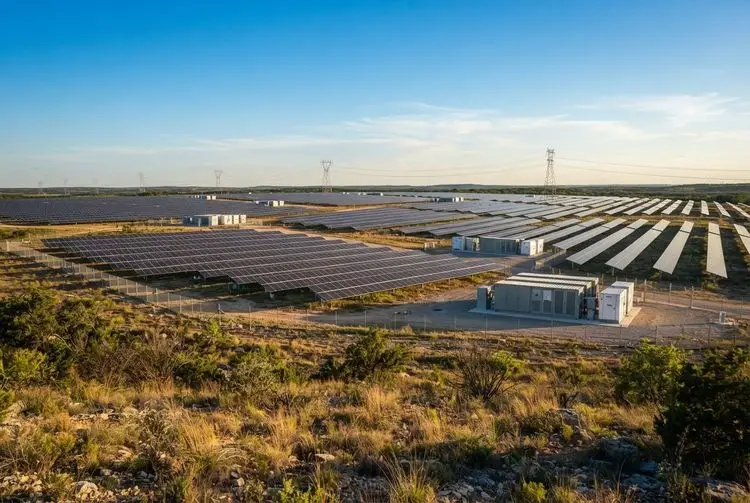
The global solar expansion is accelerating on two continents. The United States added 11.4 GW of solar capacity in the second quarter of 2026 alone, while Brazil reported that all 26 power plants commissioned in October 2026 were renewable, according to data from the Solar Energy Industries Association (SEIA) and Brazil's National Electric Energy Agency (ANEEL).
U.S. installed solar capacity has now reached a level sufficient to power more than 50 million homes. The Q2 2026 additions represent a 45% increase compared to the same period in 2025. Utility-scale projects drove the majority of this growth, supported by upgrades in battery storage and transmission infrastructure.
Texas and California Lead U.S. Deployment
Texas continues to dominate the utility-scale solar market. The state accounts for roughly 40% of the utility-scale solar capacity scheduled to come online nationwide in 2026, according to the U.S. Energy Information Administration (EIA). A flagship development is the Tehuacana Creek 1 Solar and Battery Energy Storage project, expected to contribute 837 MW of solar generation and 418 MW of battery storage. The EIA projects nearly 13 GW of new utility-scale battery capacity in Texas during 2026. Residential customers in Texas can participate in solar buyback programs, though compensation rates vary by utility.
California remains the nation's largest producer of total solar electricity when combining utility-scale and smaller installations. In 2025, the state generated approximately 90,103 GWh of solar electricity. California is also pioneering dual-use land projects, such as Project Nexus, a $20 million pilot installing solar panels over irrigation canals in the Central Valley to reduce evaporation and improve water conservation. However, a notable policy shift occurred at the federal level: the Residential Clean Energy Credit is no longer available for new residential solar systems placed in service after December 31, 2025. California continues to support storage through the Self-Generation Incentive Program.
Growth Across Key States
Florida ranks third nationally in total solar generation. Jacksonville's municipal utility, JEA, is developing the Miller and Forest Trail Solar Energy Centers, which will provide 125 MW combined — enough to serve over 22,000 households. The state offers sales and property tax exemptions for qualifying solar equipment.
Arizona is advancing large-scale projects including the Eleven Mile Solar Center (300 MW solar, 1,200 MWh storage) and the newly approved Marigold Energy Center near Stanfield, which will feature 600 MW of solar, 400 MW of battery storage, and natural gas generation. Homeowners may qualify for a state income tax credit covering 25% of installation costs, capped at $1,000.
Nevada is investing heavily in transmission infrastructure through NV Energy's Greenlink Nevada program (Greenlink West and North) to connect the northern and southern parts of the state. Under the currently open Tier 4 net metering program, excess generation is credited at 75% of the applicable retail rate. The Nevada BRIGHT program also assists eligible households with solar leasing.
North Carolina remains a Southeast leader, announcing a $5 million Clean Energy Microgrid Initiative in 2025. Plans are underway for up to 24 permanent microgrids across six western counties in 2026. The state also made approximately $1.4 million available in November 2026 for energy-efficient building improvements.
Emerging Markets and Distributed Solar
Solar growth is expanding beyond traditional strongholds. New York reached 8 GW of distributed solar capacity in July 2026, targeting 10 GW by 2030. Illinois enacted a law in January 2026 setting a cumulative energy storage target of 3,000 MW. Georgia Power received approval in September 2026 for 1,137 MW of new solar power purchase agreements. Virginia's solar industry is expanding rapidly, driven by increasing electricity demand from data centers.
Brazil: All-New Capacity from Renewables
In South America, Brazil demonstrated a rapid transition to renewables. In October 2026, Brazil put 26 new power plants into operation, all of which are renewable. According to ANEEL, this included 23 new wind farms (648.00 MW) installed entirely in the state of Paraíba, and three solar plants (55.70 MW) distributed across Bahia (32.50 MW), Rio de Janeiro (13.20 MW), and Minas Gerais (10.00 MW).
Throughout 2026 up to October 31st, Brazil's electricity matrix expanded by 5.88 GW. Among the 125 plants that started operating during this period, solar accounted for the largest share: 783 solar plants totaling 3.75 GW. This was followed by eight thermal power plants (1.22 GW), 26 wind farms (832.50 MW), six small hydroelectric plants (70.09 MW), and two hydroelectric generating plants (7.60 MW).
From January to October, power plants in 18 states entered commercial operation, with Mato Grosso do Sul (894.20 MW), Paraíba (774.00 MW), and Pará (649.37 MW) standing out. Currently, Brazil has approximately 221.6 GW of inspected power capacity, according to SIGA (Generation Information System) ANEEL. Of this total operating capacity, approximately 85% comes from renewable sources.
Infrastructure and Policy Divergence
Both the U.S. and Brazilian reports highlight a shared global consensus: solar and wind energy are being deployed at record paces, and battery storage is becoming an indispensable component of grid modernization. However, the perspectives differ in scope. The U.S. report focuses heavily on state-level market dynamics, private investment, and the interplay between utility-scale projects and residential incentives, noting the expiration of a key federal tax credit. The Brazilian report, sourced from ANEEL, emphasizes centralized capacity additions and the high percentage of renewables in the national matrix, reflecting a more centralized planning perspective.
While the U.S. faces a policy shift with the expiration of the federal residential credit, Brazil's data shows a consistent, government-tracked expansion where all new capacity in October was renewable. Both nations underscore the critical role of transmission upgrades — such as Nevada's Greenlink and Texas's grid investments — in moving electricity from generation sites to population centers. As electricity demand rises, particularly from data centers in Virginia and broader electrification efforts, these infrastructure investments will determine how effectively solar generation can support national power grids.